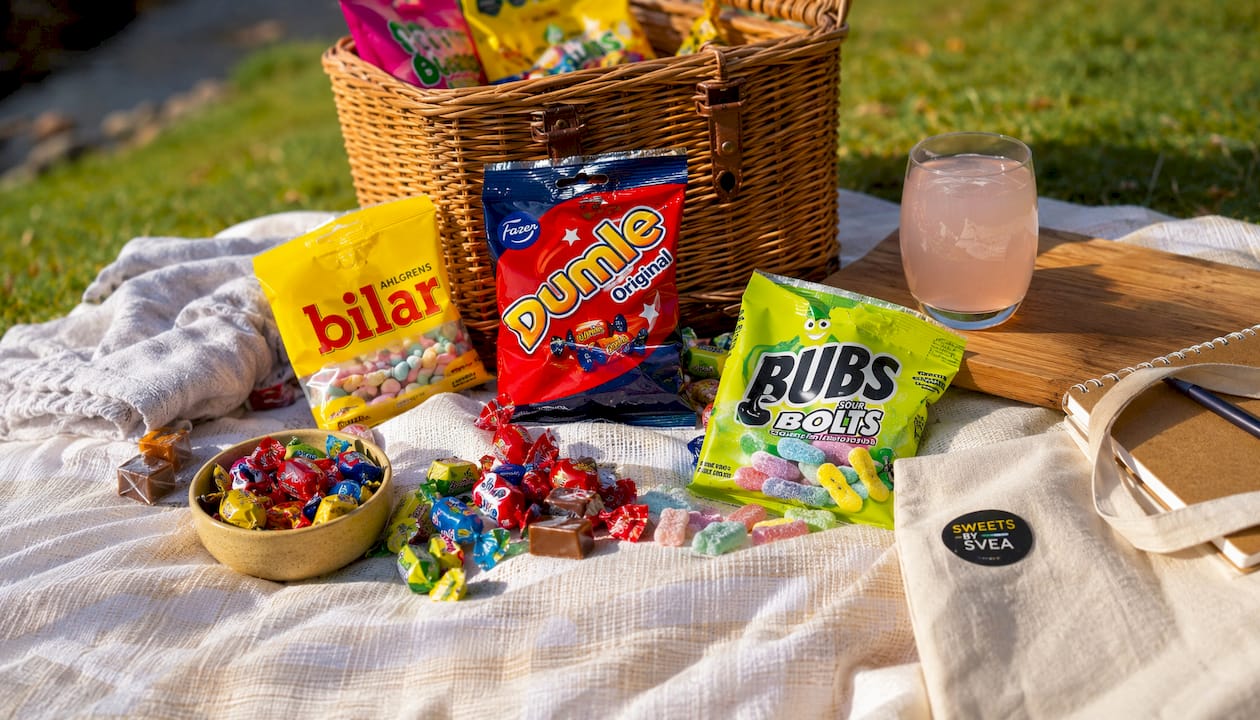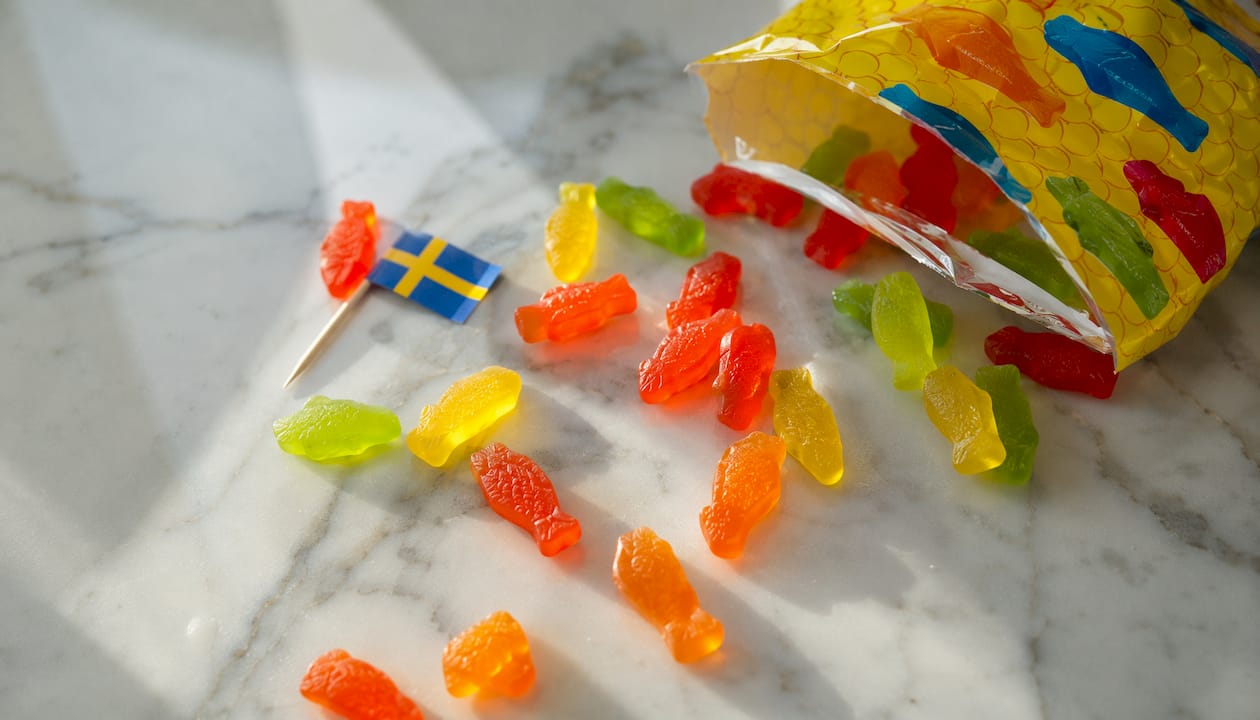

Swedish candy types fall into six clear categories: salty licorice, fruit gummies and gelé, chocolate and caramels, foam/marshmallow sweets, sour candies, and lösgodis (pick-and-mix). Each one has a distinct flavor and texture profile, and knowing the difference before you order makes the whole experience better. The average Swede consumes about 16 kilograms of sweets per year — one of the highest rates in the world — so there’s a reason this candy culture runs deep.
Here’s a quick orientation before you dig in:
- Salty licorice — sharp, salty, polarizing; an acquired taste for most Americans
- Fruit gummies and gelé — chewy, bright, fruity; the easiest entry point
- Chocolate and caramels — creamy, rich, often toffee-centered
- Foam/marshmallow — light, airy, slightly chewy; kid-friendly
- Sour candies — tangy, sugar-coated, often fruit-forward
- Lösgodis (pick-and-mix) — not a flavor but a format: bulk bins where you build your own bag
This guide covers all of them with taste notes, brand examples, and practical buying tips for U.S. shoppers.
Table of Contents
- What are the main Swedish candy types?
- Why salty licorice is the heart of Swedish candy culture
- Lösgodis and lördagsgodis: the traditions behind Swedish candy
- How to try Swedish candy in the U.S.
- Common ingredients, dietary notes, and the “healthier?” question
- The best Swedish candies to try first
- Key Takeaways
- A note on what actually makes Swedish candy worth trying
- Authentic Swedish candy, shipped to your door
- Sources and further reading
What are the main Swedish candy types?
Swedish candy covers more ground than most Americans expect. The categories below map the full range, from the mild and approachable to the genuinely intense.
| Type | Flavor Profile | Texture | Best For | Dietary Notes | U.S. Availability |
|---|---|---|---|---|---|
| Salty licorice | Salty, bitter, anise | Chewy, hard, powder-coated | Licorice lovers, adventurous eaters | Often gelatin-free; check label | Specialty stores, online |
| Sweet licorice | Mild anise, sweet | Chewy, smooth | Licorice-curious beginners | Often gelatin-free | Online, some import shops |
| Fruit gummies/gelé | Sweet, fruity, tangy | Chewy, jelly | Beginners, kids | May contain gelatin; pectin versions exist | Online, some grocery stores |
| Foam/marshmallow | Sweet, vanilla, light | Airy, slightly chewy | Kids, light snackers | Often contains gelatin | Online |
| Chocolate/toffee | Creamy, rich, caramel | Smooth, chewy, wafer-crisp | Gifting, beginners | May contain milk, nuts | Online, Scandinavian delis |
| Caramels | Buttery, sweet, fruity | Soft, chewy | Gifting, all ages | May contain milk | Online |
| Sour candies | Tart, fruity, tangy | Chewy, sugar-coated | Sour fans | Varies | Online |
| Novelty shapes | Varies by type | Gummy, foam, jelly | Beginners, gifting | Varies | Online |
Salty licorice (saltlakrits)
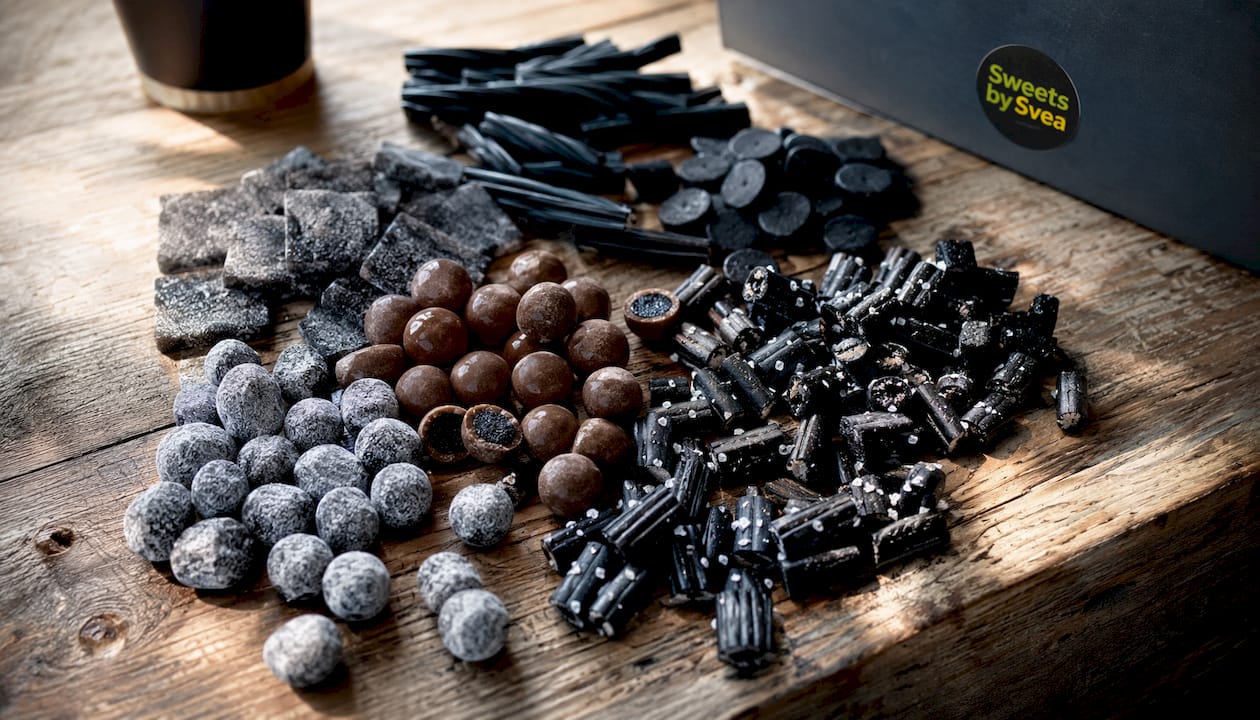
This is the category that surprises most Americans. Salty licorice and salmiak varieties are a defining feature of Swedish candy culture, and the flavor is genuinely intense: sharp anise, a mineral saltiness, and sometimes a bitter edge. Djungelvrål by Malaco is the classic example — chewy, monkey-shaped gummies rolled in salty licorice powder. Lakridsfiskar (licorice fish) come in sweet, salty, and even sour lemon versions, which surprises Americans who only know the red U.S. Swedish Fish. Those red fish are not actually eaten in Sweden.
Sweet licorice
Milder than saltlakrits, sweet licorice has a gentle anise flavor without the mineral punch. Lakridsbåtar (licorice boats) are a common pick-and-mix staple, smooth and chewy, often mixed with raspberry-flavored Hallonbåtar in the same bin. Gott & Blandat, one of the most recognized Swedish candy mixes, combines fruit-shaped gummies with small sweet licorice bites in one bag — a good starting point if you want to try licorice without committing to the salty version.
Fruit gummies and gelé
Geléhallon (raspberry drops) are the archetype here: soft, sugar-coated, raspberry-shaped gummies with a sweet-tart bite. Gröna Grodor (green frogs), launched in 1935, are another classic — subtly fruity, almost alarmingly green, and still a pick-and-mix staple. Tutti Frutti offers a broader range, from original raspberry-orange-lemon to dual-flavor “passion” varieties like passionfruit and cactus-lime. Authentic packaging usually shows Swedish-language names like gelé or frukt and lists pektin (pectin) or gelatin as the texture base.
Foam and marshmallow candies
Skumsvampar (foam mushrooms) are the most recognizable: pink-and-white, mushroom-shaped, with a slightly chewy texture that’s nothing like the soft American marshmallow. Polly by Cloetta takes the foam concept further — chewy foam drops coated in chocolate, available in vanilla, caramel, and licorice versions. Sura Skumflaskor (sour foam bottles) add a tart sugar coating to the foam base, making them a crossover between the foam and sour categories.
Chocolate and toffee
Dumle, originally made by Mazetti in 1945 and now produced by Fazer, is the benchmark: a milk chocolate shell around a soft, chewy toffee center, sold as individual bites or lollipops. KEX (Kexchoklad) is a crunchy wafer bar coated in milk chocolate — lighter than it looks because of the layered wafer inside. Marianne, made by Karl Fazer, is a hard peppermint candy with a soft chocolate filling; the Marianne chocolate bar version uses crushed Marianne pieces mixed into milk chocolate. Center, introduced in Sweden in 1941, is a small cylindrical chocolate with a soft caramel filling — essentially Sweden’s answer to Rolo.
Caramels and toffee
Franska Karameller are individually wrapped fruit caramels in a large-format bag, soft and buttery with distinct fruit flavors. These are a reliable crowd-pleaser and a common gift option. Polkagris, invented in 1859 by Amalia Eriksson in the town of Gränna, is a peppermint-flavored hard candy stick in red and white — still made by hand in Gränna and sold at Christmas markets. It’s more of a heritage candy than an everyday pick-and-mix item, but it’s worth knowing as a piece of Swedish confectionery history.
Sour candies
Sura Skumflaskor lead this category: cola-bottle-shaped foam candies with a sour sugar coating and a fruity (not really cola) flavor. Nappar (pacifier-shaped gummies) come in sour versions alongside their standard fruit and cola flavors. The sour coating on most Swedish sour candies is citric acid, which gives a clean tartness rather than the face-puckering intensity of some American sour candies.
Novelty shapes (Bilar and beyond)
Ahlgrens Bilar are the most famous novelty candy in Sweden: pastel-colored, car-shaped gummies with a soft, marshmallow-like chew and a sweet vanilla-adjacent flavor. Ahlgrens Bilar Limousines are the elongated version of the original. Ferraribilar, made by Toms, are larger and chewier, shaped like Ferrari race cars, and come in raspberry and cola flavors. Snøre is a long, hollow rope candy in strawberry, caramel, or sweet licorice — a format kids love for the novelty of eating it like a straw.
Why salty licorice is the heart of Swedish candy culture
No other category divides first-timers and regulars as sharply as salty licorice. Understanding what’s in it helps.
Salmiak is ammonium chloride, a salt compound that gives salty licorice its distinctive sharp, almost medicinal bite. It’s not the same as table salt — it has a mineral, slightly bitter edge that amplifies the anise flavor of the licorice base. Scandinavian candy makers have used it for over a century, and it’s completely food-safe in the amounts used in candy.
The forms salty licorice comes in:
- Powder-coated gummies (Djungelvrål) — the salmiak is on the outside, hitting you immediately
- Chewy hard candy (Tyrkisk Peber) — a hard shell with a salmiak powder center; the intensity builds as you chew through
- Chocolate-coated licorice — the chocolate softens the salt hit and makes it more approachable
- Licorice fish (Lakridsfiskar) — available in salty, sweet, and sour versions; the salty ones are the most traditional
The difference between salty and sweet licorice comes down to that ammonium chloride. Sweet licorice uses anise flavoring and sugar without salmiak, so it tastes more like the black licorice Americans already know. Salty licorice is a different experience entirely.
Pro Tip: Start with a chocolate-coated licorice piece before trying powder-coated salmiak gummies. The chocolate acts as a buffer and gives your palate a gentler introduction to the flavor. Once that registers as good, the powder-coated versions make more sense.
Lösgodis and lördagsgodis: the traditions behind Swedish candy
The way Swedes buy and eat candy is as distinctive as the candy itself. Two traditions explain almost everything.
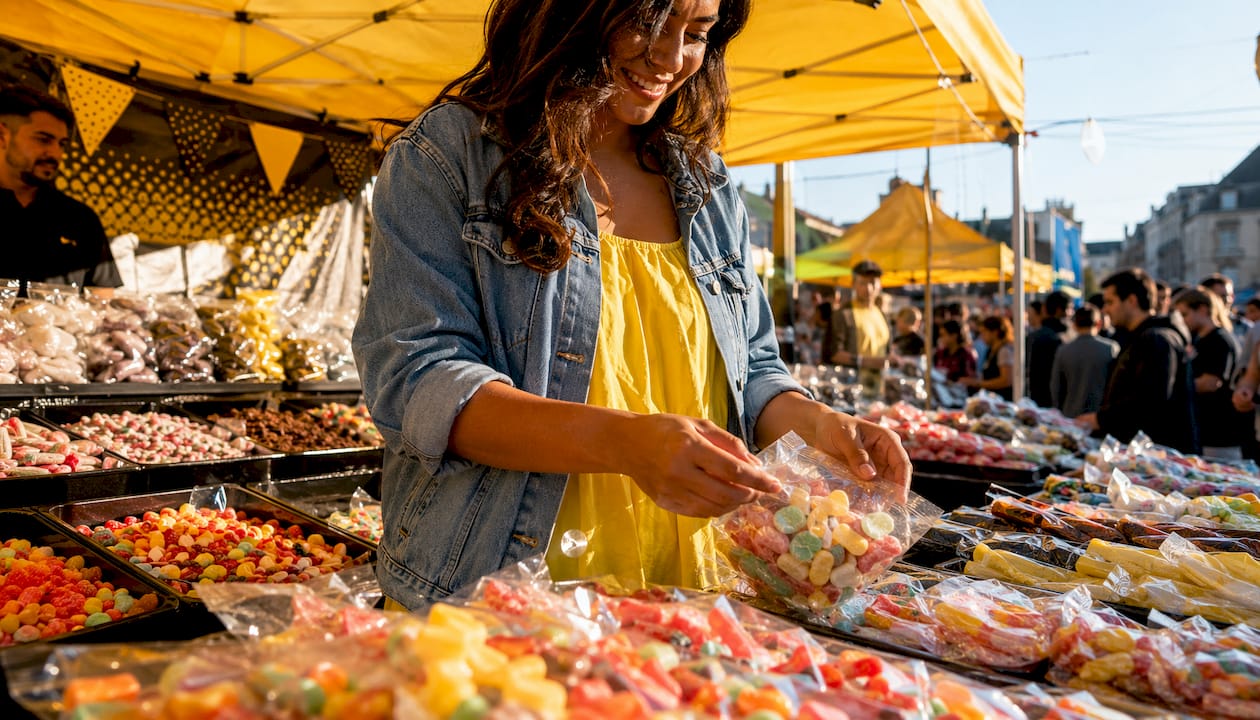
Lösgodis (pick-and-mix, literally “loose candy”) became widely popular in Sweden in the 1980s and is now the dominant retail format for candy in the country. Shoppers fill a bag from hundreds of bulk bins, mixing gummies, licorice, foam candies, and chocolate pieces in whatever combination they want. The format encourages variety and portion control by design — you take exactly what you want.
Lördagsgodis (Saturday candy) is the cultural rule that ties it together. Swedish families traditionally restrict candy to Saturdays, making the weekly trip to the lösgodis bins a ritual rather than an impulse buy. The result is that Swedes treat candy as a deliberate weekly pleasure rather than a constant snack, which partly explains why the pick-and-mix format dominates over individually wrapped single-serve products.
A few things this tradition has shaped:
- Bulk bins and large-format bags are the norm; small single-serve packs are secondary
- Individually wrapped toffees and caramels (like Franska Karameller) are designed to be shared from a communal bowl
- The mix-your-own format means most Swedes have strong opinions about their personal combination
TikTok has accelerated U.S. interest in Swedish candy significantly, with salty licorice and pick-and-mix haul videos driving demand for imported products. The cultural ritual translates well to social media — the visual variety of a mixed bag and the reaction-video potential of salty licorice have made Swedish candy a recurring trend.
For a taste of the broader Swedish lifestyle context behind these traditions, the Villa Sakis journal covers classic Swedish treats and their cultural roots in depth.
How to try Swedish candy in the U.S.
Getting the experience right the first time comes down to order and sourcing. Here’s a practical path.
-
Start with fruit gummies or Ahlgrens Bilar. These are mild, sweet, and familiar enough that they won’t shock anyone. Bilar’s soft marshmallow chew is a good baseline for understanding Swedish gummy texture.
-
Move to chocolate and toffee. Dumle, KEX, or a Plopp chocolate-caramel bar give you the toffee-forward flavor profile that shows up across many Swedish chocolate candies.
-
Try sour candies next. Sura Skumflaskor or sour Nappar introduce tartness without the intensity of licorice. The sour coating is citric-acid-based and fades quickly.
-
Finish with sweet licorice, then salty licorice. Sweet licorice (Gott & Blandat’s licorice bites) first, then a small piece of salty licorice. This order matters — starting with salty licorice can create a false impression of the whole category.
-
For salty licorice, share and portion small. A half-piece of Djungelvrål is enough for a first taste. Splitting a pack with a group prevents anyone from committing to a full bag before they know if they like it.
Where to buy in the U.S.: Scandinavian specialty delis carry some Swedish candy, but selection is limited and stock is inconsistent. Online is the reliable route. When evaluating an online retailer, look for: authentic Swedish-language product names on packaging, a clear country-of-origin label (Sweden or EU), and shipping times that suggest fresh stock rather than long warehouse storage.
What to expect on price: Imported Swedish candy costs more than domestic candy. A standard bag of gummies or a chocolate bar typically runs $4–$8 depending on size and retailer. Large-format bags (like Franska Karameller at 725g) offer better value per piece.
Packaging labels to trust: Look for lakrits (licorice), salta (salty), gelé (jelly/gummy), skum (foam), and lösvikt (bulk/loose weight) on packaging. These Swedish-language terms signal authentic products rather than Swedish-themed imitations.
Sweetsbysvea ships authentic Swedish candy with express delivery and carries a full range of the types covered here, including pick-and-mix options and curated bundles.
Pro Tip: Order a mixed sampler for a first tasting rather than large bags of a single type. You’ll cover more categories, waste less if something doesn’t land, and get a much better picture of what Swedish candy actually tastes like.
Common ingredients, dietary notes, and the “healthier?” question
The honest answer to “Is Swedish candy healthier than American candy?” is: not really, but the ingredient list often looks different.
Many Swedish gummies use real fruit juice or natural flavoring rather than artificial dyes, and some producers have moved toward pectin-based formulas instead of gelatin. Vegan and organic Swedish candy makers producing pectin-based gummies and gelatin-free options have expanded the choices for diet-restricted buyers. That said, sugar content is high across the board — these are still candy.
Key dietary and ingredient points:
- Gelatin vs. pectin: Most traditional Swedish gummies use gelatin (not vegan). Pectin-based versions exist and are labeled pektin on the ingredient list. Foam candies almost always contain gelatin.
- Salmiak (ammonium chloride): Safe in candy quantities, but people with kidney conditions or those on low-sodium diets should be cautious with heavy salty licorice consumption.
- Real black licorice caution: The FDA has noted that consuming large amounts of real black licorice (which contains glycyrrhizin from licorice root) can raise blood pressure and cause other issues in adults over 40. This applies to licorice with actual licorice root extract, not all Swedish licorice products — check the ingredient list for lakritsrot or glycyrrhizin.
- Common allergens: Milk (chocolate products), tree nuts (Marabou Helnöt, some Garant bars), wheat (KEX wafers). Always check the label.
- Artificial additives: Sweetsbysvea’s products are free from GMOs, parabens, and high fructose corn syrup — a meaningful distinction for buyers who read ingredient labels carefully.
A Swedish National Food Agency finding referenced by Study in Sweden notes that confectionery plays a notable role in Swedish diets, with sweets contributing a meaningful share of calories for some Swedes. The lördagsgodis tradition of limiting candy to one day a week is partly a cultural response to that reality.
The best Swedish candies to try first
A ranked starter list for first-timers, organized from most approachable to most adventurous.
-
Ahlgrens Bilar — Sweet, marshmallow-like, car-shaped. Zero learning curve. Easy to find online; Ahlgrens Bilar Limousines are available at Sweetsbysvea.
-
Gott & Blandat — Mixed fruit gummies plus mild sweet licorice in one bag. The best single purchase for covering multiple categories at once. Available online.
-
Geléhallon (raspberry drops) — Sugar-coated, raspberry-shaped gummies. Sweet with a slight tang. Easy to find at Scandinavian specialty retailers and online.
-
Dumle — Milk chocolate over soft toffee. Familiar flavor profile for American palates, just better than most domestic versions. Available at Sweetsbysvea and Scandinavian delis.
-
Franska Karameller — Individually wrapped fruit caramels, soft and buttery. The 725g bag is a great value for sharing. Available at Sweetsbysvea.
-
Skumsvampar (foam mushrooms) — Light, slightly chewy, vanilla-sweet. A good introduction to the foam candy category. Available online.
-
Sura Skumflaskor — Sour foam bottles with a citric-acid coating. Fruity and tart without being overwhelming. Available online.
-
Djungelvrål — Salty licorice powder-coated gummies. Start with one piece. This is the gateway to understanding what Swedish salty licorice actually is. Available online; best ordered as part of a mixed bag so you’re not committed to a full pack.
Key Takeaways
Swedish candy types span six distinct categories, and tasting them in the right order — mild fruit gummies first, salty licorice last — gives you the clearest picture of what the tradition actually offers.
| Point | Details |
|---|---|
| Six core categories | Salty licorice, fruit gummies, chocolate/toffee, foam/marshmallow, sour candies, and lösgodis (pick-and-mix format). |
| Salmiak is the key ingredient | Ammonium chloride gives salty licorice its sharp mineral bite; start with chocolate-coated versions before powder-coated ones. |
| Tasting order matters | Start mild (fruit gummies, chocolate) and work toward salty licorice last to avoid false impressions of intensity. |
| Lösgodis and lördagsgodis | Pick-and-mix became popular in the 1980s; the Saturday candy tradition shapes how Swedes buy and portion their sweets. |
| Sweetsbysvea for U.S. buyers | Sweetsbysvea ships authentic Swedish candy with express delivery, including the Candy Lovers Favorite sampler and individual category picks. |
A note on what actually makes Swedish candy worth trying
Swedish candy has a reputation problem in the U.S. that mostly comes from one product: the American-made red Swedish Fish, which bears almost no resemblance to what Swedes actually eat. The real thing is stranger, more varied, and more interesting. Salty licorice alone has more flavor complexity than most American candy categories combined — it’s just that the complexity is unfamiliar, not bad.
The lösgodis format is also genuinely worth experiencing. Building your own bag from bulk bins forces you to make deliberate choices rather than defaulting to whatever’s in front of you, and the variety available in a single Swedish candy store would take months to work through. That’s not an exaggeration — the category depth is real.
For U.S. buyers, the practical barrier is access. Most domestic grocery stores carry nothing close to authentic Swedish candy, and the Scandinavian specialty delis that do exist tend to stock a narrow selection. Online ordering from a retailer that sources directly from Sweden is the only way to get the full range. Sweetsbysvea’s commitment to freshness and GMO-free, high-fructose-corn-syrup-free products matters here — imported candy that’s been sitting in a warehouse for months is not the same experience.
Authentic Swedish candy, shipped to your door
Sweetsbysvea is the direct route to authentic Swedish candy for U.S. buyers who want the real thing without hunting through specialty stores or settling for limited selections. Every product ships fresh, free from GMOs, parabens, and high fructose corn syrup, with express delivery in 1–3 days.
Three products worth starting with, based on the categories above:
- Candy Lovers Favorite — A curated sampler that covers the main categories in one order. The easiest way to run a first tasting without committing to large bags of a single type.
- Ahlgrens Bilar Limousines — The quintessential Swedish gummy, soft and sweet. A reliable crowd-pleaser and the right starting point for anyone new to Swedish candy.
- Franska Karameller Fruit Caramels 725g — A large-format bag of individually wrapped fruit caramels, ideal for sharing or gifting.
Beyond candy, Sweetsbysvea also carries Swedish specialty foods including Björnekulla Skånsk Senap and Estrella Smör & Havssalt Västkustchips for anyone building a full Swedish snack experience. Browse the full range and place your first order at Sweetsbysvea.
Sources and further reading
- Business Sweden — 11 of the best-loved Swedish candy and healthy alternatives — Best for cultural context, consumption statistics, and vegan/organic candy trends.
- Sporked — The Best Swedish Candy and Salty Swedish Licorice, Ranked — Best for tasting notes, lördagsgodis context, and U.S. buyer perspective.
- Tasting Table — 21 Popular Swedish Candies, Ranked Worst to Best — Best for salty licorice descriptions, TikTok trend reporting, and beginner cautions.
- Saveur — Popular Swedish Candy — Best for category overviews, texture notes, and packaging/labeling context.
- John Eric Home Magazine — Move Over Fish, It’s Now About All Types of Svenskt Godis — Best for brand-level examples, novelty shapes, and U.S. audience framing.
- Scandinavia Standard — A Sweet Guide to the Best Swedish Candy — Best for product descriptions and pick-and-mix format context.
- Study in Sweden — Swedes Love Sweets — Best for nutrition and dietary context, citing Swedish National Food Agency findings.
- Wikipedia — Polkagris — Primary source for the history and ingredients of the Polkagris candy stick.