
Swedish Fish were invented in Sweden, but the ones you buy in the U.S. are almost certainly not made there. The candy was created by Malaco, a Swedish confectionery company, around 1957, specifically to sell to the North American market. Today, large-scale production for that market is handled by Mondelēz International, with facilities in Hamilton, Ontario, Canada and in Turkey. Sweden still has its own version, called pastellfiskar, but it’s a different product with different ingredients and flavors.
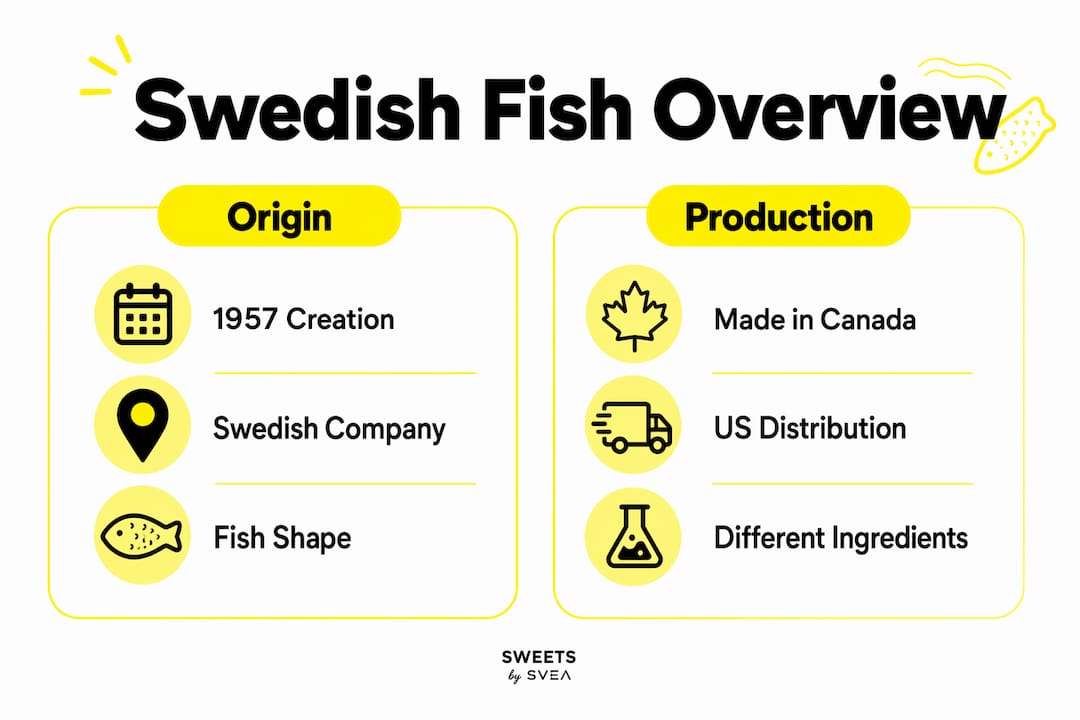
So the name is Swedish. The origin story is Swedish. The bag in your hand, probably not.
Table of Contents
- Are Swedish Fish actually Swedish? The origin story explained
- Where Swedish Fish are made now, and how the Swedish version differs
- Why U.S. Swedish Fish taste different from the Swedish versions
- Why are they called Swedish Fish if they’re not made in Sweden?
- How to buy authentic Swedish candy from the U.S.
- How U.S. and EU food regulations explain the taste difference
- Key Takeaways
- The authenticity question is more interesting than it looks
- Authentic Swedish candy, shipped to you
- Useful sources
Are Swedish Fish actually Swedish? The origin story explained
Malaco launched the fish-shaped candy in the late 1950s as an export product aimed squarely at American consumers. The fish shape wasn’t accidental. Sweden has a deep cultural association with fishing and the sea, and Malaco leaned into that identity to make the candy feel distinctive on U.S. store shelves. It worked.

For decades, the candy grew steadily in North America. Distribution passed through several corporate hands over the years, including a period tied to Cadbury Adams, before Mondelēz International took over large-scale U.S. distribution. Past reporting from Cadbury-era statements referenced large-scale production volumes during peak distribution periods, which gives a sense of how far the brand traveled from its Swedish roots.
Key milestones in the Swedish Fish timeline:
- Late 1950s: Malaco creates the candy in Sweden for the North American export market
- 1957: Widely cited as the U.S. launch year
- Mid-20th century onward: Distribution partnerships expand North American reach
- Cadbury Adams era: U.S. distribution handled under Cadbury ownership
- Current: Mondelēz International manages U.S. distribution; Malaco retains the Swedish market
The brand name stuck because it told a story. But the story and the supply chain are two different things.
Where Swedish Fish are made now, and how the Swedish version differs
For North American buyers, the manufacturing picture is straightforward: Mondelēz International produces Swedish Fish for the U.S. and Canadian markets at facilities in Hamilton, Ontario, Canada and in Turkey. A bag labeled “Swedish Fish” at a U.S. grocery store almost never comes from Sweden.

In Sweden, Malaco still distributes the fish-shaped candy family under the name pastellfiskar. These often appear in mixed bags like Gott & Blandat and include flavors you won’t find in a standard U.S. pack, including salmiak (salty licorice), which is a distinctly Scandinavian taste.
| Market | Typical production location | Brand/distributor | Product name |
|---|---|---|---|
| United States | Canada (Hamilton, ON), Turkey | Mondelēz International | Swedish Fish |
| Canada | Hamilton, Ontario | Mondelēz International | Swedish Fish |
| Sweden | Sweden | Malaco | Pastellfiskar |
“Made in Sweden” packaging on a bag sold in the U.S. is rare. Imported pastellfiskar do exist through specialty retailers, but they’re a genuinely different product, not just a repackaged version of what’s on the candy aisle at Target.
Why U.S. Swedish Fish taste different from the Swedish versions
The ingredient lists tell the real story. U.S. and Swedish versions share a basic structure but diverge in ways that change how they feel and taste.
The biggest structural difference: Swedish Fish are starch jellies, not gelatin gummies. They contain no gelatin, which is why they’re vegetarian-friendly. That chewy, dense texture comes from the starch base, not animal-derived ingredients.
Beyond that, the U.S. and EU versions split on several specific ingredients:
- White mineral oil: Present in some North American ingredient lists as a coating agent. The EU restricts or bans white mineral oil in food products, so European versions don’t have it. This changes the candy’s surface feel and mouthfeel noticeably.
- Artificial coloring: U.S. versions use dyes like Red 40, which are approved by the FDA. EU regulations take a stricter approach to several synthetic dyes, pushing European formulations toward different colorants.
- Flavoring: North American packs use artificial flavoring. Swedish versions may use regional fruit flavors and include varieties like salmiak that don’t appear in U.S. mass-market bags.
- Coating and texture: The mineral oil difference alone produces a distinct surface. EU versions tend to feel less slick.
Pro Tip: If you’re buying Swedish Fish for dietary reasons, always check the specific bag’s ingredient list. Formulations can vary by production run, and “vegetarian-friendly” applies to the starch-jelly base, but other additives differ by market.
Why are they called Swedish Fish if they’re not made in Sweden?
The name was a branding decision, not a guarantee of origin. Malaco chose the fish shape and Swedish identity to create a distinctive export product. Sweden’s fishing culture gave the candy a story that resonated with North American buyers who associated Scandinavia with quality and novelty.
That strategy worked so well that the name outlasted the Swedish manufacturing connection entirely.
A few myths worth clearing up quickly:
- “Red Swedish Fish are lingonberry flavored.” Not true for U.S. versions. North American Swedish Fish use artificial flavoring, and lingonberry is not a listed ingredient in standard U.S. packs.
- “The fish shape means something about Swedish diet.” It’s a cultural reference to fishing, not a literal food representation.
- “Swedish Fish sold in the U.S. are imported from Sweden.” They’re manufactured in Canada and Turkey for the North American market.
- “Swedish Fish and pastellfiskar are the same product.” They share a shape and a lineage, but ingredients, flavors, and formulations differ.
The name reflects where the idea came from. It doesn’t describe where the candy is made or what’s in it today.
How to buy authentic Swedish candy from the U.S.
If you want the real Swedish version, you need to know what to look for. Mass-market Swedish Fish at U.S. grocery stores won’t get you there. Authentic imported Swedish candy has specific markers.
What to look for on the packaging:
- Swedish-language text on the label (ingredient list, brand name)
- Country-of-origin statement reading “Sweden” or “Sverige”
- Malaco branding with a Swedish origin note, or other recognized Swedish confectionery brands
- EU-compliant ingredient lists (no white mineral oil, different colorants)
- Absence of U.S.-only additives like Red 40
Where to find it:
Specialty importers and dedicated Swedish food retailers are your best options. Sweetsbysvea carries authentic Swedish candy and food products, including Swedish Fish sourced from Sweden, shipped with 1–3 day express delivery. Their product pages list ingredients and country-of-origin details so you can verify before you buy.
For readers specifically interested in the salmiak and licorice flavors that define Swedish candy culture, Swedish Fish Classic Black Licorice is worth checking. It’s the kind of flavor that doesn’t exist in a standard U.S. candy aisle bag.
Sweetsbysvea also carries Swedish food products beyond candy. If you want to explore Swedish grocery staples, Abba Fiskbullar i Dillsås is a classic Swedish pantry item that gives a sense of the broader food culture the candy name references.
When ordering imported Swedish candy online, confirm the product page shows a Swedish manufacturer, an EU ingredient list, and a clear country-of-origin statement. Those three details together are the most reliable authenticity check.
How U.S. and EU food regulations explain the taste difference
The ingredient gap between U.S. and Swedish versions isn’t random. It follows directly from regulatory frameworks that govern what manufacturers can put in food.
White mineral oil is the clearest example. It’s permitted as a coating agent in the U.S. but restricted in EU food products. When Mondelēz formulates Swedish Fish for North America, that ingredient can appear. When Malaco formulates pastellfiskar for the Swedish market, it can’t. The result is a different surface texture and mouthfeel, even before you account for flavor differences.
Synthetic dyes follow the same pattern. The FDA approves colorants like Red 40 for use in U.S. candy. The EU applies stricter scrutiny to several of those same dyes, requiring warning labels or outright reformulation. That forces European candy makers toward different colorants, which can subtly shift flavor perception alongside color.
The practical outcome: two products share a name and a shape but deliver a different sensory experience. Consumers who grew up eating Swedish candy in Sweden and then try the U.S. version often notice the difference immediately, and vice versa.
Key Takeaways
Swedish Fish were invented in Sweden by Malaco in 1957, but North American versions are manufactured by Mondelēz International in Canada and Turkey, not Sweden, and differ in ingredients and flavor from the Swedish original.
| Point | Details |
|---|---|
| Swedish origin, not Swedish-made | Malaco created the candy in 1957 for the U.S. market; Mondelēz now manufactures it in Canada and Turkey. |
| Two different products | U.S. Swedish Fish and Swedish pastellfiskar differ in ingredients, flavors, and coating agents. |
| Mineral oil and dye differences | White mineral oil is banned in EU food products, producing a distinct texture in U.S. versions. |
| Lingonberry myth | Red U.S. Swedish Fish use artificial flavoring; lingonberry is not a standard ingredient. |
| Sweetsbysvea for authentic imports | Sweetsbysvea carries Swedish-sourced candy with EU ingredient lists and express shipping to the U.S. |
The authenticity question is more interesting than it looks
Most people ask “are Swedish Fish Swedish?” expecting a simple yes or no. The honest answer is more layered, and that layering is actually what makes the story worth knowing.
Malaco created something genuinely Swedish: a product rooted in Swedish fishing culture, made by a Swedish company, designed to represent Sweden abroad. That’s a real origin. What happened next is what most candy origin stories skip. The product became so successful in North America that it outgrew its Swedish manufacturing base entirely. Corporate ownership shifted. Production moved to Canada and Turkey. The name stayed.
What gets lost in that transition is the ingredient story. U.S. consumers eating Swedish Fish are eating a product shaped by FDA approvals, North American supply chains, and Mondelēz’s production facilities. Swedish consumers eating pastellfiskar are eating a product shaped by EU regulations, Malaco’s Swedish recipes, and regional flavor preferences that include salmiak. Same fish shape. Genuinely different candy.
The name “Swedish Fish” is now more of a brand heritage marker than a geographic claim. That’s not unusual in food. What is unusual is how few people realize the two versions exist, let alone that they taste different.
Authentic Swedish candy, shipped to you
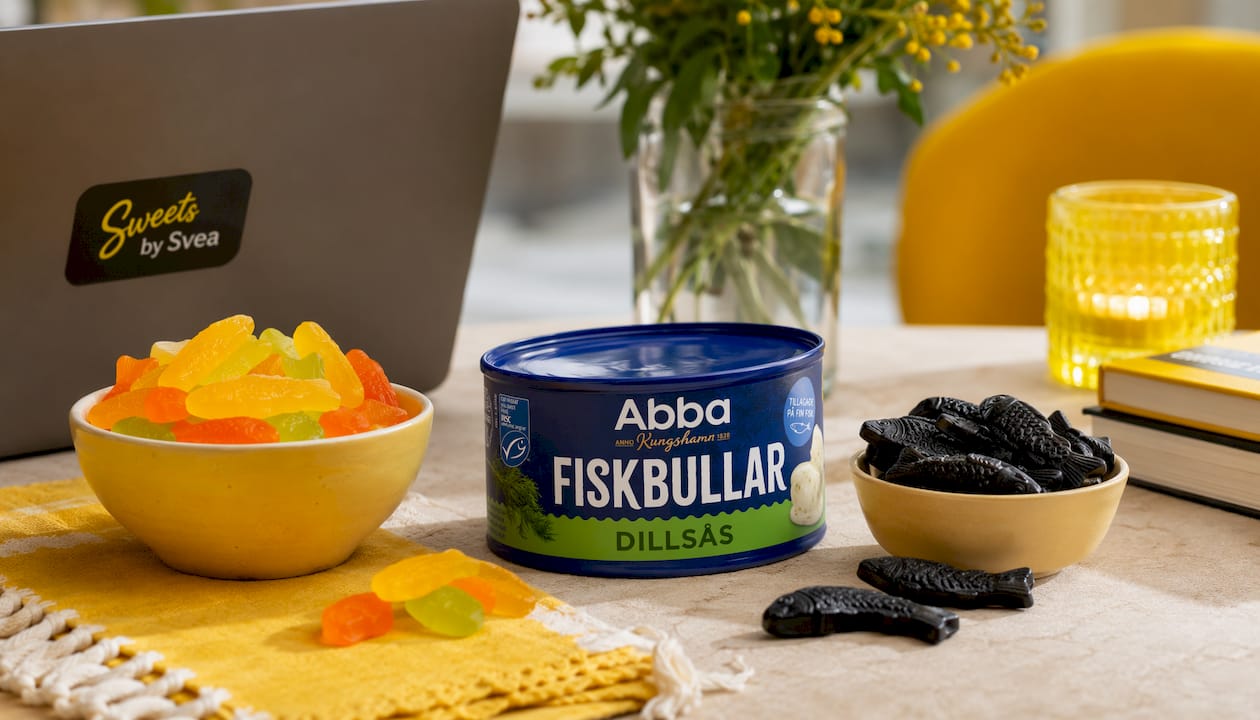
Sweetsbysvea is the direct route to genuine Swedish candy in the U.S. Every product ships with full ingredient transparency, EU-compliant labeling, and country-of-origin details on the product page. No guessing whether what you’re ordering is actually from Sweden.
The range covers fish-shaped candy, classic Swedish licorice, chocolate bars from brands like Marabou and Cloetta, and Swedish grocery staples. Thousands of customers order regularly, including Swedish expats who know exactly what authentic tastes like. Express delivery runs 1–3 days. Browse the full selection and check product pages for ingredient lists and origin details at Sweetsbysvea.
Useful sources
The following sources were used to research and verify the claims in this article:
- Swedish Fish — Wikipedia: Covers origin, ownership history, ingredient differences (including white mineral oil), and the Swedish pastellfiskar product family.
- Are Swedish Fish From Sweden? The Surprising Truth — Eat Healthy 365: Reports current production locations (Hamilton, Ontario; Turkey), Mondelēz’s role, and Malaco’s continued Swedish distribution.
- Are Swedish Fish Candy Actually Swedish? — Tasting Table: Addresses the lingonberry flavor myth and explains authenticity signals for consumers.
- A Brief History of Swedish Fish — Mental Floss: Explains the starch jelly/wine gum classification and vegetarian status.
- Are Swedish Fish Really Swedish? — Mic: Historical reporting on production volumes and U.S. market growth during the Cadbury distribution era.
For the most current ingredient information, always check the label on the specific bag you’re buying. Formulations can change, and the product page on any reputable importer’s site should list current ingredients and country of origin.