

A cloudberry is a wild Arctic fruit, Rubus chamaemorus, in the rose family (Rosaceae), that produces small amber-colored berries prized across Scandinavia for their tart, honeyed flavor. It grows in bogs and tundra from Norway to Alaska, ripens briefly in late summer, and rarely appears fresh outside its native range. For most Americans, the best way to experience it is through imported jams, frozen berries, or specialty preserves.
Here is what makes cloudberries worth knowing:
- Botanical identity: Herbaceous perennial, 10–25 cm tall, with white five-petaled flowers and aggregate drupelets similar in structure to a raspberry
- Flavor: Tangy and tart when underripe, shifting to a honeyed, apricot-like sweetness at full ripeness
- Habitat: Circumpolar Arctic and subarctic bogs, including parts of Alaska
- Culinary role: Jams, raw-stirred preserves, liqueurs, and a classic pairing with Finnish bread cheese (leipäjuusto)
- U.S. availability: Primarily imported frozen berries, jams, and specialty preserves
Table of Contents
- What is a cloudberry, botanically speaking?
- How do you identify ripe cloudberries, and what do they taste like?
- What are the nutritional benefits of cloudberries?
- How are cloudberries used in cooking?
- Where can you buy cloudberries in the United States?
- How should you store and preserve cloudberries at home?
- Foraging ethics and safety notes
- Key Takeaways
- The cloudberry deserves more attention than it gets
- Authentic Nordic specialties, delivered to your door
- Useful sources and further reading
What is a cloudberry, botanically speaking?
Cloudberry (Rubus chamaemorus) is a low-growing herbaceous perennial that spreads by underground rhizomes, sometimes extending 10 meters or more. The plant stands just 10–25 centimeters high, with one to three palmate leaves per stem and a single white flower per plant. Each flower produces one aggregate fruit made up of five to twenty-five drupelets.
One trait sets cloudberries apart from most other Rubus species: they are dioecious. Female and male plants are separate, so fruiting depends entirely on cross-pollination. A patch of all-female plants produces nothing. That biological quirk, combined with a narrow growing window and remote habitat, is a big part of why the berry is so scarce.
Cloudberries grow almost exclusively in circumpolar regions and are known by regional common names including bakeapple, aqpik, and lowbush salmonberry — prized in Scandinavia, Russia, Canada, and Alaska.
In the United States, wild cloudberries occur mainly in Alaska’s tundra and boreal wetlands. The plant thrives in sphagnum bogs, mossy heathlands, and open subarctic forest. Commercial cultivation remains uncommon because the plant’s pollination requirements and habitat specificity make large-scale farming impractical.
How do you identify ripe cloudberries, and what do they taste like?
Color is the clearest ripeness signal. Unripe berries start out pale red, then shift to a rosy-peach tone before reaching the golden amber of full ripeness. At that amber stage, the skin turns slightly translucent and the berry feels soft to the touch. Size-wise, they are roughly raspberry-sized, though the drupelet clusters are looser and the fruit tends to be juicier.
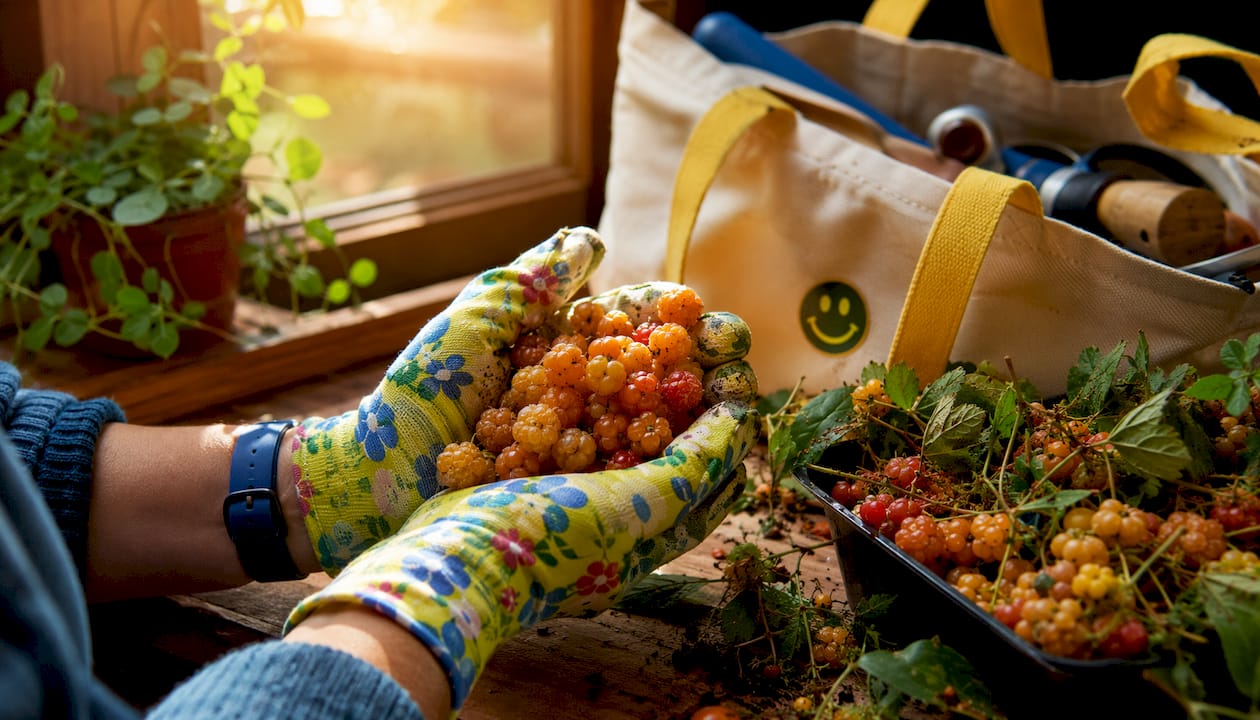
The flavor arc is what makes cloudberries memorable. Early in ripening, the taste is sharply tart with a citrus-like bite. Fully ripe, that tartness softens into something closer to apricot jam with a faint floral note and a creamy, almost buttery undertone. Think of a cross between a raspberry and a ripe apricot, with more complexity than either.
Texture is delicate. The skin bruises easily, and fresh cloudberries have a short shelf life once picked. That fragility is why you almost never see them fresh in a U.S. grocery store.
Pro Tip: If you ever handle fresh cloudberries, lay them in a single layer on a tray rather than piling them in a bowl. Even gentle pressure from stacking causes bruising within hours.
- Unripe: pale red, firm, very tart
- Mid-ripe: rosy-peach, softening, balanced
- Fully ripe: amber-gold, soft, honeyed and aromatic
- Overripe: very soft, almost liquid, intensely sweet but fragile
What are the nutritional benefits of cloudberries?
Cloudberries punch well above their weight nutritionally. According to NordGen, their vitamin C content is roughly three times that of an orange. Beyond vitamin C, the berry contains B vitamins, vitamin E, carotenoids, potassium, magnesium, zinc, and beneficial fatty acids.
The phytochemical profile is where research interest concentrates. Cloudberries contain ellagitannins and ellagic acid, compounds with antioxidant activity that laboratory studies suggest may help protect LDL cholesterol from oxidation. Separately, experimental models indicate that cloudberry supplementation may reduce metabolic inflammation in high-fat diet conditions, pointing to potential cardiovascular and metabolic benefits.
Researchers highlight the berry’s antioxidant profile and potential cardiovascular-protective mechanisms through reduced LDL oxidation — though these findings come from laboratory and experimental contexts, not clinical trials in humans.
That caveat matters. The research is promising, but eating cloudberry jam is not a treatment for any condition. Think of it as a nutrient-dense fruit with a more interesting phytochemical profile than most berries you can buy at a standard supermarket. Pair it with a balanced diet rather than treating it as a supplement.
How are cloudberries used in cooking?
Traditional Scandinavian cuisine built an entire repertoire around this berry. In Finland, cloudberries are the classic companion to leipäjuusto (Finnish bread cheese), where the berry’s tartness cuts through the mild, squeaky cheese perfectly. In Norway, multekrem combines cloudberries with whipped cream and sugar into a simple dessert that shows up at holiday tables. Swedish cooks use them as a topping for waffles, pancakes, and ice cream, and the berry also appears in lakkalikööri, a Finnish cloudberry liqueur.

For everyday use, cloudberry jam, marmalade, and raw-stirred preserves are the most practical formats. Raw-stirred jam skips the cooking step entirely: berries are mashed with sugar and stored cold, which preserves the fresh flavor and heat-sensitive nutrients far better than cooked jam. Cooked jam and marmalade work well too, though the flavor shifts slightly toward something more caramelized.
Pro Tip: When making jam or marmalade, run the cooked berries through a fine-mesh sieve or food mill. Cloudberry seeds toughen during cooking and can make the texture gritty — straining takes two minutes and makes a noticeable difference.
For U.S. cooks working with imported preserves, the simplest moves are:
- Spoon cloudberry jam over vanilla ice cream or Greek yogurt
- Serve alongside a cheese board with mild, creamy cheeses
- Stir into vinaigrette for a tart fruit dressing on salads with game meat or duck
- Use as a filling for thumbprint cookies or Swedish-style pastries
- Pair with Nordic dark chocolate for a simple dessert board
Where can you buy cloudberries in the United States?
Fresh cloudberries are nearly impossible to find outside Alaska. The harvest window is short, the berries bruise easily in transit, and commercial cultivation is minimal. Even in Alaska, fresh berries are a local seasonal event rather than a retail product. Cloudberries are scarce and expensive because they grow in remote habitats and must be harvested by hand.
For most U.S. buyers, these are the realistic options:
- Frozen berries: Occasionally available through Scandinavian specialty importers and some online retailers; best for cooking and smoothies
- Imported jams and preserves: The most widely available format; look for products from Norway, Sweden, or Finland at Scandinavian specialty shops or online
- Cloudberry liqueur: Lakkalikööri appears at well-stocked liquor stores and online retailers with Nordic spirits
- Specialty online retailers: The most consistent source for U.S. buyers seeking authentic Nordic preserves year-round
When buying frozen berries, look for individually quick-frozen (IQF) packaging, which keeps the drupelets separate and prevents clumping. For jams, seedless or strained versions are worth the slight premium if you prefer smooth texture.
How should you store and preserve cloudberries at home?
Fresh cloudberries need immediate attention. Because the skin is thin and the flesh is soft, they bruise and ferment quickly at room temperature. Refrigerate them in a single layer as soon as possible and plan to process them within a day or two.
For longer storage, two methods work well:
- Raw-stirred with sugar: Mash berries with sugar (roughly equal parts by weight), pack into sterilized jars, and refrigerate. The berry’s naturally high benzoic acid content acts as a mild preservative, extending refrigerator life considerably compared to other soft fruits.
- Single-layer freezing: Spread berries on a parchment-lined tray, freeze solid, then transfer to airtight bags. Frozen whole berries keep their texture better than berries frozen in a pile.
Cooked jams and marmalade, properly sealed in sterilized jars, last up to a year in a cool pantry. Raw-stirred preserves keep for several months refrigerated. Always label jars with the date.
Pro Tip: Frozen cloudberries thaw quickly and release liquid fast. Thaw them in a sieve over a bowl so you can capture the juice separately — it makes an excellent sauce base or cocktail mixer.
Foraging ethics and safety notes
Wild cloudberry patches are a shared resource, and overharvesting a single location can deplete it for years. If you forage in Alaska or encounter cloudberries on a trip to Scandinavia or Canada, take only what you will use, leave plenty of berries for wildlife and other foragers, and always confirm you are on public land or have the landowner’s permission.
Because cloudberries are not widely cultivated, wild harvest pressure is the primary supply mechanism. Buying from reputable importers who source sustainably is a meaningful choice.
On the safety side, cloudberries are a food with a long history of safe consumption. That said, any new fruit can trigger a reaction in sensitive individuals. If you have known allergies to other Rubus fruits (raspberries, blackberries), introduce cloudberries cautiously and consult a clinician if you experience any unusual reaction.
Key Takeaways
Cloudberry (Rubus chamaemorus) is a rare Arctic berry with a tart-to-honeyed flavor, exceptional vitamin C content, and a strong tradition in Nordic cuisine — most accessible to U.S. buyers as imported jams or frozen berries.
| Point | Details |
|---|---|
| What it is | A wild Arctic perennial (Rubus chamaemorus, Rosaceae) producing amber aggregate fruit, 10–25 cm tall. |
| Flavor profile | Tart and citrusy when underripe; honeyed and apricot-like at full amber ripeness. |
| Best U.S. buying option | Imported frozen berries or jams from Nordic specialty retailers are the most practical choice. |
| Top preservation method | Raw-stirred with sugar or single-layer freezing; strain seeds for smooth jam texture. |
| Health note | Rich in vitamin C and ellagitannins with promising antioxidant research — a nutrient-dense fruit, not a cure-all. |
| Where to find Nordic specialties | Sweetsbysvea carries authentic Nordic food products with fast delivery for U.S. buyers. |
The cloudberry deserves more attention than it gets
Most Americans have never tasted a cloudberry, and that is a genuine gap. Not because it is exotic for its own sake, but because the flavor is genuinely unlike anything else in the berry world. That tart-to-honeyed shift as the fruit ripens, the faint apricot note, the creamy finish — it is the kind of thing that makes you understand why Nordic cooks have built entire dessert traditions around it.
What gets underestimated is how well cloudberry preserves translate to an American kitchen without any special knowledge. A jar of cloudberry jam on a cheese board, spooned over vanilla ice cream, or stirred into a pan sauce for duck or pork works immediately. You do not need to understand the botany or the foraging tradition to appreciate the flavor. The cultural context is interesting, but the taste is the real argument.
The rarity and price can feel like a barrier, but imported preserves are far more affordable than fresh berries and deliver most of the flavor. For anyone curious about Nordic food culture, cloudberry is the single best entry point.
Authentic Nordic specialties, delivered to your door
If cloudberries have you curious about Nordic flavors, Sweetsbysvea is the most direct route to authentic Swedish and Scandinavian food products without a trip to a specialty import store. The shop carries a curated range of Nordic specialties, from preserved fruits to traditional Swedish sweets, all sourced for quality and shipped with 1–3 day delivery to keep everything fresh.
No GMOs, no high fructose corn syrup, and no compromises on authenticity. Whether you are a Swedish expat missing familiar flavors or simply someone who wants to explore what Nordic food actually tastes like, Sweetsbysvea has the range to get you started. Browse the full shop and find your next favorite Nordic flavor today.
Useful sources and further reading
A few of the most authoritative references used in this article, for readers who want to go deeper:
“Cloudberry is a circumpolar boreal plant which can be naturally found throughout the northern hemisphere. The berries are very appreciated and considered a delicacy. They are packed with vitamin C.” — NordGen Plant Portraits
- Cloudberry (Rubus chamaemorus) — NordGen: Botanical overview, vitamin C data, and traditional uses across Nordic countries
- Rubus chamaemorus — Wikipedia: Detailed botanical description, dioecious reproduction, and geographic distribution
- University of Alaska Fairbanks Cooperative Extension — Cloudberries: Practical handling, preservation, and Alaska-specific sourcing notes
- Martat — Cloudberry: Finnish culinary authority on traditional pairings and raw-stirred preparation
- Nutrition Advance — What are cloudberries?: Summary of ellagitannins, ellagic acid, and antioxidant research
- PMC — Cloudberry effects on metabolic inflammation: Peer-reviewed experimental research on cloudberry supplementation and metabolic health