
Lingonberry jam is a tart, bright-red fruit preserve made from Vaccinium vitis-idaea, a small wild berry native to Scandinavian forests, and it’s the condiment that makes Swedish meatballs complete. The flavor starts sharp and slightly astringent, but sugar transforms it into something genuinely complex: tart-sweet, a little tangy, with a clean finish that cuts through rich, fatty dishes better than most condiments can. At Sweetsbysvea, it’s one of the most requested Swedish pantry staples shipped worldwide.
Quick snapshot of what you’ll find it on:
- Swedish meatballs with mashed potatoes and gravy
- Pancakes and porridge
- Aged cheese and charcuterie boards
- Roasted game, sausages, and black pudding
- Toast, yogurt, and oatmeal
Table of Contents
- What is lingonberry jam made of?
- How do you make lingonberry jam at home?
- How is lingonberry jam used in Scandinavian cooking?
- How does lingonberry jam compare to cranberry jam?
- Is lingonberry jam healthy?
- Where can you buy lingonberry jam in the United States?
- Key Takeaways
- Why lingonberry jam deserves more than a meatball cameo
- Authentic Swedish lingonberry jam, shipped to your door
- Useful sources
What is lingonberry jam made of?
The berry itself, Vaccinium vitis-idaea, is a botanical cousin of the cranberry. Both belong to the Ericaceae family, but lingonberries are smaller, softer, and more acidic than cranberries, and they have a thinner skin. Red currants are another frequent comparison, though lingonberries carry more tannin-like bite and a distinctly wilder flavor.
Core ingredients in a jar of lingonberry jam are simple: berries and sugar. That’s it in the best versions. Some commercial jars add water, apple pulp (a common cost-cutting dilution), lemon juice for brightness, or added pectin to speed up the set.
A few things worth knowing about composition:
- Benzoic acid: Lingonberries contain this compound naturally. It acts as a preservative, which is why traditional preparations stay stable in the refrigerator for months without artificial additives.
- Pectin levels: Lingonberries are relatively low in natural pectin compared to apples or quince, so cooked jams sometimes need longer simmering or added lemon to achieve a firm set.
- Label reading tip: On U.S. store shelves, look for the Swedish word lingonsylt and check the berry percentage. A jar listing apple as a second or third ingredient is diluted. Aim for 50% berry content or higher for authentic flavor.
How do you make lingonberry jam at home?
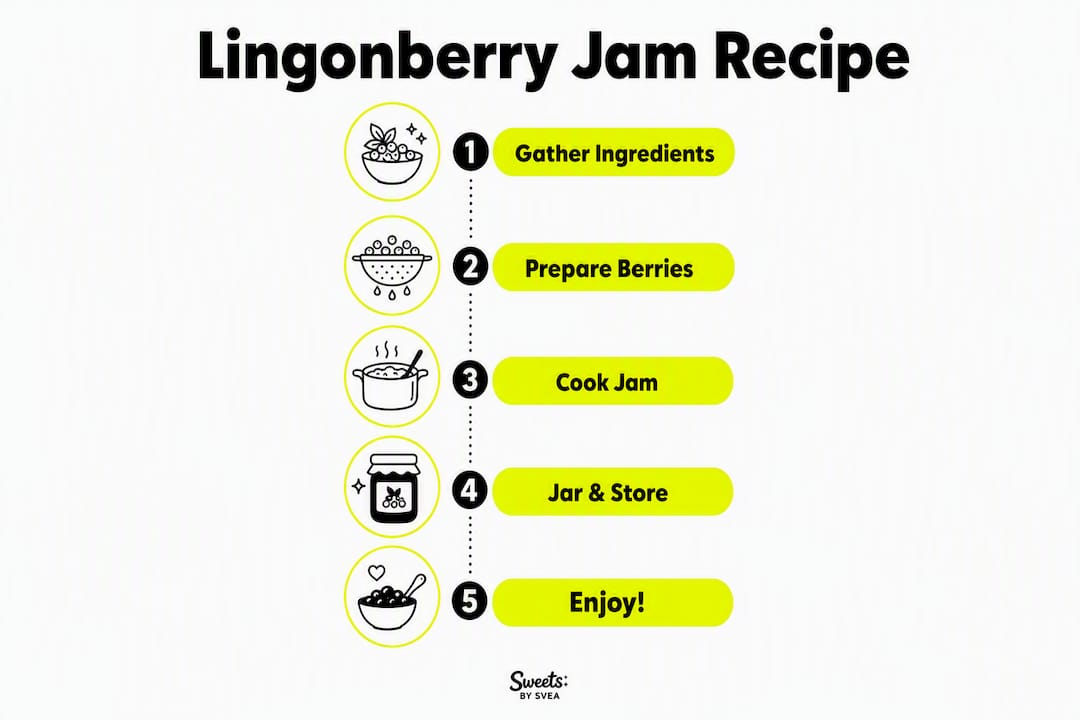
Two methods dominate home kitchens: a cooked jam and rårörda (raw-stirred). The cooked version is shelf-stable if canned properly; rårörda stays in the fridge and preserves a fresher, brighter berry taste that many Scandinavian cooks prefer for everyday use.
Cooked jam method
- Rinse 2 cups (about 250g) of fresh or thawed frozen lingonberries.
- Combine with 1 cup (200g) of sugar in a heavy saucepan.
- Bring to a boil over medium heat, stirring to dissolve the sugar.
- Reduce heat and simmer until thickened, skimming foam as needed.
- Add a squeeze of lemon juice in the last 5 minutes to brighten flavor and help the set.
- Pour into a clean jar, cool to room temperature, then refrigerate. Use within 3–4 weeks, or follow standard water-bath canning guidelines for shelf-stable storage.
Rårörda (raw-stirred) method
- Measure roughly three parts fresh lingonberries to one part sugar by volume (adjust to taste).
- Stir together in a bowl until the sugar fully dissolves and the berries release their juice.
- Transfer to a clean jar and refrigerate immediately. It keeps for several weeks and the flavor stays noticeably fresher than cooked versions.
Pro Tip: If you can source lingonberries after the first autumn frost, use them. Cold temperatures reduce bitterness and boost natural sweetness, which means you can dial back the sugar without losing balance.
Lingonberries are lower in natural pectin than apples, so if your cooked jam looks thin after cooling, simmer it longer or stir in a teaspoon of lemon zest. Added commercial pectin works too, though it changes the texture slightly toward a firmer gel.
How is lingonberry jam used in Scandinavian cooking?
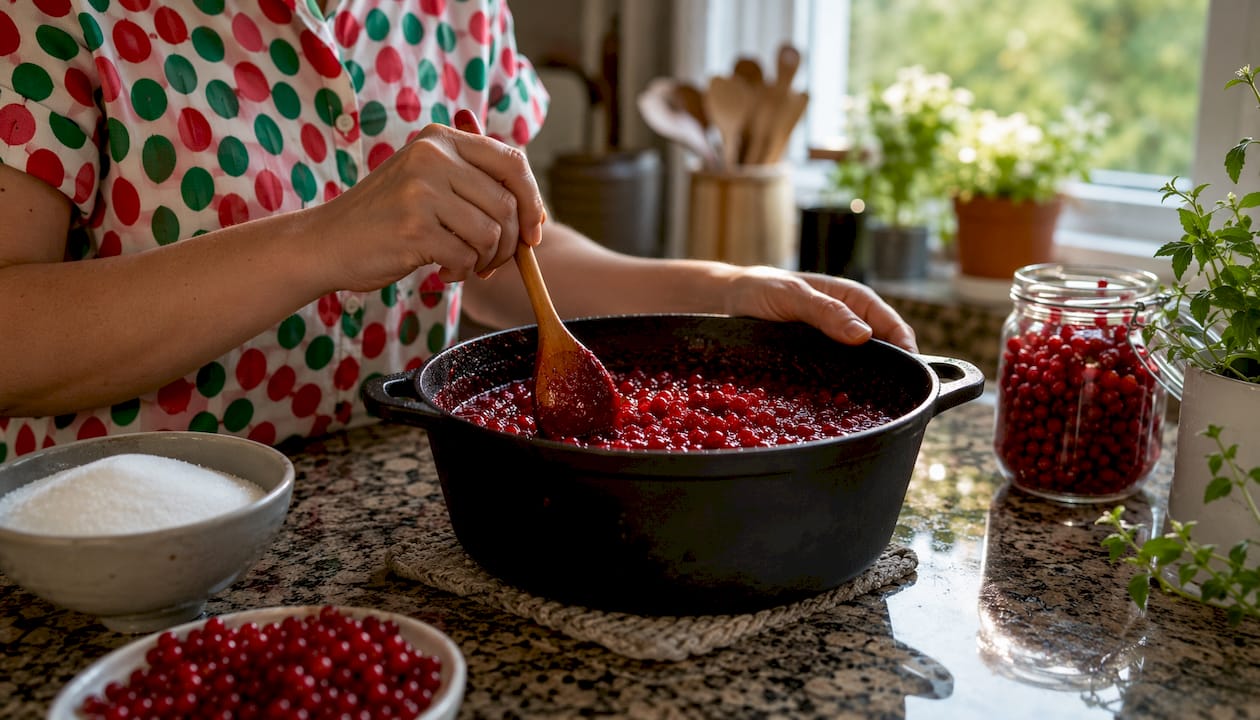
In Sweden, lingonberry jam isn’t a condiment you pull out for special occasions. It sits on the table the way ketchup does in an American diner. TasteAtlas documents it as a household staple, served alongside meat dishes and pancakes as a matter of course.
The acidity and tannin-like quality are the whole point. Lingonberry jam cuts through fatty, rich dishes in a way that a sweeter preserve simply can’t. That’s why it works so well with:
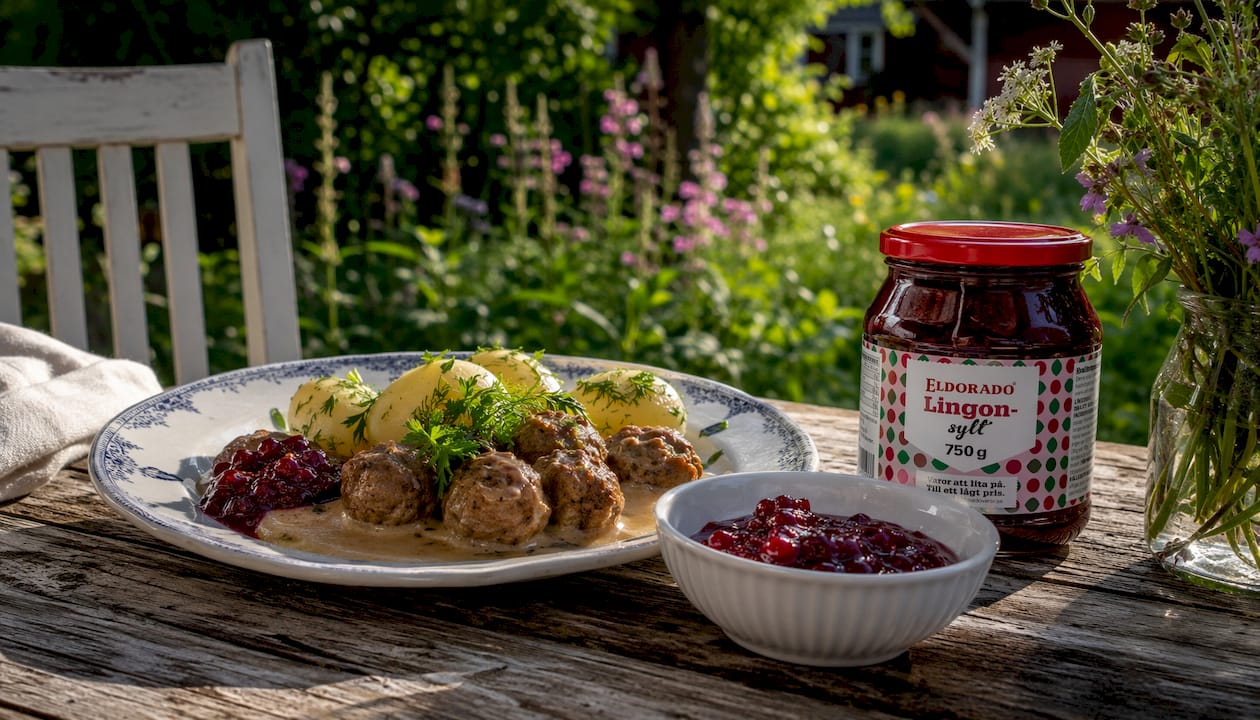
- Swedish meatballs with gravy and boiled or mashed potatoes
- Game meats like reindeer and elk steak, where the tartness balances the iron-rich flavor
- Black pudding and sausages, a classic pairing in Finland and Sweden
- Savory pancakes and potato fritters
- Porridge as a sweet-tart topping
- Aged hard cheeses on a board
In the U.S., the most common first encounter is at IKEA, where it appears alongside the famous meatball plate. Specialty Scandinavian markets and import shops carry it too. At home, it works as a sauce base for pork tenderloin, a glaze for roasted duck, or simply spread on sourdough toast.
How does lingonberry jam compare to cranberry jam?
Lingonberry and cranberry are related, but they’re not interchangeable in a recipe.
| Feature | Lingonberry jam | Cranberry jam | Red currant jelly |
|---|---|---|---|
| Flavor | Tart, slightly astringent, complex | Tart, bold, slightly bitter | Sharp, bright, less earthy |
| Texture | Soft-set, slightly chunky | Firmer, more gel-like | Smooth, clear gel |
| Best uses | Meatballs, game, pancakes, cheese | Turkey, pork, baked goods | Lamb, glazes, pastries |
| Sweetness level | Moderate | Moderate to high | High |
Substitution tips:
- Cranberry sauce works as the closest swap. Reduce the sugar slightly and add a small squeeze of lemon to mimic lingonberry’s sharper edge.
- Red currant jelly is a good match for savory pairings, especially with game or lamb, though it’s sweeter and less earthy.
- A homemade tart berry compote (mixed frozen berries, minimal sugar, lemon juice) gets you close if neither is available.
When buying a substitute, check the fruit percentage on the label. A heavily sweetened cranberry sauce won’t replicate the clean tartness that makes lingonberry jam so useful with rich food.
Is lingonberry jam healthy?
Lingonberries themselves are genuinely nutritious. Medical News Today reports they’re rich in antioxidants and may support heart and gut health. The jam form, though, adds significant sugar, so the health picture is more nuanced.
Key nutritional points:
- Antioxidants: Lingonberries are high in polyphenols, including anthocyanins, which give the berries their red color.
- Vitamin E and fiber: Present in the berries, though cooking reduces some heat-sensitive nutrients.
- Sugar content: A standard serving of commercial jam carries meaningful added sugar. That’s the main caveat for health-conscious readers.
Practical guidance: treat lingonberry jam as a condiment, not a side dish. A tablespoon alongside meatballs adds flavor without a large sugar load. For a lower-sugar version, the rårørda method lets you control the ratio, and some home cooks use as little as half the sugar of a standard cooked recipe.
Where can you buy lingonberry jam in the United States?
Authentic jars aren’t hard to find if you know where to look. Common sources:
- IKEA food markets (in-store and online) carry their own house brand
- Specialty Scandinavian and European import shops
- Online retailers including Sweetsbysvea, which ships authentic Swedish jars worldwide
- Some farmers’ markets in areas with Scandinavian heritage communities
When buying, look for lingonsylt on the label and a berry percentage of 50% or higher. Jars that list apple or apple juice early in the ingredient list are diluted products. Size matters too: 750g jars are the standard household size in Sweden, while 1.5kg jars make sense if you cook with it regularly.
If lingonberry jam isn’t available, frozen lingonberries are the best substitute base for a homemade batch. They’re sold at some specialty grocers and online, and they work equally well in both the cooked and raw-stirred methods.
Two small-batch recipes to try
Cooked lingonberry jam (small batch)
Ingredients: 2 cups lingonberries, 1 cup sugar, 1 tsp lemon juice
- Combine berries and sugar in a saucepan over medium heat.
- Stir until sugar dissolves, then bring to a boil.
- Simmer 15–20 minutes until thickened, stirring occasionally.
- Add lemon juice, stir, and remove from heat.
- Cool and refrigerate. Keeps 3–4 weeks refrigerated.
For shelf-stable storage, process in sterilized jars using standard water-bath canning.
Rårörda (raw-stirred lingonberries)
Ingredients: 3 cups fresh lingonberries, 1 cup sugar
- Combine in a bowl and stir vigorously for 10–15 minutes.
- Let sit until sugar fully dissolves and berries release juice.
- Transfer to a clean jar and refrigerate immediately.
Keeps several weeks refrigerated. Flavor is noticeably fresher and brighter than cooked versions.
Pro Tip: To thicken cooked jam without commercial pectin, simmer longer and stir in a teaspoon of lemon zest. The natural pectin in the zest helps the jam set without changing the flavor.
Key Takeaways
Lingonberry jam is one of the simplest, most versatile preserves in Scandinavian cooking, and understanding the two main styles, cooked and raw-stirred, opens up a lot of options in the kitchen.
| Point | Details |
|---|---|
| What it is | A tart fruit preserve made from Vaccinium vitis-idaea berries and sugar, native to Scandinavian cuisine. |
| Flavor and use | Sharp, tart-sweet, and great at cutting rich dishes; pairs with meatballs, game, pancakes, and cheese. |
| Two home methods | Cooked jam (15–20 minute simmer) or raw-stirred rårörda (no heat, fresher flavor, refrigerate only). |
| Where to buy in the U.S. | IKEA, Scandinavian import shops, and online retailers like Sweetsbysvea; look for 50%+ berry content. |
| Health note | Rich in antioxidants but contains added sugar; use as a condiment in small portions for the best balance. |
Why lingonberry jam deserves more than a meatball cameo
Most Americans encounter lingonberry jam exactly once: at IKEA, in a small plastic cup next to the meatballs. That’s a fine introduction, but it undersells what the jam actually does. The reason it works so well with fatty, savory food isn’t nostalgia or tradition for its own sake. It’s the acidity and tannin structure of the berry, which genuinely cleanse the palate in a way that a sweeter preserve can’t replicate. Cranberry sauce is the obvious comparison, but lingonberry jam is sharper, less cloying, and more versatile across a meal.
The raw-stirred rårørda version is the one worth making at home first. It takes fifteen minutes, requires no cooking equipment beyond a bowl and a spoon, and the flavor is noticeably more alive than anything from a jar. Once you’ve tasted it fresh, the cooked version starts to feel like a compromise. Both have their place, but the rårørda is the one that shows you what the berry actually tastes like.
Authentic Swedish lingonberry jam, shipped to your door
If you want the real thing without hunting through specialty stores, Sweetsbysvea carries authentic Swedish jars ready to ship. The Eldorado Lingonsylt 750g is the standard household size, clean ingredient list, and exactly what you’d find in a Swedish kitchen. For higher berry content, the Garant Lingonsylt 50% Bär is labeled clearly with its fruit percentage. And if you cook with lingonberry jam regularly, the Eldorado 1.5kg jar is the better value.
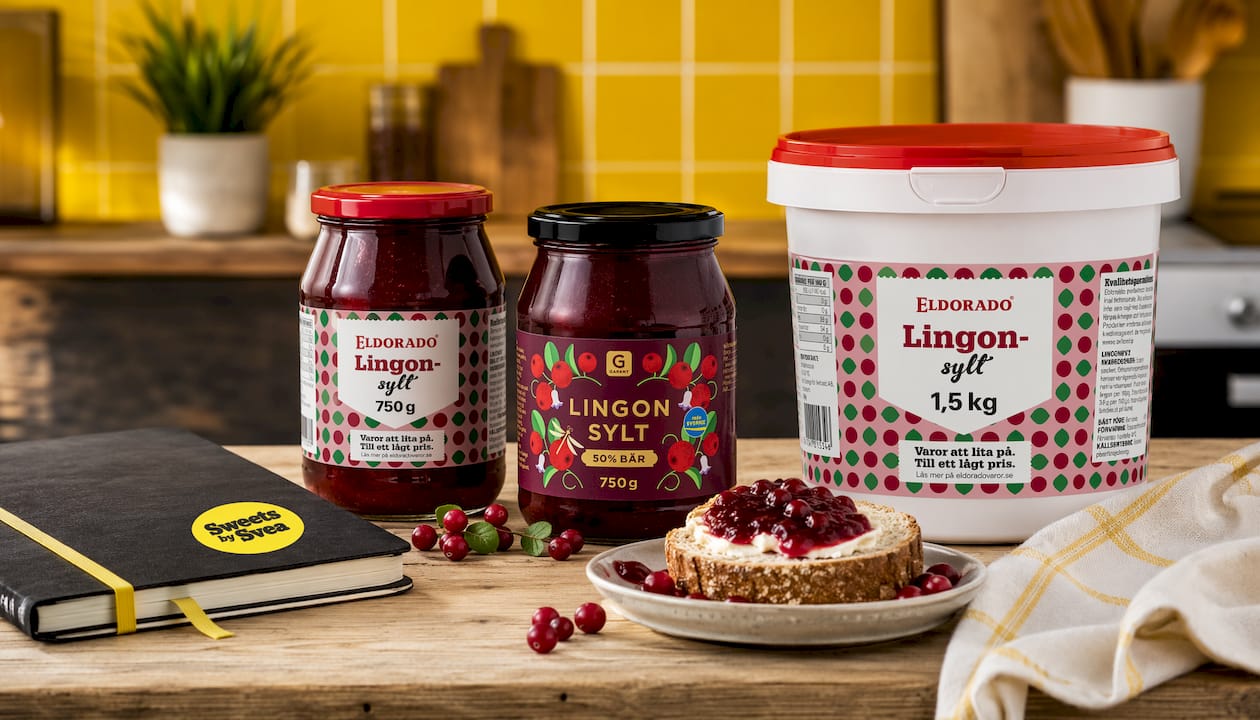
All orders ship with 1–3 day express delivery. Check the label for lingonsylt and a berry percentage of 50% or higher, and you’ll know you’re getting the authentic product. Browse the full range at Sweetsbysvea and order directly from the product pages above.
Useful sources
| Source | What it covers |
|---|---|
| Lingonberry jam — Wikipedia | Definition, ingredients, regional variations, and culinary pairings |
| Vaccinium vitis-idaea — Wikipedia | Botanical profile, traditional uses across Scandinavia and indigenous communities |
| Lingonberry Jam — TasteAtlas | Cultural context, Swedish household use, and pairing traditions |
| Lingonberries: Health benefits — Medical News Today | Antioxidant content, gut and heart health research, sugar cautions |
| What does lingonberry taste like? — Chef’s Resource | Flavor profile, cooking technique guidance, and texture notes |
| What is Lingonberry Jam? — WiseGEEK | Consumer-facing overview of uses, ingredients, and storage |
| Lingonberry Jam — Food Preserving | Home preserving guidance, serving suggestions, and recipe context |