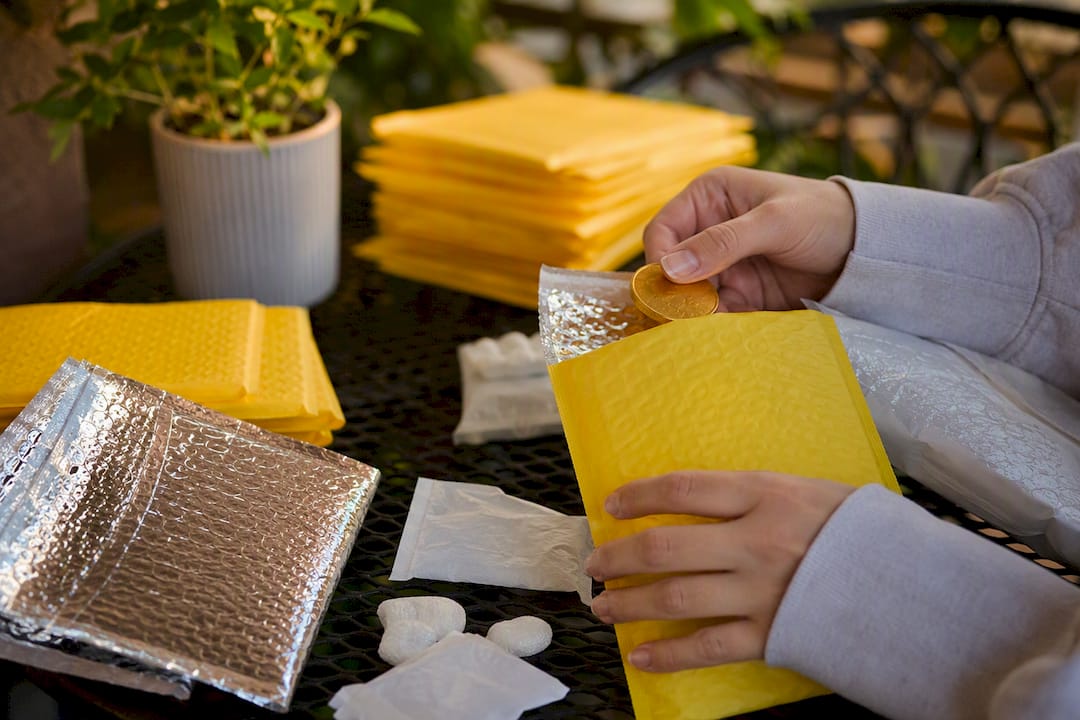

Cold packs work when you pair them with real insulation, expedited transit, and a coolant that matches your route. A conditioned gel pack wrapped inside a reflective liner, shipped overnight or two-day, keeps most chocolate intact through 48 hours in warm weather. Once destination highs push past roughly 90°F, or transit stretches beyond two days, hold the order or upgrade to temperature-controlled packaging instead of gambling on ice alone.
TL;DR:
- Gel packs are suitable for most domestic chocolate shipments up to 48 hours, but exceed that or face higher temperatures, PCM or temperature-controlled packaging are necessary.
- Larger gel packs outperform multiple small ones on identical routes due to better resistance to temperature change, especially for shipments over 24 hours or in warm climates.
- Proper packing sequence, including pre-cooling, reflective liners, individual bagged coolant, and careful placement, is crucial to prevent condensation and cold shock damage.
- Shipping timing should be aligned with weather forecasts, with priority on overnight or two-day services during warm months, and holding orders during extreme heat or delays beyond 48 hours.
- Premium truffles require rigid insulated shippers with thermal separators and moisture control to prevent surface spotting and preserve delicate textures during transit.
Table of Contents
- Which Cold Packs Work Best for Shipping Chocolate?
- How Do You Pack a Chocolate Shipment Step by Step?
- Which Carrier and Transit Time Should You Choose?
- What Extra Steps Do Truffles and Gift Boxes Need?
- How Sweets by Svea Helps You Ship Chocolate Safely
- Should You Ship Chocolate Now or Hold It for Later?
- What Regulations Apply to Shipping Perishable Chocolate?
- What Actually Matters Most When Shipping Chocolate
- Where to Buy Cold Chain Packaging for Your Chocolate Shipments
- Sources
Which Cold Packs Work Best for Shipping Chocolate?
Gel packs, phase-change material (PCM), and dry ice each solve a different problem, and picking the wrong one wastes money or, worse, arrives as soup.
Gel packs are the workhorse for most chocolate shipments. They’re reusable, ship without special handling, and cover routes up to multiple days when sized correctly. PCM packs hold a steadier temperature band for longer stretches and cost more, which makes sense for premium truffles or international lanes where a few extra degrees of stability justify the price. Dry ice belongs to a different category entirely. It’s for frozen shipments or transit windows beyond 48 hours where carrier rules permit it. It sublimates into carbon dioxide gas, so boxes need ventilation, and anyone packing it should wear gloves. Skip it for a routine domestic chocolate order; it’s overkill and adds regulatory complexity you don’t need.
Size matters more than most shippers assume. A single large gel pack thaws slower than three or four small ones covering the same weight, because mass resists temperature change more efficiently than surface area, which means larger single-mass packs outperform multiple smaller ones on identical routes. As a rough guide:
- Under 24 hours, mild climate: one medium gel pack per box
- 24 to 48 hours, warm climate: one large gel pack, or two positioned at opposite corners
- 48+ hours or extreme heat: PCM or temperature-controlled packaging rather than gel alone
Always bag gel packs in sealed plastic before placing them near product. Condensation from a thawing pack is just as damaging as heat, since a soggy label or a water-streaked box makes a gift look mishandled even when the chocolate inside is fine.
Pro Tip: Keep coolant on the outer perimeter of the box, never stacked directly against a chocolate bar or truffle tray. Direct contact creates cold spots that can cause surface blooming, that dusty white film that scares customers even though the chocolate is still safe to eat.
How Do You Pack a Chocolate Shipment Step by Step?
Good packing follows a sequence, not a checklist you tick randomly. Skip the order and you introduce condensation or cold shock before the box even leaves your workspace.
- Pre-cool everything together. Store your chocolate and your gel packs in the same cool room for several hours before packing. Sealing warm product into an insulated shipper alongside a frozen coolant creates a temperature gradient that causes condensation on the inside of the box, and that moisture is what actually damages chocolate in transit more often than heat itself.
- Line the inner box with a reflective liner. A metalized or foil-faced thermal liner reflects radiant heat and, combined with a small air gap between the liner and the outer carton, meaningfully extends how long the interior stays cool.
- Wrap and place the coolant. Bag each gel pack individually, then position them around the box perimeter, plus one on top and one on the bottom if the shipment is going more than 24 hours. Never let a pack touch the product directly.
- Add support and moisture control. Use snug inner dividers so bars or boxes don’t shift, void fill that won’t crush a presentation ribbon or gift wrap, and an absorbent pad at the bottom to catch any stray condensation.
- Seal, label, and ship early in the week. Tape every outer seam tightly, since removing trapped air and sealing seams measurably improves thermal hold time. Mark the box “Perishable, Keep Cool,” and choose overnight or two-day service. Tuck a short note inside telling the recipient to refrigerate immediately if the chocolate feels soft on arrival.
The reasoning behind this order isn’t arbitrary. Packaging should be chosen route backward, meaning you decide how the chocolate needs to arrive and how long it will travel, then work backward to pick insulation and coolant that actually satisfy those conditions. Guessing at materials first and hoping they hold is how melted-order refunds happen.
Which Carrier and Transit Time Should You Choose?
Speed matters more than almost any other variable in warm-weather chocolate shipping. Chocolate should stay below roughly 18 to 20°C, or 64 to 68°F, and milk and white chocolate soften at even lower temperatures than dark, so a slow ground service in July is asking for trouble no matter how good your packout is.
A few operational rules keep this simple:
- Use overnight or two-day service for anything shipped between late spring and early fall.
- Cap transit at 48 hours wherever possible; beyond that, switch to a carrier offering true temperature-controlled logistics.
- Ship Monday through Wednesday so packages don’t sit in a warm depot over a weekend.
- Require signature confirmation on high-value orders so boxes aren’t left baking on a porch.
- Include tracking information and simple storage instructions with every shipment.
When a destination’s forecast high sits near or above 90°F, treat that route as a point of no return and hold the order rather than risk it. For premium items, the math usually favors paying more for speed. Reshipping a melted order costs more in reputation than the extra few dollars for overnight service ever would, especially for a small chocolatier where every review counts.
What Extra Steps Do Truffles and Gift Boxes Need?
Truffles and other filled chocolates are far less forgiving than a solid bar. Their surfaces mark easily, their fillings can separate or weep in heat, and condensation shows up as visible spotting on a ganache shell in a way it never would on a candy bar wrapper. That fragility is exactly why truffle shipments tolerate shorter routes than bars do, and why the packout needs to change.
For premium truffle boxes, upgrade to a rigid insulated shipper rather than a standard corrugated box with a liner dropped in. Coolant belongs strictly on the perimeter, never touching the tray, with thermal separators creating a buffer zone between ice and product. Direct coolant contact causes cold spots and can damage delicate surfaces, so tray inserts and low-pressure cushioning matter as much as temperature control. A moisture-control layer under the tray catches condensation before it reaches the presentation.
Pro Tip: Before scaling any new truffle SKU, run a live packout with your actual production boxes on your most common shipping route and, if the order size justifies it, validate the result with a data logger. It’s the only way to catch a packaging failure before a customer does.
How Sweets by Svea Helps You Ship Chocolate Safely
Sweetsbysvea built two solutions around exactly this problem. Shipping Protection covers single gifts and standard orders, giving buyers peace of mind that a melted or damaged shipment gets made right. Temperature-Controlled Packaging is built for premium truffles, larger orders, and international lanes where transit time or climate risk is higher.

A small gift box of bars pairs well with standard protection and expedited shipping, much like in delicate arrangements such as a candy bouquet where careful packaging and shipping are essential. A shipment of premium filled chocolates crossing borders, or heading somewhere hot, calls for the temperature-controlled option. Both back Sweetsbysvea’s promise of fast worldwide delivery and ingredients free from GMOs, parabens, and high fructose corn syrup, the same standards that have earned trust from thousands of customers ordering Swedish treats far from home.

Should You Ship Chocolate Now or Hold It for Later?
Not every order needs to leave your workspace today. If a customer’s local forecast shows a heat wave, or if you’re between overnight carrier pickup windows, holding a completed order in cold storage for a day or two is almost always safer than sending it into a bad transit window.
Long-term storage and shipping timing solve different problems, and mixing them up costs money. Chocolate stores well for weeks in a controlled environment around 60 to 68°F with stable humidity, away from strong odors it can absorb. Shipping, by contrast, is a race against a much narrower window, often just 24 to 48 hours, where temperature swings inside a moving vehicle or sorting facility are the real threat.
The practical rule: ship immediately when your route forecast is favorable and transit fits within your coolant’s protection window. Hold the order when the destination is forecasting extreme heat, when a carrier delay would push transit past 48 hours, or when a weekend sits between your ship date and delivery. A short delay with a clear note to the customer, explaining you’re protecting their order from summer heat, almost always lands better than a melted box and a refund request.
This is also where batching helps small operations. If you’re holding several orders for the same regional heat wave, shipping them together once temperatures ease reduces the number of times you’re paying for expedited service under marginal conditions. It’s a small operational habit, but it adds up over a season.
What Regulations Apply to Shipping Perishable Chocolate?
Shipping chocolate across borders or state lines involves more than picking a box size. Perishable food shipments generally require accurate ingredient labeling, allergen disclosure, and, for international orders, compliance with the destination country’s food import rules, which vary widely and change without much notice.
At minimum, every shipment should carry a label listing ingredients and known allergens, since chocolate frequently contains or contacts milk, soy, nuts, and gluten. Country-of-origin marking is required for many international shipments, and some destinations restrict or tax confectionery imports above certain quantities. Because these rules differ by country and even by product category within a country, a small business shipping internationally should check the destination’s customs and food safety authority directly rather than relying on general shipping advice.
Domestic shippers face lighter but still real requirements. Perishable goods often need a “Perishable” designation on the shipping label, and some carriers require specific packaging certifications for food items shipped with dry ice due to its classification as a hazardous material in transit. If your business ships dry ice regularly, confirm your carrier’s current hazmat documentation requirements before your next shipment, since these get updated periodically and a missing form can delay an entire batch of orders.
What Actually Matters Most When Shipping Chocolate
Most advice on this topic starts with the coolant, gel packs versus dry ice, this pack versus that one, as if the ice is the hard part. It isn’t. The hard part is defining what “arrived in good condition” actually means for your specific product and route, then building backward from there. A bar of dark chocolate shipping overnight in October has almost nothing in common with a tray of milk truffles crossing two time zones in July, yet plenty of packing guides treat them the same.
The overrated fix is throwing more ice at the problem. The underrated fix is sequencing: pre-cooling everything in the same room, sealing seams properly, and testing your actual production packout on your actual worst route before you scale. Skip that testing step and you find out about a design flaw from an angry customer instead of a data logger.
If you want a system that’s already been engineered around this logic, Sweetsbysvea’s protection and temperature-controlled options exist precisely so smaller operations don’t have to reinvent route-backward packaging from scratch.
— Sweets
Where to Buy Cold Chain Packaging for Your Chocolate Shipments
If you’ve read this far, you already know the packout matters as much as the chocolate itself. Sweetsbysvea sells the two tools built to solve exactly what this guide covers: Shipping Protection for standard gift orders and single boxes, and Temperature-Controlled Packaging for premium truffles, bulk orders, and international lanes where transit risk runs higher.
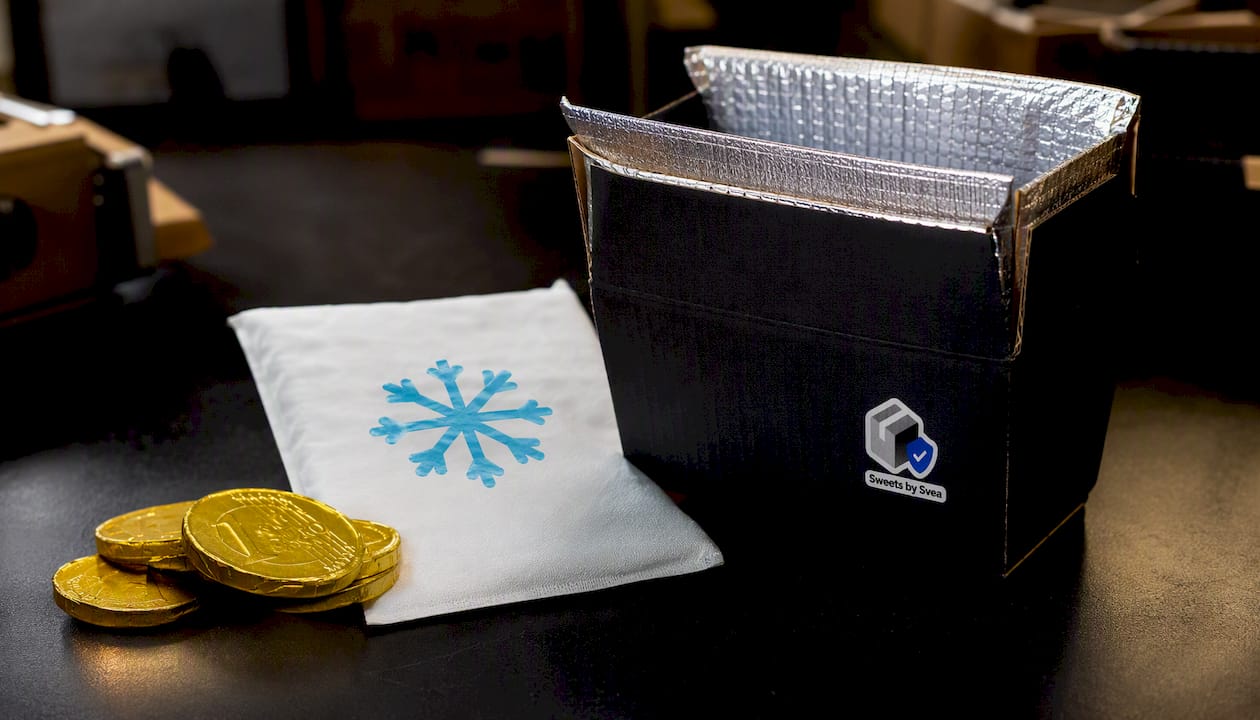
Both options plug directly into checkout, no separate account or contract required. If you’re outfitting a gift order around a specific product, pair either option with something like the Marabou Caramello bar or a box of Côte d’Or pralines to see how the packaging scales for delicate items. For a custom packout on a larger or recurring order, reach out through the site to discuss expedited shipping before your next warm-weather batch goes out.
Sources
- Chocolate shipping packaging cold guide: Practical packaging guide for buyers
- Tip #296: Shipping Chocolate in the Summer is Possible! Here’s How!
- How to prevent chocolate from melting during shipping