
Licorice doesn’t “expire” in the way milk or meat does. It gets hard, dry, and less chewy long before it becomes unsafe to eat, and the sugar content that gives it that long shelf life also keeps most spoilage microbes from taking hold. Room temperature storage typically preserves best quality for 6 to 8 months, with the freezer stretching that further. Toss it only if you see mold, catch a sour or musty smell, or notice a slimy texture.
TL;DR:
- Licorice stored at room temperature remains in peak condition for six to eight months, with freezing extending its quality up to one year.
- Soft licorice loses its chewability faster than harder types once opened, but both can be kept fresh with airtight resealing and proper storage.
- True spoilage is rare due to high sugar content; most signs of “expiration” are just staling manifested by hardening and texture loss.
- Signs of actual spoilage include mold, sour odors, sliminess, and discoloration, which require discarding the candy immediately.
- Proper storage after opening, such as sealing tightly and avoiding heat or humidity, can significantly delay staling and preserve freshness long-term.
Table of Contents
- How Long Does Licorice Last in Storage?
- Does Licorice Go Bad, or Just Go Stale?
- How to Store Licorice So It Stays Fresh
- How to Soften Stale or Hardened Licorice
- Why Freshness Starts Before the Candy Ever Reaches You
- Where to Buy Fresh Licorice That’s Built to Last
- Sources
- FAQ
How Long Does Licorice Last in Storage?
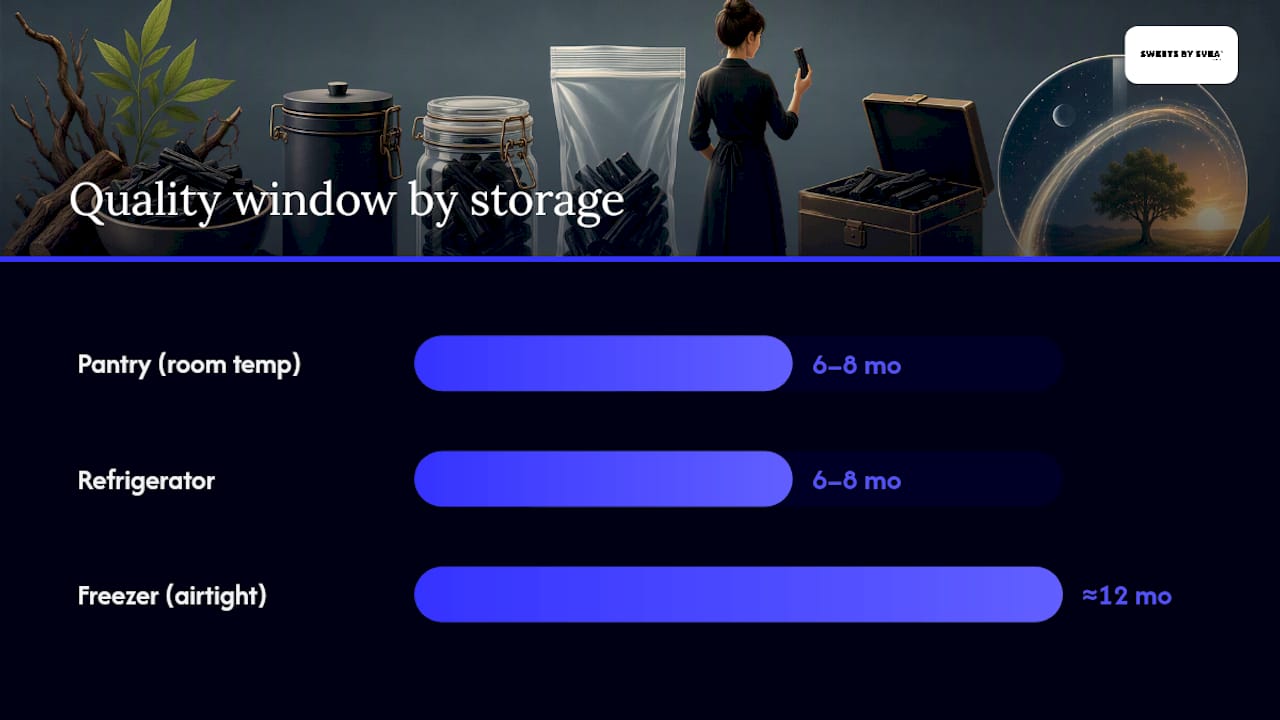
An unopened bag of licorice kept in a cool pantry holds peak texture and flavor for about 6 to 8 months, and the fridge offers roughly the same window. The freezer is the real extender: sealed in an airtight container, licorice can hold its best quality for close to a year, though the texture sometimes shifts slightly once it thaws.
Soft, chewy licorice loses its bite faster than harder pastille-style pieces once the package is opened, simply because it has more moisture to lose to the air. Hard licorice, like sea salt pastilles, tends to stay serviceable longer since it starts out firmer.
The “best by” date on the package is a manufacturer’s estimate of peak quality, not a safety deadline. Licorice that properly stored licorice often remains perfectly fine to eat well after that date passes, as long as nothing looks or smells off.
| Storage Method | Best Quality Window | Notes |
|---|---|---|
| Pantry (room temp) | 6 to 8 months | Best for sealed, unopened bags |
| Refrigerator | 6 to 8 months | Helps in hot or humid climates |
| Freezer | Close to a year | Texture may shift slightly after thawing |
Does Licorice Go Bad, or Just Go Stale?
Most of what people call “expired” licorice is really just stale licorice. The high sugar concentration in licorice candy makes it a poor environment for bacteria and mold, so true spoilage is uncommon. What usually happens instead is moisture loss: the candy hardens, loses its chew, and eventually turns brittle. That’s a quality problem, not a health risk.
Real spoilage still happens occasionally, especially if the package was damaged or exposed to moisture during storage. Watch for these before you eat a piece that’s been sitting around:
- Any fuzzy or colored mold spots on the surface
- A sour, musty, or otherwise “off” smell that wasn’t there before
- Unusual sliminess or stickiness that feels wrong, not just soft
- Discoloration paired with a smell change, rather than texture alone
If you only notice hardness or a loss of chew, that’s staling, and it’s fixable. Licorice left exposed to open air can start firming within 24 to 48 hours and turn fully brittle in 3 to 7 days depending on humidity. None of that makes it unsafe. Mold, sour smells, or sliminess mean it goes in the trash, no exceptions.
How to Store Licorice So It Stays Fresh
Licorice starts losing moisture the moment a bag is opened, so what you do in the first few minutes after opening matters more than anything you do later.
- Reseal the bag immediately in an airtight container or a heavy-duty resealable bag. Air exposure is the main driver of staling.
- Store it somewhere cool, dry, and away from direct sunlight. A kitchen cabinet away from the stove works better than a countertop bowl.
- In hot or humid climates, move sealed licorice to the refrigerator. Humidity accelerates stickiness and texture breakdown faster than dry heat does.
- For long-term storage, vacuum seal or double-bag portions and freeze them. Thaw at room temperature inside the sealed bag so condensation doesn’t collect directly on the candy.
- At the store, choose bags with no tears or punctures, and check the best-by date so you’re starting with the freshest stock possible.
Buying smart matters just as much as storing smart. A sugar-free pastille tin or a sealed bulk mix bag holds up far better in shipping and storage than a package that’s already been opened and reclosed loosely.
Pro Tip: Portion a large bag into smaller freezer bags before freezing. You’ll only expose the amount you need to air each time, instead of thawing and refreezing the whole batch.
How to Soften Stale or Hardened Licorice
Hardened licorice isn’t ruined. A little moisture and gentle heat usually bring the chew back, as long as you’re dealing with staleness and not spoilage.
- Wrap a piece loosely in a damp paper towel and microwave in one or two very short bursts, just a few seconds at a time. Overdoing it melts sugar and scorches the outside.
- Seal the licorice in an airtight container with a slightly damp paper towel (not soaking wet) and let it sit for several hours or overnight. The candy reabsorbs moisture gradually.
- Add a slice of apple or bread to the sealed container instead of a paper towel. Both release enough ambient moisture to soften candy without making it wet.
- Check on it periodically. Oversaturating stale licorice can make it gummy or promote mold if left too long.
Skip all of this if you spot mold or catch a sour smell first. Softening won’t undo actual spoilage. For a full walkthrough with timing and troubleshooting, Sweets by Svea’s guide on how to soften hard licorice covers each method step by step.
Pro Tip: If you’re softening a whole bag at once, spread pieces in a single layer rather than stacking them. Even moisture exposure means even results.
Why Freshness Starts Before the Candy Ever Reaches You
Freshness is a shipping problem before it’s a storage problem. Licorice starts its slow slide toward staleness the moment it leaves a sealed production run. Soucing freshness knowledge matters for customer support, because a bag that arrives fresh and gets stored well is the whole point of ordering imported candy.
— Sweets
Where to Buy Fresh Licorice That’s Built to Last
If you want licorice that holds its texture from the day it arrives, start with how it’s packaged, not just where it’s from. Some online retailers ship sealed, freshness-focused Swedish candy worldwide in 1 to 3 days, which cuts down the transit time that lets moisture loss even start.
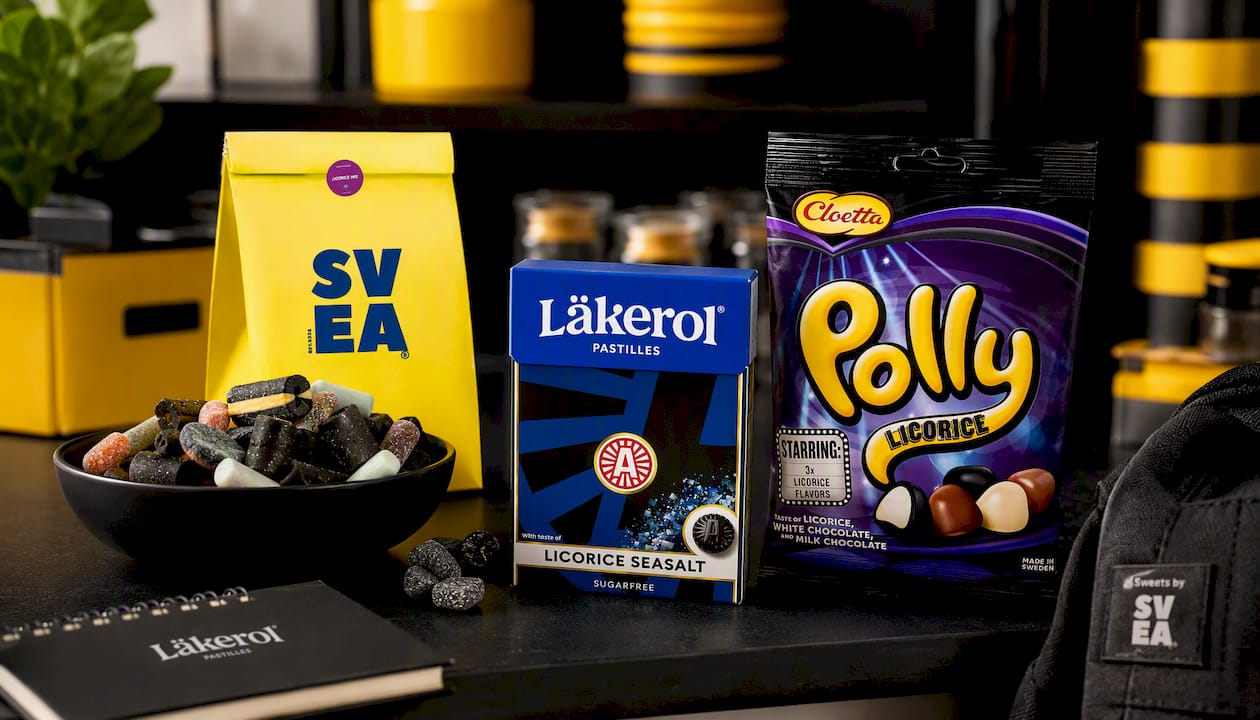
For readers who prefer a low-sugar option that resists staling especially well, the Läkerol sugar-free sea salt pastilles come in a tin that seals tight between uses. If you’re stocking up for a household or a gift box, the Swedish licorice mix gives you 500 grams of variety in one sealed bag, which is worth portioning into smaller containers once opened. And if you want to see how a softer, coated style holds up over time, the Cloetta Polly chewy foam candy pairs licorice with a chocolate coating that behaves differently in storage than plain hard pastilles.
Whatever you order, check that the packaging arrives intact and note the best-by date when it lands. Then reseal it the moment you open it, and it’ll taste like it just came off the shelf for months to come.
Sources
- How Long Does Licorice Candy Last? — StillTasty
- Licorice
- How long for licorice to dry? A complete guide — EatHealthy365
FAQ
Are Twizzlers Still Good After the Expiration Date?
Generally yes, if the package is sealed and shows no mold, off smell, or sliminess. The date reflects peak quality, not safety, so a slightly firmer piece past the date is usually fine to eat.
Can I Eat Candy That’s Three Years Past Its Date?
It depends entirely on how it looks and smells rather than the date alone. If it’s been sealed and stored cool and dry with no mold, sour odor, or sliminess, it’s likely just hard and stale rather than unsafe; if any of those warning signs are present, throw it out.
Is Twizzlers Black Licorice Actually Licorice?
Twizzlers black licorice is flavored to taste like traditional licorice but often relies primarily on artificial flavoring rather than real licorice root extract, unlike traditional Scandinavian licorice candy, which typically uses actual licorice extract as a core ingredient.
How Long Is Black Licorice Good For?
Black licorice holds its best quality for about 6 to 8 months at room temperature and up to roughly a year in the freezer. It can remain safe to eat beyond that window as long as there’s no mold, off smell, or sliminess, even though the texture will keep getting firmer over time.