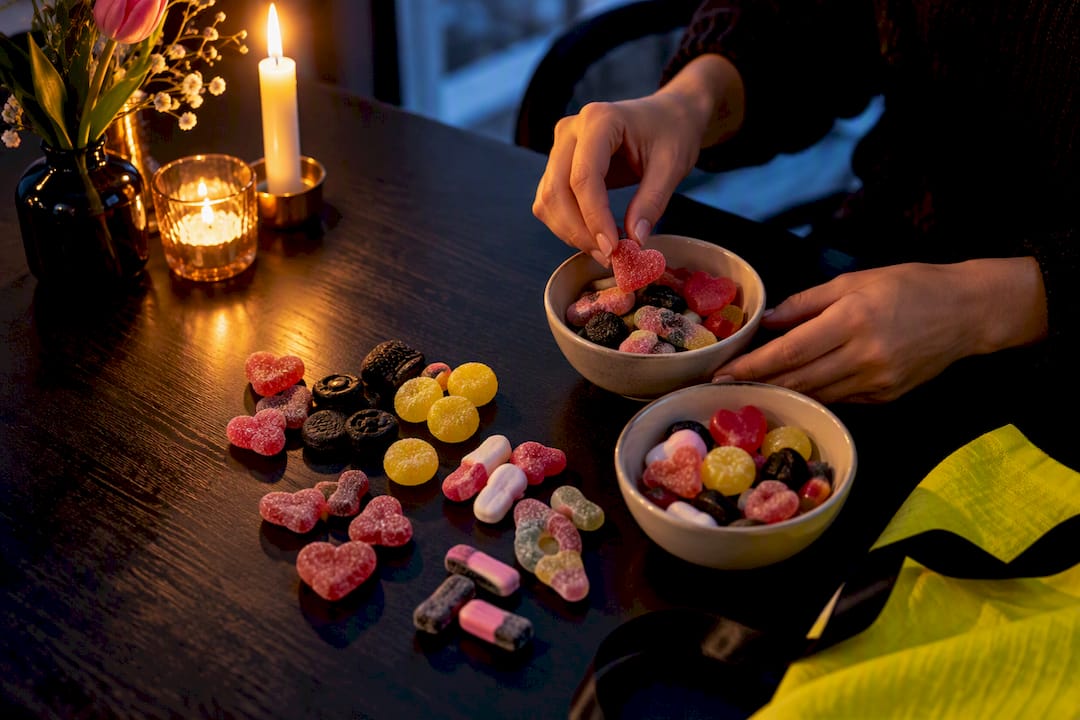

Dark, full-bodied beers like stouts, porters, and pastry stouts are the best match for black licorice, since their roasted malt and residual sweetness stand up to anise without getting steamrolled. Red or strawberry licorice works better with highly carbonated, citrusy beers like witbier. The rule underneath both: match intensity, and let bitterness or roast character balance the sweetness and anise. Homebrewers experimenting at the kettle should treat licorice as a cautious secondary flavor, not the headline.
TL;DR:
- Black licorice pairs best with dark, roasted beers like porters and pastry stouts, which balance its bitterness and residual sweetness effectively.
- Highly carbonated and citrusy beers such as witbier complement red or strawberry licorice by counteracting its sweetness and refreshing the palate.
- When brewing with licorice, use concentrated forms dissolved in warm water and add it late in the boil to avoid scorching or overpowering the beer’s flavors.
- Pairing intensity must match; delicate beers risk being overwhelmed by licorice, while too subtle beers can get lost against stronger licorice flavors.
- Avoid high-hop, citrus-forward beers, as their fruity esters clash with licorice’s medicinal notes, leading to muddled or off-putting flavors.
Table of Contents
- Best Beers for Licorice: A Quick Pairing Shortlist
- How to Brew With Licorice: Forms, Doses, and Timing
- Why Bitterness and Roast Make or Break the Pairing
- Sweets by Svea: Licorice Picks for Snacking or Light Infusion
- What Licorice Actually Tastes Like, and Where That Clashes or Works With Beer
- Where Licorice and Beer Pairings Go Wrong
- Licorice in Beer: A Tradition Older Than Craft Brewing
- An Editorial Take: Treat Licorice Like a Spice, Not a Sugar Bomb
- Build Your Own Licorice Tasting Flight
- Sources
- FAQ
Best Beers for Licorice: A Quick Pairing Shortlist
Licorice tasting with beer works best when you stop thinking of it as a novelty pairing and start treating it like any other flavor-matching exercise: sweetness needs a counterweight, and anise needs something roasty or bitter to lean against.
- Pastry and dessert stouts, paired with black licorice like Good & Plenty style candy. The stout’s thick body and dessert-like sweetness complement the candy’s bitter anise notes instead of clashing with them. Add a salt-forward licorice piece and you get a dessert course in two bites.
- Porters, especially licorice-forward examples. Roasted malt and chocolate character in a porter naturally echoes what licorice already brings to the table. Weyermann’s Nr. 5 Licorice Porter is a commercial reference point, built around coffee, roasted nuts, dark chocolate, and licorice working together rather than one flavor dominating.
- Witbier for red licorice. The orange peel and coriander in a good witbier cut against red licorice’s sweetness, and the beer’s high carbonation cleanses the palate between bites so the candy never overstays its welcome.
- Abbey blondes with subtly licorice-cured fish. This one is for the adventurous. A lightly licorice-cured gravlax paired with a Pilsner-style or abbey blonde lets the cure add depth without fighting the beer, a Nordic gastronomy trick that works because the licorice stays in the background.
Start with the stout and black licorice pairing if you’ve never tried this before. It’s the most forgiving combination and the easiest to get right on the first attempt.
How to Brew With Licorice: Forms, Doses, and Timing
Brewer’s licorice comes in a few forms, and picking the wrong one is the fastest way to ruin a batch. Concentrated blocks or paste (often labeled “brewer’s licorice”) are potent and need to be dissolved in warm water before they go anywhere near your kettle. Licorice root, sold dried or cut, is milder and slower to extract, which makes it more forgiving but harder to dose precisely. Licorice candy itself, the kind with sugar, coloring, and coatings, generally has no place in the boil kettle. It muddies the wort with unpredictable ingredients you can’t control.
Dosing is where most first attempts go wrong. Brewer’s licorice is potent enough to overwhelm a beer if you eyeball it, so treat any starting recipe as a ceiling, not a target. A common conservative approach many homebrewers use is to add licorice as a small, cautious fraction of the grist by weight, and even that range assumes you’re tasting as you go rather than dumping it all in at once.
Here’s a simple protocol for your first attempt:
- Dissolve the concentrate in a small volume of hot water separately, never straight into the boil.
- Add late in the boil, in the last 10 to 15 minutes, for a light sterilizing effect without prolonged heat exposure.
- Reserve a portion for secondary or conditioning if you want more aroma than flavor, since heat drives off some of the volatile anise character.
- Taste in small increments across a few days of conditioning before deciding whether to add more.
Boiling licorice too long, or using too much, can scorch the sugars or trigger an unpleasant tingling sensation on the tongue that some brewers describe as a peppermint-like burn. That’s your signal you’ve overdosed, not a flavor to chase.
Pro Tip: Brew a one-gallon test batch before committing a full five-gallon run to licorice. It costs you almost nothing and saves you from dumping a ruined batch down the drain.
If you want a tested starting point rather than guesswork, the American Homebrewers Association publishes a documented licorice ale recipe that’s worth studying before you improvise your own.
Why Bitterness and Roast Make or Break the Pairing
The pairing principle that governs everything above is simple: intensity has to match. A delicate lager next to a bold black licorice candy will lose every time, the beer fading into the background while the candy dominates the palate. Flip it, put a big pastry stout against a weak licorice mint, and you get the opposite problem: the beer bulldozes a flavor too subtle to register.
Bitterness does real work here. Hop bitterness or roasted malt character cuts through sugar the way a squeeze of lemon cuts through fat, keeping a sweet licorice pairing from turning cloying after the second bite. Carbonation plays a similar cleansing role, especially with red licorice and witbier, resetting your palate between sips instead of letting sweetness build up.
Licorice has reliable flavor companions beyond beer alone:
- Vanilla softens anise’s sharp edge and rounds out a pastry stout pairing.
- Dark chocolate echoes the bittersweet quality already present in black licorice and roasted malt.
- Roasted nuts add texture and a savory counterpoint to licorice’s sweetness.
- Chili cuts sweetness sharply and adds a contrast some brewers use directly in the boil.
- Pickled beets and salty cheeses work in savory contexts, where licorice adds earthy depth rather than sugar.
- Smoked meats stand up to licorice’s intensity without being overpowered by it.
If you’re adding any of these directly to a licorice beer, resist stacking more than two strong flavors at once. Vanilla and chocolate together already crowd the glass. A measured approach to balancing sweet and bitter applies just as much to beer as it does to dessert wine pairing.
Sweets by Svea: Licorice Picks for Snacking or Light Infusion
Not every licorice candy belongs in the same role. Some are built for eating alongside a beer, others work better as a flavor reference than an actual brewing ingredient.
- Haribo Rotello is mild and fruity, an easy match for a highly carbonated witbier or a lighter lager where you don’t want the candy to dominate.
- Sweet Licorice Screws carry classic anise sweetness with enough body to hold up next to a robust stout or porter.
- Licorice Lovers is a curated mix, useful if you want variety in a single tasting session rather than committing to one flavor profile.
The products are made without GMOs, parabens, or high fructose corn syrup, and shipped worldwide with fast delivery, ensuring the candy arrives fresh rather than stale from months in transit. One practical note: candies with sugar coatings or chocolate shells are great for snacking next to a beer but a poor choice for actual in-brew use, since you can’t control what those coatings do once they hit hot wort.
What Licorice Actually Tastes Like, and Where That Clashes or Works With Beer
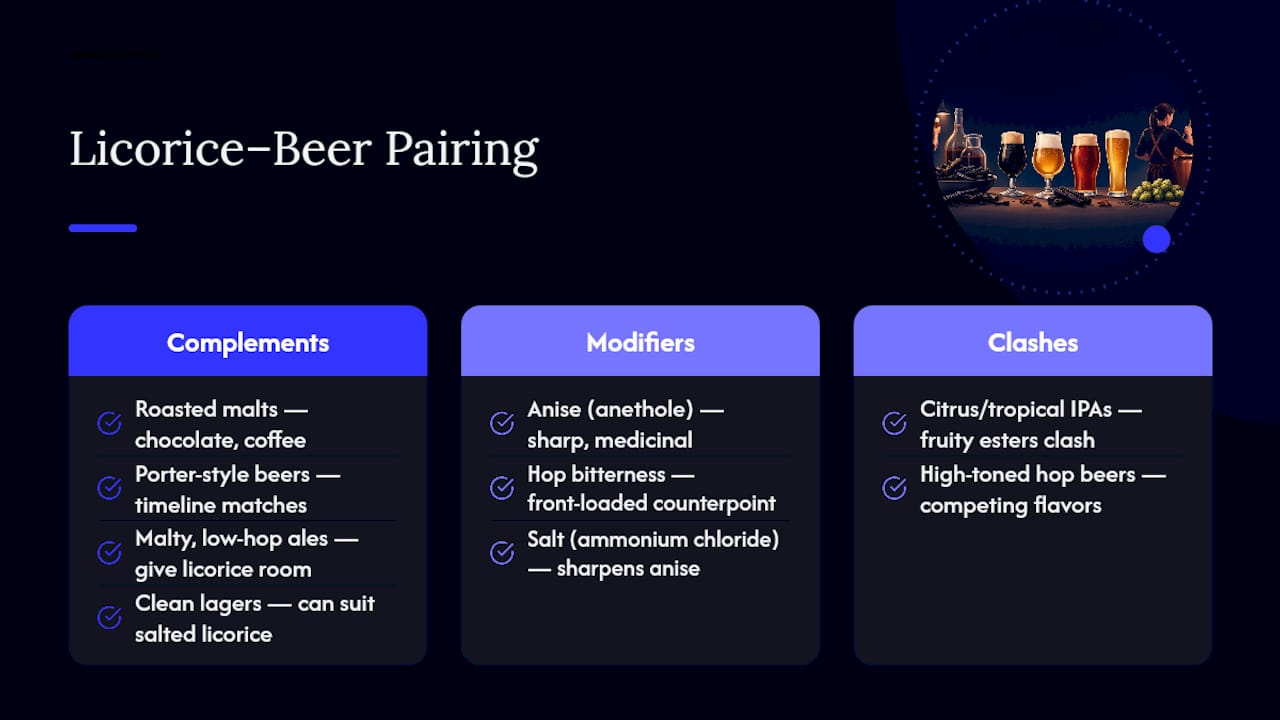
Anise is the dominant note in licorice, and it’s sharper and more medicinal than most people expect on first taste. That sharpness comes from anethole, the same compound found in fennel and star anise, and it reads as almost peppery at high concentrations. Underneath the anise sits a deep, molasses-like sweetness, especially in black licorice, plus a faint bitterness that lingers on the back of the tongue after the sweetness fades.
That combination, sweet up front, bitter and sharp on the finish, is exactly why roasted malt works so well as a partner. A porter’s chocolate and coffee notes arrive on the same timeline as licorice’s own finish, so the two flavors overlap instead of competing for attention. Hop bitterness does something slightly different: it front-loads a bitter counterpoint that keeps the licorice’s sweetness from taking over the first impression.
Where licorice tends to fight beer instead of complementing it is in beers with bright, high-toned hop character, think tropical or citrus-forward IPAs. The fruity esters clash with anise’s medicinal edge rather than framing it, and you end up with two loud flavors talking over each other. Malty, low-hop beers give licorice room to sit comfortably in the mix. Spice notes in licorice, particularly in salty licorice varieties popular in Scandinavia, add another layer: ammonium chloride salt sharpens the anise and can either heighten a pairing with a clean lager or overwhelm a delicate one entirely.
Where Licorice and Beer Pairings Go Wrong
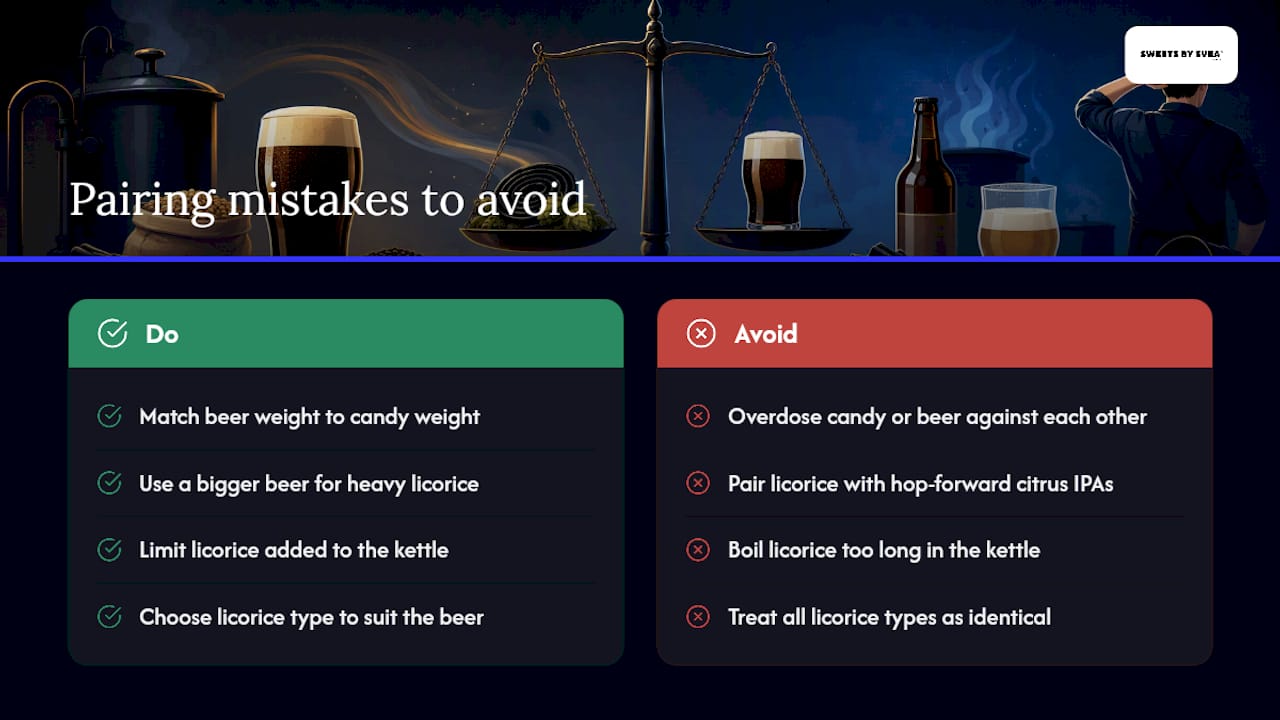
The most common mistake is overdosing the candy or the beer relative to the other. A thin lager loaded up against a heavy black licorice bar will always lose, the beer disappearing under the candy’s weight. The fix isn’t a better beer, it’s matching a bigger beer to that candy in the first place.
The second mistake is combining licorice with hop-forward, citrusy beers expecting the fruit notes to play nice. They usually don’t. West Coast IPAs and their bright grapefruit and pine character tend to clash with anise’s medicinal sharpness rather than complement it, producing a muddled, slightly bitter mess instead of a clean pairing.
Overdosing licorice in the brew kettle itself is its own separate problem. Too much brewer’s licorice, or boiling it too long, produces that scorched, peppermint-tingle sensation mentioned earlier, a sign the batch has crossed from “licorice porter” into “medicine cabinet.” There’s no fixing that after the fact beyond blending down with an unflavored batch, which rarely saves the beer completely.
A subtler mistake: assuming all licorice is interchangeable. Salty licorice, red fruit licorice, and black anise licorice behave completely differently against the same beer. Red licorice against a heavy stout falls flat, its brightness lost entirely, the same way black licorice against a witbier turns muddy instead of complex. Match the candy’s weight to the beer’s weight, not just the word “licorice” on the label.
Licorice in Beer: A Tradition Older Than Craft Brewing
Licorice’s relationship with beer isn’t a modern craft brewing invention. Scandinavian countries, particularly Sweden and Finland, have used licorice in food and drink for generations, most visibly in salty licorice candy but also in traditional spiced ales where licorice root shows up alongside juniper and other regional botanicals. That long-standing familiarity with anise as a flavor, not just a candy note, is part of why Nordic brewers reach for it more naturally than brewers elsewhere.
Belgian brewing traditions took a related but different path. Belgian abbey and dubbel styles have long used dark candi sugar, dried fruit, and spice additions that create a flavor neighborhood adjacent to licorice, deep, dark, slightly medicinal sweetness, even in beers that never touch actual licorice root. That shared flavor territory is part of why licorice porters and licorice-adjacent Belgian dark ales tend to sit comfortably next to each other on a tasting flight.
Commercial licorice beers today, mostly porters and stouts, generally treat licorice as a supporting player rather than the star, working alongside roasted malt the way it always has in Nordic kitchens. It’s less a trend than a return to an old pairing that never really went away.
An Editorial Take: Treat Licorice Like a Spice, Not a Sugar Bomb
The biggest misconception about licorice and beer is treating licorice as pure candy sweetness when it actually behaves more like a spice. Sweetsbysvea curates licorice products around predictable, consistent flavor outcomes precisely because that predictability is what makes tasting experiments useful. A simple order works best: neutral water first, then a small bite of candy, then a sip of the paired beer, noting what shifts, then water again before the next round. Skip that discipline and you’ll mistake a bad pairing for a bad beer.
— Sweets
Build Your Own Licorice Tasting Flight
Figuring out which beer pairs with which licorice is a lot easier when you’re tasting the right candies side by side instead of guessing from a bag of assorted sweets.

A starter flight built from Haribo Rotello for your witbier, Sweet Licorice Screws for your stout or porter, and the Licorice Lovers mix for everything in between covers the full range this article walks through, without you having to order three separate bags and hope they arrive fresh. Shipping is available worldwide with swift delivery and the products are free of GMOs, parabens, and high fructose corn syrup, so what lands on your counter tastes as intended. Browse the full candy and snacks catalog if you want to build a bigger tasting flight around your next brew day, and place your order today to have it ready before your next batch conditions.
Sources
- Leftover Halloween Candy and Beer Pairings
- Weyermann® Nr. 5 Licorice Porter
- Pints of Depiction: Pairing Beer with Candy
- Special Ingredient: Brewers Licorice
- Black licorice lager (Shorts Brewing)
FAQ
What candy goes best with beer?
Black licorice pairs best with pastry stouts and porters, since the beer’s roast and sweetness complement the candy’s bitter anise. Red or fruit-flavored licorice pairs better with lighter, carbonated beers like witbier.
What pairs well with licorice?
Vanilla, dark chocolate, roasted nuts, and chili all work as flavor companions to licorice, either in a beer’s recipe or as an accompanying snack. Salty cheeses and smoked meats also pair well in savory contexts, where licorice adds earthy depth rather than sugar.
What is the 3:30:300 rule for beer?
This rule doesn’t come up in licorice pairing guidance and isn’t something this article’s sources address directly. If you’ve seen it referenced elsewhere, it’s worth checking the original source before applying it to a licorice pairing decision.
Is licorice good for bowel movement?
Licorice root has a long folk history tied to digestion, but that’s a health question outside the scope of beer pairing, and this article doesn’t cover it. Talk to a healthcare provider if you’re considering licorice for digestive reasons rather than flavor.
How much licorice should I add to a homebrew batch?
A conservative starting approach many homebrewers use is to add a small amount of licorice relative to the grist by weight, added late in the boil or during conditioning. Brewer’s licorice is potent enough to overwhelm a beer if overdosed, so start low and taste incrementally before adding more.