
Cranberries (Vaccinium macrocarpon) and lingonberries (Vaccinium vitis-idaea) are cousins in the same genus, but they are not the same berry. The single biggest practical difference: cranberries hit harder. They are larger, more aggressively tart, and bitter at the skin. Lingonberries are smaller, slightly sweeter, and carry a subtle woodsy depth that makes them feel more like a condiment than a fruit.
- Taste: Cranberry is sharper and more astringent; lingonberry is tart but rounder, with faint spice notes.
- Appearance: Cranberries are noticeably larger with a hollow interior; lingonberries are small, firm, and dense.
- Culinary role: Cranberries dominate sauces and juices; lingonberries are the classic Swedish jam and table condiment.
- Substitution: Yes, you can swap them gram for gram. When using lingonberries in place of cranberries, reduce added sugar slightly. When going the other direction, add a little more.
Both berries are covered in USDA FoodData Central nutrition data, and both have been studied for antioxidant activity. Sweetsbysvea, a specialist in authentic Swedish foods, publishes this comparison to help you cook with both confidently.
Key Takeaways
Lingonberries and cranberries are distinct Vaccinium species with the same gram-for-gram substitutability in recipes, but lingonberries need less added sugar and hold their texture longer in heat.
| Point | Details |
|---|---|
| Taste difference | Cranberry is sharper and more astringent; lingonberry is tart with subtle sweetness and woodsy notes. |
| Substitution ratio | Swap gram for gram, but reduce added sugar by 10–15% when using lingonberries in cranberry recipes. |
| Nutrition caveat | Both berries show strong antioxidant activity in lab studies; human clinical evidence remains limited. |
| Buying tip | Look for 50% or higher fruit content on lingonberry jam labels and avoid high-fructose corn syrup. |
| Availability | Cranberries are widely available fresh in autumn and processed year-round; lingonberries are most reliably found as imported preserves. |
| Sweetsbysvea | Carries Garant and Eldorado lingonberry preserves with worldwide delivery, all GMO-free and free from high-fructose corn syrup. |
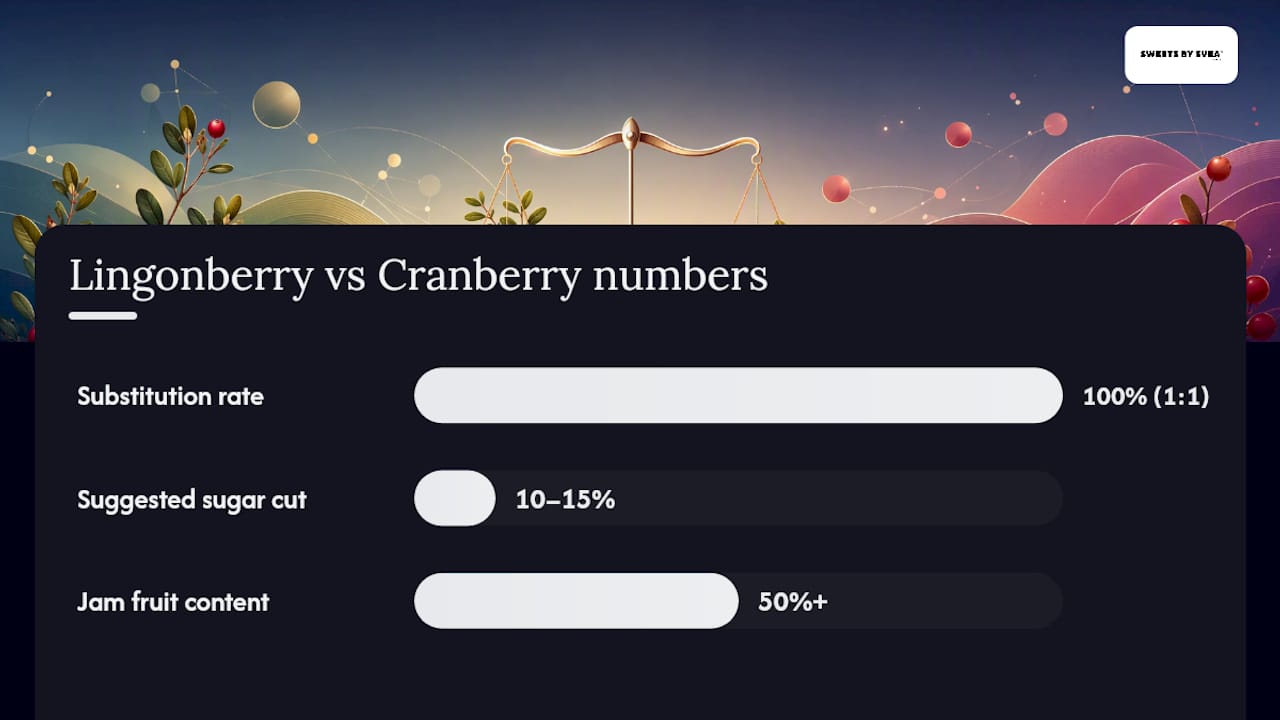
Table of Contents
- How do lingonberries and cranberries compare?
- What are lingonberries and cranberries, botanically?
- How do they look and taste side by side?
- What does the nutrition research actually show?
- How to cook with each berry and swap them in recipes
- Where to find each berry and how to store them
- Authentic Swedish ways to serve lingonberries
- Why lingonberry usually wins in my kitchen
- Where to buy quality lingonberry preserves
- Sources
How do lingonberries and cranberries compare?
| Dimension | Cranberry | Lingonberry |
|---|---|---|
| Species | Vaccinium macrocarpon, V. oxycoccos | Vaccinium vitis-idaea |
| Native habitat | North American bogs and marshes | Northern forests, Scandinavia, subarctic regions |
| Size and color | Larger (1–2 cm), deep red, hollow interior | Smaller (5–10 mm), bright red, dense flesh |
| Taste and texture | Very tart, astringent, bitter skin | Tart but slightly sweeter, subtle woodsy notes |
| Key nutrients (per 100 g) | close calories, less fiber, close sugar, — vitamin C | close calories, close sugar, less fiber, — vitamin C |
| Culinary uses | Sauce, juice, dried, baked goods | Jam, stirred condiment, paired with game and cheese |
| Substitutability | Yes, gram for gram with sugar adjustment | Yes, gram for gram with sugar adjustment |
| Common forms sold | Fresh, frozen, dried, canned, juice | Jam, stirred preserves, frozen, syrup |
Practical takeaways from the table:
- Swap lingonberry for cranberry at a 1:1 ratio, but reduce added sugar slightly since lingonberries are less aggressively acidic.
- Cranberries are available year-round in North America in processed forms; lingonberries are most reliably found as imported preserves.
- Both berries peak in autumn, though lingonberries can produce a second flush in summer depending on the region.
- For texture-sensitive recipes like whole-berry sauce, lingonberries hold their shape better due to their firmer, denser flesh.
What are lingonberries and cranberries, botanically?
Both berries belong to Vaccinium, the same genus that includes blueberries and bilberries. Cranberries in North America are primarily Vaccinium macrocarpon (the large-fruited species behind most commercial products) and the smaller V. oxycoccos. Lingonberries are Vaccinium vitis-idaea, a low-growing evergreen shrub native to boreal forests across Scandinavia, northern Europe, Russia, and parts of Canada.
The habitat difference is stark. Cranberries are bog plants, requiring constantly saturated, acidic, sandy soil and the flooding conditions used in commercial wet harvests. Lingonberries are far more forgiving: they prefer moist, well-drained acidic soils and grow naturally on forest floors, heathlands, and mountainsides. That difference in growing conditions is part of why cranberry farming scaled into a major commercial industry while lingonberry cultivation remains limited.
According to NordGen’s lingonberry plant portrait, lingonberries are mainly collected from the wild, with only a handful of cultivated varieties developed through plant breeding. Cranberries, by contrast, are mass-farmed across Maine, Wisconsin, and the Pacific Northwest, which is why you find them in every supermarket.
- Cranberries: one main autumn harvest, commercial bog farming, year-round supply via frozen and processed forms.
- Lingonberries: often two harvest windows (summer and early autumn), primarily wild-foraged, most available as imported preserves.
- The British Berries comparison notes that cranberries need bog-like moisture while lingonberries tolerate ordinary moist, acidic soils, making lingonberries easier to grow in home gardens.
How do they look and taste side by side?
Size is the fastest visual tell. Cranberries run roughly 1–2 cm across. Lingonberries are much smaller, typically 5–10 mm, closer to a large pea than a grape. Both are red, but cranberry red tends toward deep burgundy while lingonberries are a brighter, almost lacquered scarlet.
Cut one open and the difference continues. Cranberries have a hollow, air-pocket interior and thick skin that contributes to their bitter edge. Lingonberries are dense and firm all the way through, with thinner skin and a juicier bite.
Taste profile, side by side:
- Cranberry: Aggressively tart, astringent, with a bitter note from the skin. The flavor is one-dimensional in a useful way: it cuts through rich food like a knife.
- Lingonberry: Tart but less punishing, with a faint sweetness and what tasters often describe as woodsy or lightly spiced undertones. More complex, less aggressive.
For cooking, that texture difference matters. Cranberries soften and burst quickly in heat, releasing pectin and thickening sauces fast. Lingonberries hold their shape longer, which is why stirred lingonberries (rörda lingon) can be served almost raw with just sugar. In baked goods, cranberries add more moisture and a sharper pop of flavor; lingonberries stay firmer and contribute a subtler tartness. Sensory comparisons from EatHealthy365 confirm cranberry as the sharper, more astringent berry and lingonberry as the more nuanced of the two.
What does the nutrition research actually show?
Per 100 g, the two berries are close in calories but differ in sugar and fiber. Values below are drawn from USDA FoodData Central:
Cranberries edge out lingonberries on fiber and come in slightly lower on sugar. Lingonberries run a little higher in calories and natural sugars, though the gap is small enough that it rarely matters in practice.
Both berries contain anthocyanins, polyphenols, and proanthocyanidins. Cranberries are particularly studied for A-type proanthocyanidins, which have been researched for their role in inhibiting bacterial adhesion in the urinary tract, though efficacy depends heavily on product formulation and dose. Lingonberries are rich in anthocyanins and arbutin, a compound with antimicrobial properties studied in laboratory settings.
A note on the evidence: A PMC review on lingonberry confirms that antioxidant and anti-inflammatory effects are well-documented in cell and animal studies, but human clinical trials are sparse. A broader review on berry antioxidants reaches the same conclusion: the in vitro data is promising, but researchers call for more human trials before strong disease-prevention claims can be made.
Both berries are nutritious. Neither is a proven therapeutic food at the doses most people eat.
How to cook with each berry and swap them in recipes
Cranberries are the workhorse of North American holiday cooking: sauce, juice, relish, muffins, and dried snack mixes. Lingonberries are the Swedish kitchen’s all-purpose condiment, served alongside meatballs, game, pancakes, and cheese boards. The flavor roles overlap more than most cooks realize.
Common uses:
- Cranberry: Whole-berry sauce, fresh juice, dried and sweetened for trail mix, baked into scones and quick breads, pressed into cocktail mixers.
- Lingonberry: Jam and stirred preserves, warm compote over porridge, cold condiment with savory dishes, stirred into yogurt, paired with aged cheese.
Substitution rules:
The swap works gram for gram in most recipes. The key adjustment is sugar. Because lingonberries are less aggressively acidic than cranberries, using a standard cranberry recipe with lingonberries can produce a jam that is too sweet. Going the other direction, add a little more sugar to compensate for cranberry’s sharper bite.
Quick recipe tweaks:
- Reduce sugar modestly when making lingonberry jam from a cranberry recipe.
- Add 2–3 tablespoons of water or apple juice per cup of dried cranberries when using them in place of fresh lingonberries in sauce.
- For whole-berry sauce, pull lingonberries off heat 2–3 minutes earlier than cranberries to preserve their firmer texture.
- In baked goods, the swap is nearly seamless: use the same volume and adjust sweetness to taste.
Pro Tip: Frozen lingonberries perform almost identically to fresh in jam and compote. Keep a bag in the freezer and you can make rörda lingon any time of year without waiting for the short fresh season.
Where to find each berry and how to store them
Fresh cranberries appear in North American stores from September through December. Outside that window, frozen, dried, and canned forms are available year-round. Fresh lingonberries are far harder to find outside Scandinavia. In North America, Australia, and most of Europe, lingonberry products are most reliably sold as imported jams, stirred preserves, and frozen berries, often at a premium price that reflects wild-harvesting and import costs.
Common forms and storage:
- Fresh: Refrigerate up to 4 weeks (cranberry); lingonberries are rarely sold fresh outside their native range.
- Frozen: Both freeze well. Use within 12 months for best flavor. No thawing needed for jam or sauce.
- Jam and preserves: Unopened jars keep 1–2 years in a cool pantry. Refrigerate after opening and use within 4–6 weeks.
- Dried cranberries: Pantry-stable for up to a year; check for added sugar and oils on the label.
Shopping tips:
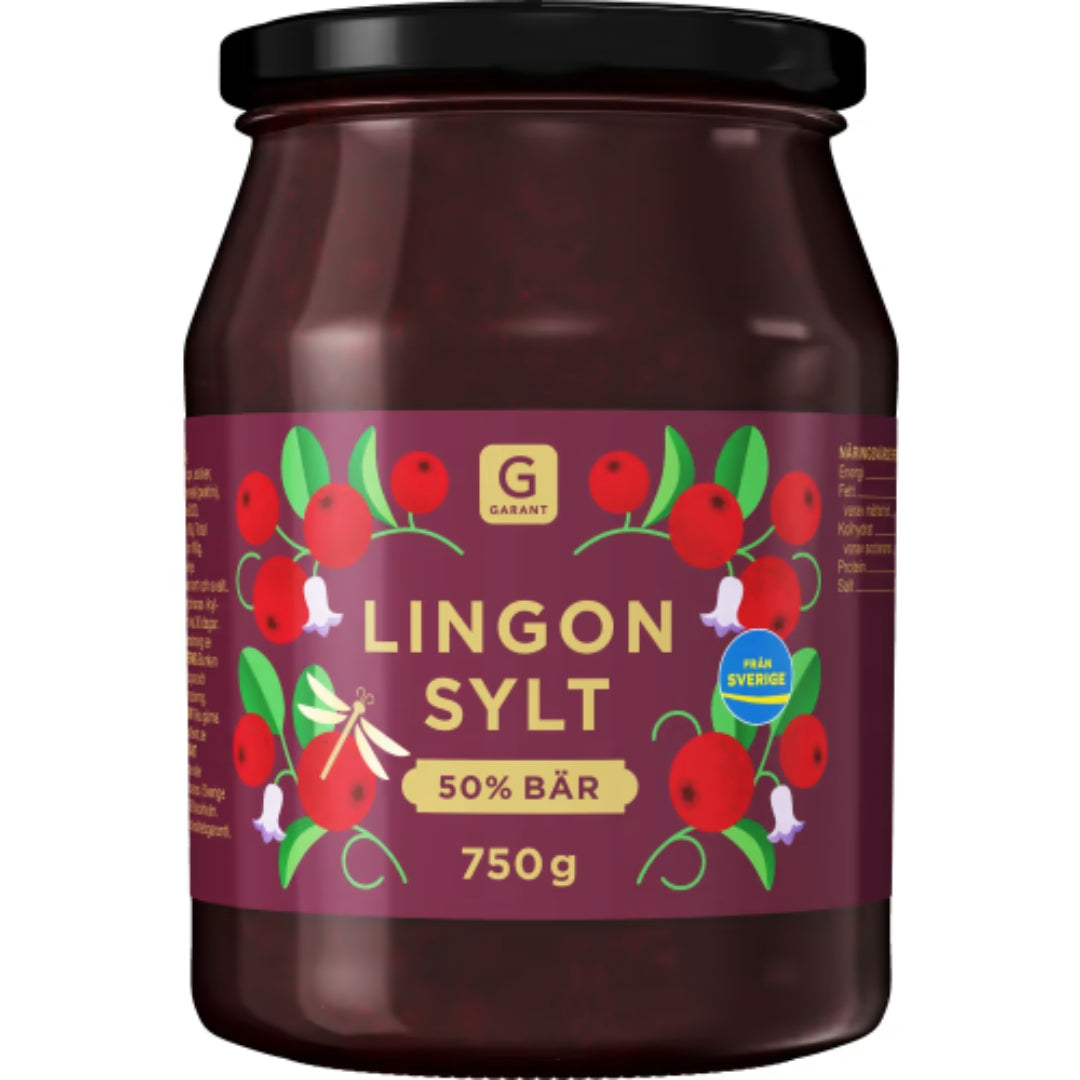
- Look for a fruit percentage on lingonberry jam labels. A good jar lists 50% or more berry content, as you’ll find on products like Garant Lingonsylt.
- Avoid jars with high-fructose corn syrup or artificial thickeners. The ingredient list should be short: berries, sugar, sometimes pectin.
- Lingonberry products priced as premium imports are often genuinely wild-harvested, which accounts for the cost.
Authentic Swedish ways to serve lingonberries
In Sweden, lingonberries are not a seasonal novelty. They are a pantry staple used the way Americans use ketchup: on almost everything savory. The lingonberry jam guide at Sweetsbysvea covers the full range of uses, but here are the most traditional pairings:
- Swedish meatballs (köttbullar): The classic. A spoonful of stirred lingonberries cuts through the richness of the cream sauce.
- Game and roasted meats: Venison, elk, and duck pair naturally with lingonberry’s tart-sweet balance.
- Pancakes and waffles: Warm lingonberry compote in place of syrup is a standard Swedish breakfast.
- Porridge: Stirred into oatmeal or rice porridge for a tart contrast to the creamy base.
- Cheese boards: Lingonberry jam alongside aged hard cheeses, particularly Swedish varieties, is a simple and effective pairing.
How to make rörda lingon (stirred lingonberries):
This is the simplest lingonberry preparation and the one most central to Swedish cooking. The ratio is roughly 4 parts fresh or thawed frozen lingonberries to 1 part sugar by weight. Stir gently until the sugar dissolves and the berries begin to release juice. Do not cook them. The result is a fresh, lightly sweetened condiment that keeps refrigerated for up to two weeks. The berries stay whole, the texture stays firm, and the flavor is brighter than any cooked jam.
Pro Tip: For a more complex flavor, stir in a small pinch of ground cardamom or a strip of orange zest while the sugar dissolves. Both are traditional additions in Swedish home kitchens.
Sweetsbysvea specializes in authentic Swedish foods, including Nordic berries like cloudberry and a curated range of lingonberry preserves sourced from established Swedish producers.
Why lingonberry usually wins in my kitchen
Cranberry gets all the marketing. It has the holiday association, the ocean-spray imagery, the juice aisle presence. But for everyday cooking, lingonberry is the more versatile berry. It works on savory dishes without overwhelming them, it needs less sugar to balance, and its firmer texture means you can serve it almost raw.
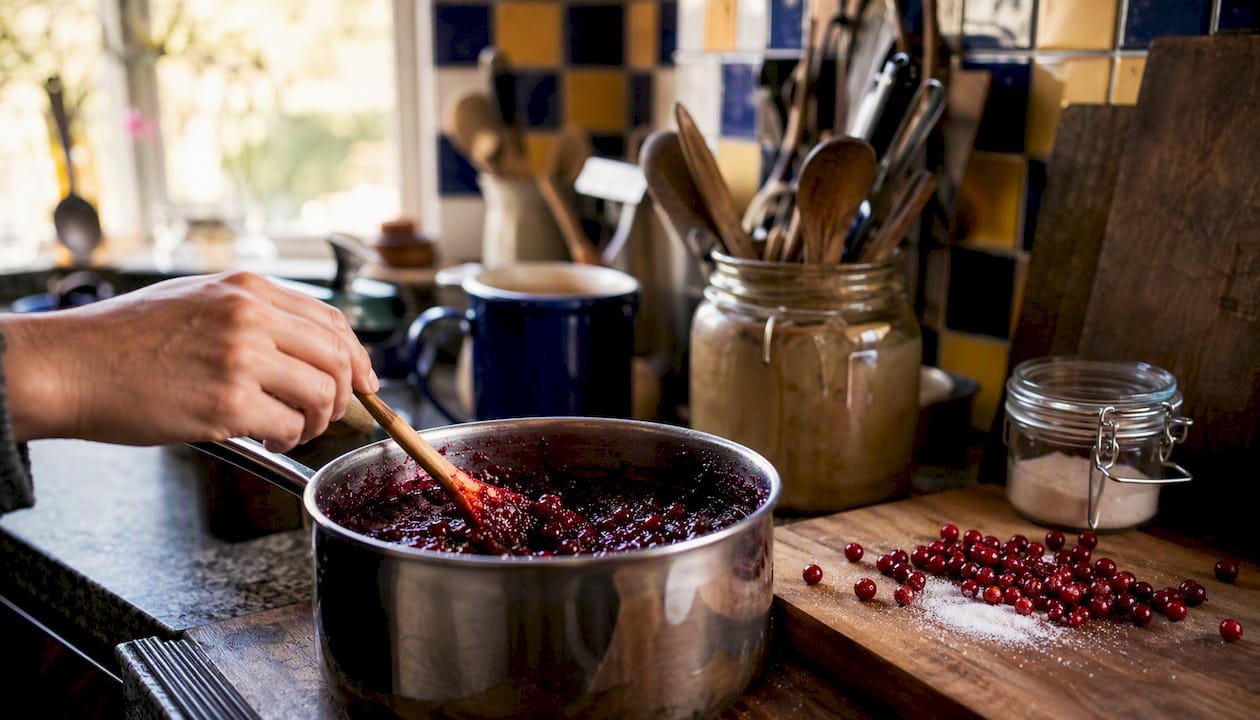
The one place cranberry genuinely earns its dominance is in high-acid applications: a sharp, punchy sauce that needs to cut through a fatty roast, or a cocktail that needs real tartness without added citrus. For those jobs, cranberry’s aggressive acidity is a feature, not a flaw.
What most cooks underestimate is how much the sugar question matters. A lingonberry jam made with a cranberry recipe’s sugar ratio will taste like candy. Get the ratio right and it tastes like something you’d find on a table in Stockholm.
Where to buy quality lingonberry preserves
Sweetsbysvea carries a focused range of authentic Swedish lingonberry products, all sourced from established Scandinavian producers and shipped worldwide with 1–3 day delivery.
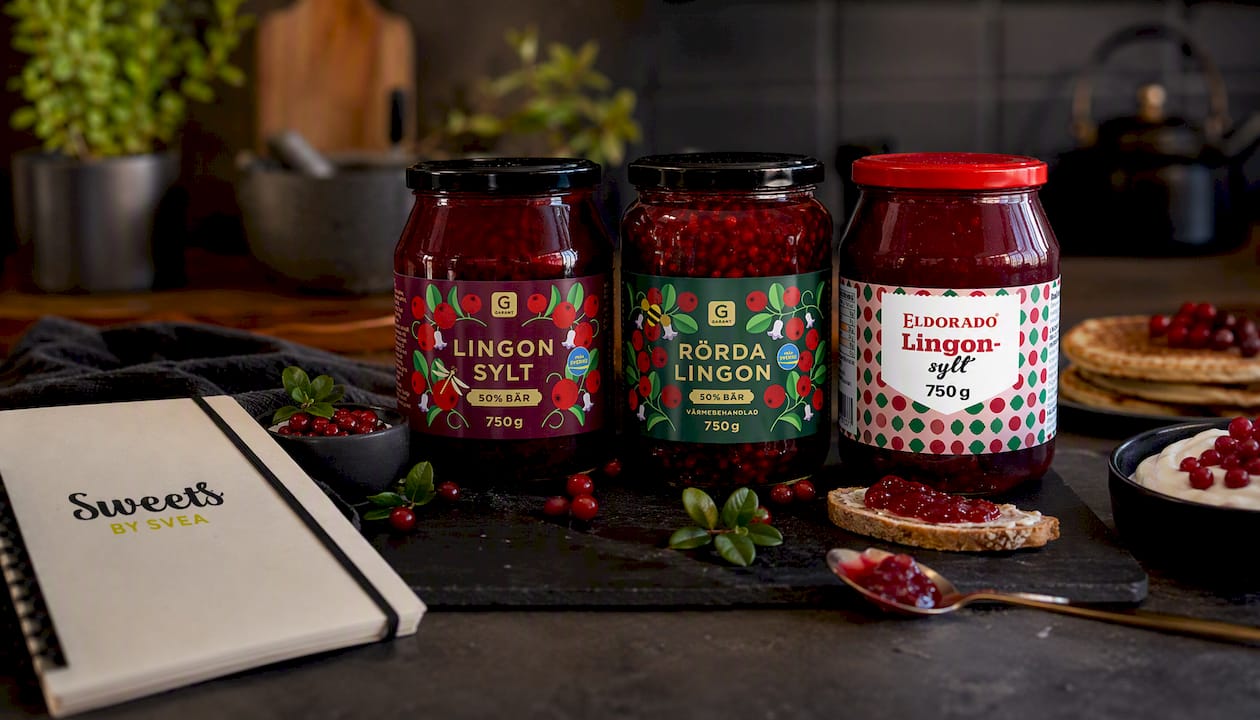
Three options worth knowing: Garant Lingonsylt 50% Bär is a 750 g jar of traditional lingonberry jam with 50% fruit content, no high-fructose corn syrup, and a clean ingredient list. Garant Rörda Lingon 50% Bär is the stirred version: whole berries, lightly sweetened, ready to spoon straight onto meatballs or pancakes. For a more affordable entry point, Eldorado Lingonsylt delivers solid quality at a lower price per jar. Start with a single jar of stirred lingonberries and see how quickly it disappears.
Sources
- Lingonberry (Vaccinium vitis-idaea) review — PMC
- Cranberry facts and history — University of Maine Extension