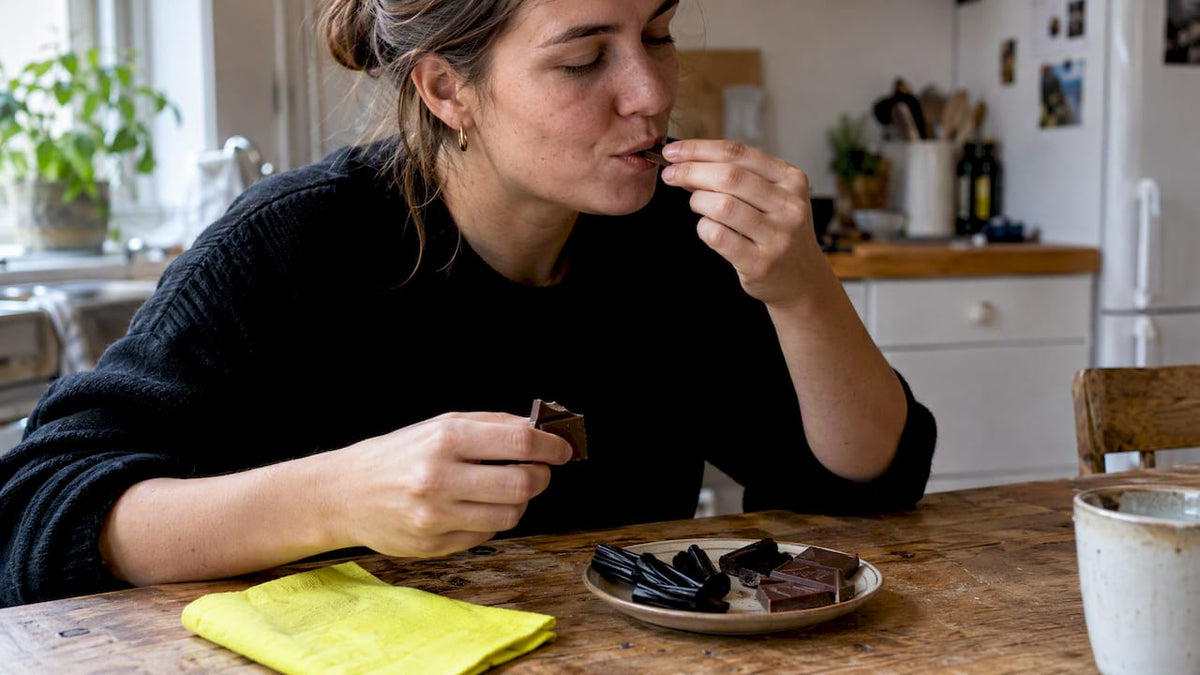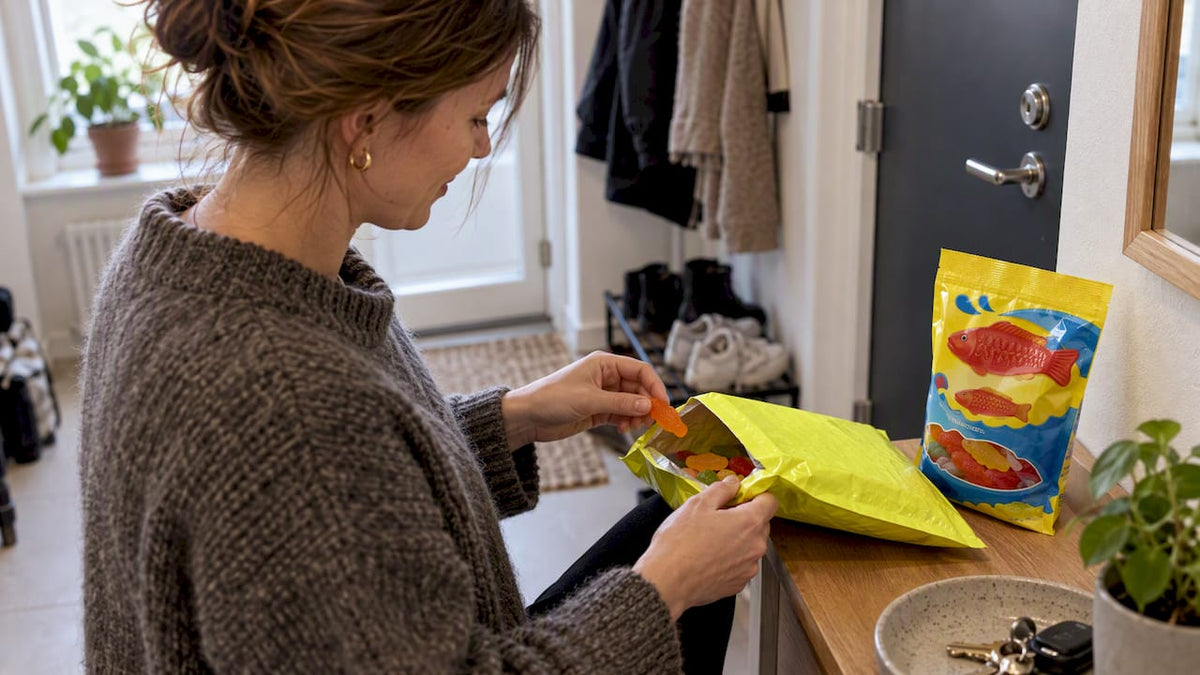

The candy that holds up best in heat is anything without cocoa butter: hard candies, wrapped caramels, firm fruit chews, licorice, jelly beans and pectin-based gummies. Chocolate is the first thing to go. Even the sturdy picks can turn tacky or fuse into one lump if they get hot enough, so the type of candy matters, and so do the wrapper, the temperature and how long it sits there.
Below, we sort candy by how it fails, explain why, and cover what to do for picnics, parades, care packages and summer shipping.
TL;DR
- Chocolate is the weakest link. Cocoa butter softens around 75–86°F and liquefies around 93–101°F, so skip it for hot days.
- Hard candy, licorice, jelly beans and firm chews are the safest bets. Pectin- or starch-based gummies generally hold their shape better than gelatin-heavy ones.
- “Won’t melt” is not “won’t stick.” Heat and humidity both push candy past its glass transition, which makes it sticky rather than liquid.
- For shipping, pick heat-stable candy, wrap it individually, ship early in the week and avoid weekend sitting time.
- Swedish-style gummies and licorice are usually made with starch or pectin instead of high fructose corn syrup, which is one reason we like them for warm-weather orders.
Table of Contents
- Why some candy melts and some doesn’t
- Candy that holds up in heat, ranked
- Non-candy swaps that never melt
- Picking candy for the occasion
- Shipping candy in summer
- Our view: why we like Swedish candy for warm weather
- Build a heat-friendly Swedish candy box
- Quick checklist before a hot day
- FAQ
- Sources
Why some candy melts and some doesn’t
Candy falls into two camps: fat-based and sugar-based. Chocolate is fat-based. Its structure depends on cocoa butter, which starts to soften at a temperature you can reach in a warm kitchen or a car with the windows up. That’s why the same bar that snaps in March slumps in July.
Most other candy is sugar-based, and sugar behaves differently. It doesn’t melt so much as change state. Food scientists use a number called the glass transition temperature (Tg) to describe it. Below Tg, a candy is a stable, glassy solid. Above it, it turns rubbery and fluid, which causes stickiness, collapse and loss of texture. The same source notes that water acts as a plasticizer and lowers that temperature, so a humid day can be as hard on candy as a hot one.
Tg also varies a lot by candy. Researchers at the University of Illinois have studied how it differs across confections cooked to different sugar stages, which is a technical way of saying that a rock-hard lollipop and a soft chew are built to behave differently.
In practice, that gives you three failure modes:
- Melting into liquid. Chocolate, chocolate coatings, some fudge and soft truffles.
- Going soft and sticky. Hard candy, mints and wrapped caramels, especially in humidity.
- Fusing together. Gummies, jelly candies and chews that touch each other in a bag.
Only the first is the real melting people worry about. The second and third are mostly cosmetic: the candy tastes fine, but it’s harder to eat or share.
Candy that holds up in heat, ranked
Here is how the main candy families do when temperatures climb. These are rules of thumb, not lab guarantees, since brands vary.
| Candy type | Heat tolerance | What can go wrong | Best for |
|---|---|---|---|
| Hard candy, sour balls, lollipops | Very high | Turns tacky and clumps in humidity or extreme heat | Parades, pockets, purses, long trips |
| Licorice (ropes, wheels, bites) | High | Can soften and bend, rarely melts | Road trips, beach bags |
| Jelly beans and panned candy | High | Coating can get sticky | Picnics, party bowls |
| Firm fruit chews and taffy | Medium to high | Soften, stick to wrappers | Wrapped favors, lunch boxes |
| Pectin or starch gummies | Medium to high | Can fuse in a hot bag | Everyday summer snacking |
| Gelatin-heavy gummies | Medium | Softer, more likely to stick together | Cooler days, short trips |
| Fudge, caramel, toffee | Low to medium | Softens, oils may separate | Cool shipping only |
| Chocolate and chocolate-coated candy | Low | Melts, blooms, loses shape | Refrigerated, short trips |
Hard candy and sour balls
Sour balls and boiled sweets are the classic answer. They are cooked to a very low moisture level, so they stay glassy through most summer weather. The weakness is humidity: left open, they get sticky. Individually wrapped is the way to go.
Licorice
Soft licorice is a flour, sugar and starch candy with no cocoa butter in it. It doesn’t liquefy in a hot bag. It may get floppy, but it springs back when cooled. Salty licorice and sweet licorice behave the same way. If you’re curious how the Swedish styles differ, see our Swedish candy types guide.
Gummies: gelatin versus pectin
Gummies are the most misunderstood category. Most gummy and chewy candies are relatively heat-resistant, but they can still soften or stick together in extreme heat. Pectin and coated gummies tend to hold form better than those made purely with gelatin, which has a lower melting point.
That is a quiet advantage of a lot of European candy. Reporting on the Swedish candy craze describes it as formulated with natural ingredients and alternative gelling agents like pectin or starch, rather than high fructose corn syrup or large amounts of gelatin, which can make it more resilient when shipped and handled correctly. Ingredient lists differ from product to product, so check the label. Our guide to what’s inside Swedish candy shows how to read them, and the European vs. American candy breakdown covers why the recipes differ.

Jelly beans, chews and panned candy
Jelly beans have a hard sugar shell and a firm center, which makes them tough. Chews can handle a warm day if they are individually wrapped. Skittles-style candies are a common question: the hard shell protects them, though a car left in the sun will make them stick together.
Candy to skip
Chocolate bars, chocolate-covered anything, soft fudge, truffles and cream-filled candy are poor choices for hot weather. If the day will be warm and the candy will sit unrefrigerated, swap them out.
Non-candy swaps that never melt
If you’re building a care package, there are good alternatives that sidestep the issue entirely. One care-package list suggests dried fruit, granola bars, granola mix, non-chocolate candies, kettle corn, gum and cereal. Mixing a few of these with sturdy candy gives variety without risk.
Picking candy for the occasion
Parades and outdoor events. Choose individually wrapped hard candy, wrapped chews or licorice pieces. Wrappers matter: they stop sticking and keep dirt off.
Picnics and beach days. Licorice, jelly beans and wrapped chews. Keep them in a cooler bag even without ice, since shade helps a lot. Don’t leave the bag on the dashboard.
Road trips. Treat the car as an oven. A parked car can far exceed the outside temperature, so candy should travel in the cabin with you or in an insulated bag.
Party favors and event mixes. Pick sturdy candy and wrap it in small bags. Avoid mixing chocolate into outdoor event bags.
Kids’ lunch boxes. Wrapped chews, pectin gummies and hard candy usually survive until lunch. Add a frozen water bottle if the box will sit in a hot backpack.

Shipping candy in summer
Most searches about candy that doesn’t melt come from people trying to mail something. The same logic applies, with a few extras.
Choose the candy first
Ship chocolate only if you can control the whole journey. Packaging specialists note that colder months make it easier and cheaper to keep chocolate from melting in transit, which tells you what summer asks of you. For summer parcels, hard candy, licorice, jelly candies and pectin or starch gummies are far safer. Even licorice, which many people worry about, has no cocoa butter to liquefy, so it handles transit better than chocolate does.
Pack it for the worst day
- Wrap individually. Individually wrapped pieces can’t fuse into one block.
- Use a rigid box. Crushing causes more complaints than heat.
- Add insulation if the route is long. A liner or a layer of paper fill buffers short temperature spikes.
- Separate sensitive items. If you must include something soft, keep it in its own bag in the middle of the box.
- Keep it dry. Humidity pushes candy toward stickiness, as the Tg research above shows.
The same principles apply to other delicate sweets. A Canadian bakery’s practical guide to transporting cake pops is a good read on cushioning and securing fragile treats in a box.
Mind the calendar
A parcel that sits in a warehouse or truck over a weekend is exposed longer than one that arrives in two days. Ship Monday to Wednesday, choose faster service, and tell the recipient it’s coming so it doesn’t sit on a porch. Delivery speed is often the most effective protection you have.
We wrote more on this in our post about candy freshness after shipping, including how we pack for the high temperatures a container can reach in transit.
Our view: why we like Swedish candy for warm weather
We ship Swedish candy and snacks to customers around the world, and summer is a regular conversation in our inbox. Here is what we tell people.
First, we steer warm-weather orders toward the sturdy end of the range: licorice, fruit gummies, jelly candy, sour mixes and hard-boiled sweets. These categories are part of what Swedes eat all year, and nothing about them needs a fridge.
Second, we think ingredients matter for how candy handles shipping. Our products are free from GMOs, parabens and high fructose corn syrup, and many Swedish recipes lean on starch and pectin for chew. That’s the reason we feel comfortable sending them on long journeys, with the caveat that no candy is immune to a hot truck.
Third, we treat speed as part of the product. We deliver within 1-3 days, because a short trip is kinder to candy than any packaging trick.
Our honest advice: don’t order chocolate for a heat wave and expect it to arrive perfect. Order the sturdy stuff, and enjoy the chocolate when the weather turns.
— Sweets
Build a heat-friendly Swedish candy box
If you want to try this, here’s a simple approach. Pick a mix across textures: one sour, one sweet, one salty-sweet licorice, one fruity gummy. That gives variety without putting anything at the melting end of the spectrum. Our sour Swedish candy picks and top 10 Swedish candies for American buyers are good places to start.
We stock candy, snacks, groceries, fika treats, drinks and more, and you can browse the whole range, including pick-and-mix, at Sweets by Svea. If a monthly delivery of Swedish favorites sounds appealing, check out our Home, Delivered Monthly option on the same page.

Quick checklist before a hot day
- Pick candy without chocolate or cream fillings.
- Prefer individually wrapped pieces.
- Keep candy out of parked cars and direct sun.
- Store in a cool, dry place, since humidity is a hidden enemy.
- If candy does get sticky, chill it for 20 to 30 minutes. Hard candy and chews usually firm up again, though the texture may not be perfect.
- Never refreeze and refrigerate repeatedly. Condensation can leave candy damp.
FAQ
What candy doesn’t melt in heat?
Hard candy, sour balls, lollipops, licorice, jelly beans and firm chews hold up best. They contain no cocoa butter, so they don’t turn to liquid at normal summer temperatures. They can still get sticky in high humidity or in a hot car.
Will Skittles melt in heat?
Not in the way chocolate does. The hard shell protects the soft center, so they keep their shape on a warm day. In a hot car, though, they can soften and stick together.
Can you ship chocolate in summer?
You can, but only with insulation, cold packs and fast delivery, and it still carries risk. Chocolate begins softening around 75–86°F, which is easy to exceed in a delivery truck. For a gift you can’t babysit, choose heat-stable candy instead.
Is licorice safe to ship in summer?
Generally yes. Licorice has no cocoa butter, so it doesn’t melt into liquid. It may soften or bend in extreme heat, but it usually recovers when cooled. Pack it in a rigid box, and avoid long weekend delays.
What is the best candy for hot weather?
Individually wrapped hard candy and firm chews are the most dependable. Licorice and pectin-based gummies are close behind. Choose by occasion: wrapped pieces for parades, licorice and jelly candy for picnics.
Sources
- Summer Candy Melting: Why Some Treats Can’t Take the Heat, Redstone Foods
- Chewy candy defines the texture playbook, Snack Food & Wholesale Bakery
- Moisture and Sugar in Shelf Life, Critical Reviews in Food Science and Nutrition
- Characterization of the glass transition of commercial confections, Illinois Experts
- New Jersey-based confectioner aims to capitalize on Swedish candy craze, NJBIZ
- 27 Candy Swaps That Won’t Melt in Care Packages, Jo, My Gosh!
- Chocolate Shipping Guide, IPC