
Most authentic Swedish candies are built on a short, recognizable ingredient list: sucrose or glucose syrup (from sugar beets, not corn), potato starch or pectin as the gelling agent, fruit and plant concentrates for color, and food-grade acids for sourness. Swedish candy ingredients differ from U.S. mass-market candy in a few specific ways that matter if you’re reading labels.
- Gelling agents: potato starch or pectin instead of animal gelatin in most modern Swedish gummies
- Salmiak: ammonium chloride, the defining ingredient in salty licorice
- No HFCS: high-fructose corn syrup is virtually absent from Swedish confectionery
- Colorings: fruit and vegetable concentrates dominate; Red 40 and Yellow 5 are rare
- Glazing: carnauba wax (plant-based) is the standard finish on coated candies
Swedish brands like BUBS use potato starch as the primary thickener, which is why many of their gummies carry a gelatin-free label. EU color additive rules push manufacturers toward natural concentrates, so the ingredient lists tend to be shorter and more readable than comparable U.S. products.
Key Takeaways
Authentic Swedish candy relies on real sugar, plant-based starches or pectin, natural colorings, and characteristic salts like ammonium chloride, making it meaningfully different from most U.S. mass-market candy in both formulation and label readability.
| Point | Details |
|---|---|
| Plant-based gelling is standard | Most Swedish gummies use potato starch or pectin, not gelatin, making many products vegan-friendly by default. |
| Salmiak means ammonium chloride | Salty licorice lists “ammonium chloride” on English labels; its position in the list indicates how strong the flavor will be. |
| No HFCS, fewer synthetic dyes | Authentic Swedish candy uses sucrose or glucose syrup from sugar beets, and natural plant concentrates for color instead of Red 40 or Yellow 5. |
| Licorice is the main gluten risk | Most Swedish gummies are naturally gluten-free; licorice products may contain wheat flour and warrant a specific label check. |
| Sweetsbysvea lists full ingredients | Every product page on Sweetsbysvea includes the complete ingredient list and allergen statement, with dietary filters for vegan and gluten-free options. |
Table of Contents
- What are the main Swedish candy ingredients and what does each one do?
- What makes salty licorice different, and is salmiak safe?
- How do you tell if a Swedish gummy is vegan or contains gelatin?
- What colorings and additives are common in Swedish candy?
- Which allergens show up in Swedish candy, and how do you spot them?
- How do you verify Swedish candy ingredient claims on U.S. import labels?
- Where to buy authentic Swedish candy with clear ingredient info
- Sources
What are the main Swedish candy ingredients and what does each one do?
Swedish confectionery recipes follow a consistent logic: each ingredient group has a specific functional job, and the Swedish preference for plant-based inputs shapes which ingredient gets chosen for that job.
Sugars and syrups
Sucrose (plain sugar, usually from sugar beets in Sweden) is the base sweetener in nearly every product. Glucose syrup prevents crystallization and controls chewiness. Invert sugar appears in softer, moister products because it holds water better than sucrose alone. You will not find high-fructose corn syrup listed on authentic Swedish labels; the formulations simply don’t use it.
Starches and thickeners
Potato starch is the Swedish industry’s go-to thickener for gummies and foam candies. Corn starch appears in some products, particularly those from brands with broader European supply chains. Modified starch shows up occasionally for specific texture targets. From a dietary standpoint, potato and corn starch are gluten-free, which is why most Swedish gummies are naturally gluten-free.
Gelling agents
Pectin (from fruit) and potato starch are the dominant gelling agents. Agar (from seaweed) appears in some specialty products. Gelatin, which is derived from animal collagen, is used in some products but is far less common than in U.S. gummy candy. The shift toward starch and pectin is partly market-driven: Swedish brands were early adopters of gelatin-free gummy technology, and that decision made a large portion of the category vegan-friendly by default.
Acids and salts
Citric acid delivers the sharp front-of-mouth sour hit in most sour gummies. Malic acid gives a smoother, longer-lasting tartness. Lactic acid appears in some cream-flavored or milder sour products. Ammonium chloride (salmiak) is the defining ingredient in salty licorice and has no real equivalent in American candy. For sourness in commercial recipes, these acids are also what you’d use if you’re learning how to make Swedish candy at home.
Fats and glazing agents
Carnauba wax, derived from Brazilian palm leaves, is the standard glazing agent on coated gummies and licorice pieces. It gives that slight sheen and prevents sticking. Beeswax appears in some products but is less common. Vegetable fats and cocoa butter show up in chocolate-coated items like Cloetta Polly Licorice, where the coating requires a fat with specific melting properties.
| Ingredient Group | Common Swedish Choice | Functional Role | Dietary Note |
|---|---|---|---|
| Base sweetener | Sucrose (sugar beet) | Sweetness, structure | Vegan |
| Syrup | Glucose syrup | Texture, anti-crystallization | Vegan |
| Thickener/gelling | Potato starch, pectin | Chewiness, set | Vegan, gluten-free |
| Souring agent | Citric acid, malic acid | Tartness | Vegan |
| Salty/mineral | Ammonium chloride | Salty licorice flavor | Vegan |
| Glazing | Carnauba wax | Shine, anti-stick | Vegan |
| Coloring | Fruit/vegetable concentrates | Color | Usually vegan |
Traditional Swedish candy recipes, including homemade versions like chokladbollar, use butter, cream, and oats alongside sugar and cocoa, which shows how the same core sweetener base branches into very different formulations depending on the product type.
What makes salty licorice different, and is salmiak safe?
Salty licorice is the ingredient category that surprises most American shoppers. The key compound is ammonium chloride, sold in Scandinavia as salmiak. It is not table salt (sodium chloride). Ammonium chloride produces a sharp, mineral, almost astringent flavor that reads as intensely salty and slightly bitter to people who didn’t grow up eating it.
A typical salty licorice ingredient list includes:
- Glucose-fructose syrup and sugar as the base
- Corn starch or potato starch for texture
- Ammonium chloride (listed as salmiak on Swedish labels, as ammonium chloride on English-language labels)
- Liquorice extract (lakritspulver or lakritsextrakt) for the root flavor
- Malic acid for a slight tartness
- Black carrot concentrate or other plant concentrates for color
- Carnauba wax as the glazing finish
The BUBS Hallon Lakrits Skalle product page is a useful reference: it lists exactly this formulation and explicitly labels the product as gelatin-free, confirming the starch-based gelling approach.
Safety note: Ammonium chloride in candy is regulated and considered safe at typical confectionery levels. However, people with kidney disease, liver conditions, or those on certain medications that affect potassium or acid-base balance should check with a doctor before eating high-salmiak products regularly. The European Food Safety Authority has reviewed ammonium chloride in food contexts, and most regulatory bodies treat it as acceptable at the concentrations found in candy. Children and people sensitive to strong flavors should start with milder salty licorice before moving to high-salmiak varieties.
Shopping tip for U.S. buyers: On American import labels, look for “ammonium chloride” in the ingredient list. On the original Swedish packaging, it appears as “salmiak” or “ammoniumklorid.” If neither appears, the product is regular licorice, not salty licorice.
Pro Tip: If you’re new to salmiak, start with a product that lists ammonium chloride lower in the ingredient list (ingredients are listed by weight, descending). A lower position means a milder hit.
How do you tell if a Swedish gummy is vegan or contains gelatin?
Many modern Swedish gummies are vegan-friendly, but not all. The fastest check is the ingredient list: look for the word “gelatin” (or gelatin in Swedish, spelled the same). If it’s absent and you see potato starch, pectin, or agar instead, the product is almost certainly gelatin-free.
| Gelling Agent | Source | Texture | Vegan? | Label Keywords |
|---|---|---|---|---|
| Gelatin | Animal (pork/beef collagen) | Springy, elastic | No | gelatin, gelatine |
| Pectin | Fruit (apple, citrus peel) | Firm, slightly brittle | Yes | pectin, pektin |
| Potato starch | Potato (plant) | Soft, chewy, foam-like | Yes | potato starch, potatisstärkelse |
| Agar | Seaweed | Firm, slightly grainy | Yes | agar, agar-agar |
Swedish brands like BUBS have built their product lines around potato starch and pectin, which is why their gummies carry explicit gelatin-free labeling. Wellibites vegan gummies go further, combining a plant-based gelling agent with sugar-free formulations using sugar alcohols. The Wellibites hallon/saltlakrits vegan option shows that even salty licorice gummies can be fully plant-based.
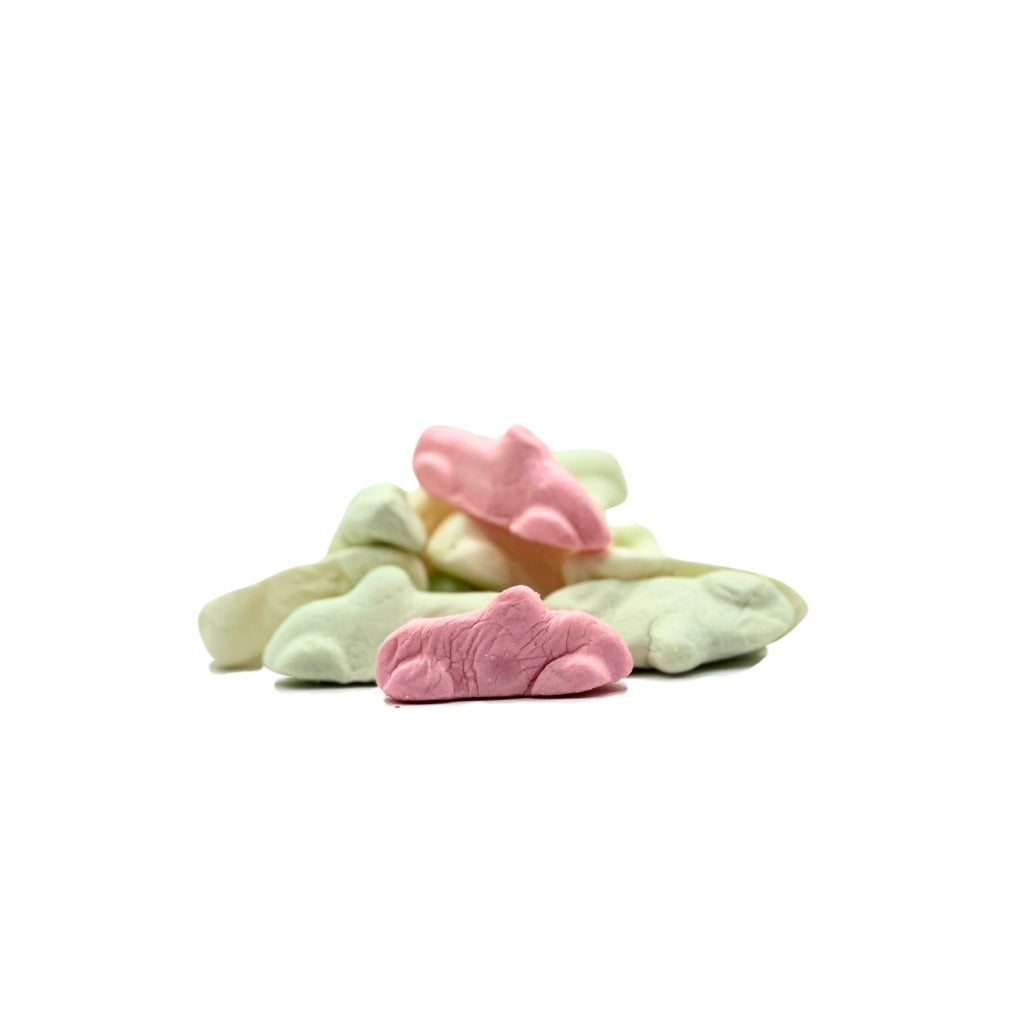
Reading the label on Ahlgrens Bilar (the iconic Swedish car-shaped candy) is a good exercise: the ingredient list uses potato starch as the primary thickener, and the product carries no gelatin. That’s typical for Swedish foam-style gummies.
Pro Tip: When you see “natural colors” and “potato starch” together in the ingredient list with no mention of gelatin, that’s a strong signal the product is vegan-friendly. Confirm by checking whether the brand’s product page carries an explicit vegan or gelatin-free claim.
What colorings and additives are common in Swedish candy?
Swedish confectionery leans heavily on plant and fruit concentrates for color. The ingredient list on a typical Swedish gummy will name specific sources rather than FD&C dye numbers.
Common natural color sources:
- Beetroot concentrate (red, pink)
- Black carrot concentrate (purple, dark red)
- Spirulina extract (blue, green)
- Turmeric (yellow)
- Carrot concentrate (orange)
- Fruit and vegetable concentrates listed generically as frukt- och växtkoncentrat
E-numbers you may see on Swedish candy labels include E153 (vegetable carbon, black), E160b (annatto, orange-yellow), and E140 (chlorophyll, green). These are all plant-derived and considered vegan.
Synthetic dyes like Red 40 (Allura Red, E129) and Yellow 5 (Tartrazine, E102) are uncommon in Swedish candy. EU labeling rules require a warning label on products containing certain azo dyes, which has pushed most Swedish manufacturers toward natural alternatives. Titanium dioxide (E171), once used as a whitening agent, was banned in the EU in 2022, so you will not find it in products manufactured after that date.
Glazing agents and their vegan status:
- Carnauba wax (E903): from Brazilian palm leaves, fully vegan, the most common choice
- Beeswax (E901): from honeybees, not vegan, less common in Swedish candy
- Shellac (E904): from lac insects, not vegan, rare in Swedish confectionery
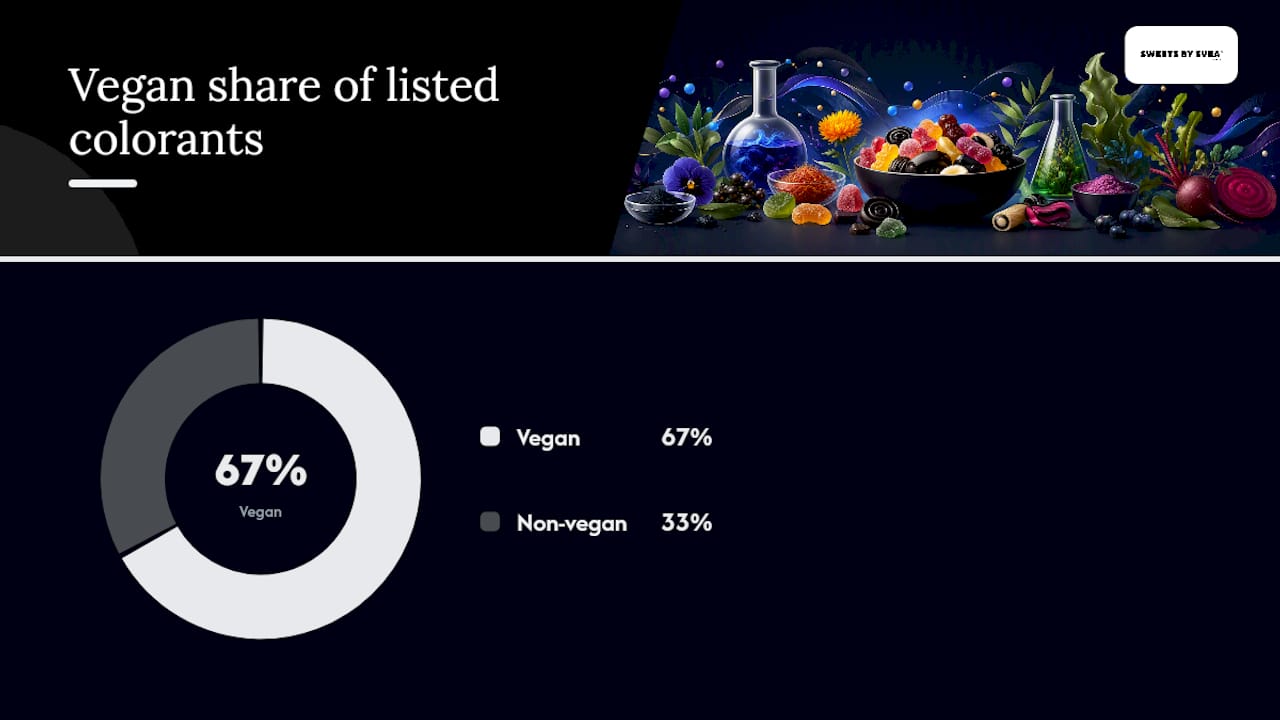
On U.S. import labels, carmine (E120, derived from cochineal insects) may appear as “carmine,” “carminic acid,” or “cochineal extract.” The FDA requires carmine to be declared by name on U.S. labels specifically because of allergy and religious dietary concerns. It is not vegan. Most Swedish brands avoid it in favor of beetroot or black carrot, but check the label if this matters to you.
| Colorant | Source | E-Number | Vegan? |
|---|---|---|---|
| Beetroot concentrate | Plant | beetroot concentrate | Yes |
| Black carrot concentrate | Plant | black carrot concentrate | Yes |
| Annatto | Plant (seed) | E160b | Yes |
| Carmine | Insect (cochineal) | E120 | No |
| Carnauba wax (glazing) | Palm leaf | E903 | Yes |
| Beeswax (glazing) | Bee | E901 | No |
Which allergens show up in Swedish candy, and how do you spot them?
Swedish candy is not automatically allergen-free. The most common allergen sources are:
- Milk/dairy: whey powder, milk fat, and cream appear in chocolate-coated products and caramels. Any candy with a chocolate shell likely contains milk.
- Wheat/gluten: most gummies are gluten-free, but licorice is the exception. Some licorice products use wheat flour as a binder. Always check the label on licorice specifically.
- Soy: soy lecithin is a common emulsifier in chocolate coatings. It appears in products like Cloetta Polly Licorice and most chocolate-covered candies.
- Tree nuts: less common in pure candy, but present in chocolate bars and some specialty products.
Cross-contamination is a real concern with pick-and-mix formats. Shared scoops, bins, and production lines mean that a product that contains no allergen ingredients may still carry a “may contain traces of” warning. For people with celiac disease or severe nut allergies, pre-packaged sealed products are the safer choice.
EU allergen declaration rules require the 14 major allergens to be highlighted on the label, typically in bold or a different font. This makes Swedish product labels easier to scan than many U.S. formats, where allergen declarations are sometimes buried in the ingredient list without visual emphasis.
Key label phrases to know: “Innehåller” means “contains.” “Kan innehålla spår av” means “may contain traces of.” On English-language import labels, these will appear in English, but knowing the Swedish originals helps when you’re reading a product page that hasn’t been fully translated.
Practical checks:
- Look for “glutenfri” or “gluten-free” on the front of the package for confirmed gluten-free products
- Bold allergen text on EU-format labels is a legal requirement, not a design choice
- “Contains milk” and “contains gelatin” are explicit statements on most Swedish brand pages
- For mixed bags like Hulten Favoritmix, check each component’s allergen status separately
How do you verify Swedish candy ingredient claims on U.S. import labels?
A quick, ordered checklist for reading labels in-store or on a product page:
-
Scan the ingredient list for key terms. Look for “gelatin” (animal-derived gelling agent), “pectin” or “potatisstärkelse” (plant-based alternatives), “ammonium chloride” (salmiak), and “carmine” (non-vegan red dye). These four words answer most vegan and allergen questions immediately.
-
Read the allergen statement and “may contain” warning. The allergen statement sits below the ingredient list on EU-format labels. If you have a severe allergy, the “may contain” line matters as much as the ingredient list itself. Choose sealed, pre-packaged items over pick-and-mix when cross-contact is a risk.
-
Cross-check the product page claim against the ingredient list. A product labeled “vegan” or “gelatin-free” should have no gelatin in the ingredient list. If the claim and the list conflict, trust the ingredient list.
-
Use manufacturer brand pages and FDA guidance for color additives. For color additives specifically, the FDA requires carmine to be named on U.S. labels. If you’re unsure about an E-number, the manufacturer’s product page (Fazer, Cloetta, Marabou, BUBS) typically explains the colorant source. Swedish candy FAQ resources can also clarify common formulation questions.
Pro Tip: Photograph the ingredient list and run a quick translation: glukossirap = glucose syrup; potatisstärkelse = potato starch; socker = sugar; citronsyra = citric acid; pektin = pectin. These five translations cover the majority of what you’ll see on Swedish gummy labels.
How ingredient claims were verified for this article
Ingredient claims in this article were verified against manufacturer product pages (including BUBS, Fazer, Cloetta, and Marabou brand pages), retailer product listings with full ingredient text, Swedish-to-English ingredient translation references, and EU food labeling regulations. Allergen declarations were cross-checked against EU Regulation No 1169/2011 on food information to consumers, which governs the 14-allergen highlighting requirement. Colorant and additive notes reference EU additive approval lists and FDA color additive guidance for U.S. import labeling. Product pages were reviewed in 2025.
A note on sourcing and ingredient transparency from Sweetsbysvea
At Sweetsbysvea, ingredient transparency isn’t a marketing line. Every product page on the store lists the full ingredient text, and dietary filters let you sort by vegan, gluten-free, or sugar-free before you add anything to your cart. The store carries only products free from GMOs, parabens, and high-fructose corn syrup, which aligns with what authentic Swedish manufacturers actually put in their products. If you have a specific allergen concern, the product pages include the allergen statement exactly as it appears on the package. Shipping is express, with delivery in 1–3 days, and products arrive sealed and fresh.
Where to buy authentic Swedish candy with clear ingredient info
Knowing what’s in your candy is only useful if you can actually find the product and read its label before buying.

Sweetsbysvea carries the full range of authentic Swedish candy with complete ingredient lists on every product page, no guesswork required. The store is specifically built for U.S. buyers who want real Swedish formulations, not American-market approximations. A few product pages worth checking directly:
- Candy Lovers Favorite: a curated variety bundle with visible ingredient lists and dietary filters, good for first-time buyers who want to sample across categories
- Swedish Fish: the gummy fish product page includes ingredient details and clarifies the formulation differences between authentic Swedish versions and U.S. market variants
- Ahlgrens Bilar Limousines: the iconic Swedish car-shaped candy, with a potato starch-based formulation and no gelatin
- The Falukorv Classic: a Swedish specialty product for shoppers exploring beyond candy
- Refrigerated Items: products that require cold shipping, with clear handling notes on the category page
- 10 Classic Swedish Recipes: a downloadable recipe collection that pairs traditional candy and food recipes with ingredient sourcing notes, useful if you want to make Swedish confectionery at home
Every order ships express with a freshness guarantee. Browse the full store at Sweetsbysvea and use the dietary filters on any category page to narrow by vegan, gluten-free, or sugar-free.
Sources
- What’s In Swedish Candy (Godis) Explained Guide | SwedishCrave