
Most commercially packaged candy and chocolate can enter the United States for personal use, but you must declare every food item on your customs form. A CBP agriculture specialist may inspect it, and the outcome depends on the packaging, the ingredients and whether you were upfront about carrying it. Declared items that turn out to be restricted are typically abandoned, not penalized. Undeclared ones risk confiscation and fines.
TL;DR:
- Commercially packaged candy in sealed, retail-ready packaging is generally allowed and easiest to declare without issues at U.S. customs.
- Foods containing unprocessed plant material or animal-derived ingredients are more likely to be flagged or denied entry, especially if homemade or loose.
- Always declare food items on your customs form, keep packaging accessible, and respond honestly to CBP questions to avoid confiscation or fines.
- Mailing candy intended for resale requires FDA Prior Notice and possibly registration, unlike personal travel baggage which does not.
- Ordering candy from online retailers before your trip simplifies process and avoids customs delays or confiscation risks.
Table of Contents
- Which Candy and Confectionery Items Are Allowed or Restricted?
- How Do You Declare Candy at U.S. Customs?
- Packaging and Labeling Tips That Improve Your Odds
- Personal Baggage vs. Commercial Shipments: What’s the Difference?
- What Happens If Your Candy Is Prohibited or Undeclared?
- Packing Advice From an International Candy Retailer
- Is Carrying Candy Through Customs Worth the Hassle?
- Why Order Swedish Candy Instead of Carrying It Home
- Where to Verify These Rules Yourself
- Sources
Which Candy and Confectionery Items Are Allowed or Restricted?
Sealed, factory-wrapped candy clears customs far more easily than anything homemade or loose. CBP’s own guidance treats commercially packaged, finished confectionery as generally admissible for personal use, precisely because it’s been processed and sealed in a way that eliminates most pest or contamination risk. That’s the whole logic behind these customs rules for candy: the government isn’t policing sugar content, it’s screening for anything that could carry an agricultural threat.
Ingredients matter more than the candy category. A chocolate bar is usually fine. A chocolate bar with a meat filling, or a sweet made with fresh fruit pulp, dairy from a country with active disease outbreaks, or unprocessed nuts still in the shell, gets flagged for a closer look. Plant material and animal-derived ingredients are what trigger secondary screening, not the fact that something is sugary.
Here’s how that breaks down in practice:
- Generally low risk: sealed chocolate bars, hard candy, gummies, toffee, and licorice in original retail packaging
- Higher scrutiny: homemade fudge or brittle with no ingredient label, meat-filled confections, and fresh fruit-based sweets
- Case-by-case: nut-based candies and mixes, which depend on how the nuts were processed and where they originated
- Almost always denied entry: anything containing raw or unprocessed plant material that could carry pests
Products like Fazer Dumle or Swedish Fish fall squarely into the first category: mass-produced, individually wrapped, and shelf-stable. That’s the kind of candy that moves through inspection without much friction.
How Do You Declare Candy at U.S. Customs?
Declaring candy is not optional, and it’s not complicated either. You check the box on your customs declaration form indicating you’re carrying food products, and if a CBP officer asks directly, you say yes and show them what you have. That’s the entire obligation on your end.
Here’s what the process actually looks like at the port of entry:
- Mark “yes” on the food/agricultural items line of your customs declaration.
- Have your candy accessible in your carry-on or checked bag rather than buried at the bottom.
- Answer the CBP officer’s questions honestly if you’re pulled for a follow-up conversation.
- If referred to an agriculture specialist, present the packaging and let them inspect the ingredient label.
- Accept the outcome. Admission, voluntary abandonment, or, in rare cases, further review.
CBP agriculture specialists are looking for three things: intact packaging, a legible ingredient list, and any sign of animal or plant material that shouldn’t be there. They have final say at that port, and that authority holds even for items bought duty-free at the airport. A sealed box from an airport shop overseas isn’t pre-approved just because it was sold at a gate.
Pro Tip: Declare first, explain later. Officers respond far better to “yes, I have chocolate from my trip” than to finding an undeclared bag of candy during a routine bag check.
Packaging and Labeling Tips That Improve Your Odds
Original packaging does more work than people realize, especially when it comes to FDA compliant labeling. A CBP agriculture specialist can scan a sealed, factory-labeled product in seconds. An unmarked bag of loose candy from a market stall requires a judgment call, and judgment calls go against the traveler more often than not.
A few habits make inspection faster and lower risk:
- Keep candy in its original, unopened retail packaging with the ingredient list intact.
- If the label is only in a foreign language, a quick photo translation on your phone helps if an officer asks what’s inside.
- Carry receipts for anything you bought in bulk. It backs up your claim that it’s for personal use, not resale.
- Pack chocolate and anything meltable in an insulated bag or your carry-on rather than checked luggage that sits on a hot tarmac.
There’s no published numeric allowance for how much candy one traveler can carry. The guiding principle in CBP’s own materials is “personal use,” and a suitcase of sealed chocolate bars reads very differently to an officer than forty identical boxes clearly meant for resale.
Personal Baggage vs. Commercial Shipments: What’s the Difference?
The rules split sharply depending on whether you’re carrying candy in your suitcase or mailing it as freight. FDA guidance draws that line clearly, and it changes what paperwork you’re on the hook for.
If it’s in your bag for your own consumption or as a gift, you don’t need to file FDA Prior Notice. You still declare it to CBP and it’s still subject to inspection, but there’s no separate import filing required. Cross into commercial territory, though, and the entire framework changes. A shipment intended for resale, or a quantity large enough to suggest resale, needs FDA Prior Notice, may require the sender to be a registered food facility, and can trigger a customs bond depending on value.
Quick checklist to sort which category applies to you:
- Personal baggage: small quantities, in your own luggage, for you or as gifts. No Prior Notice needed.
- Commercial shipment: mailed in bulk, intended for sale, or shipped by a business. Prior Notice and possibly FDA registration required.
- Gray area: repeated large shipments to the same address, which FDA treatment can reclassify as commercial regardless of stated intent.
If you’re mailing candy as a gift rather than carrying it, keep the quantity modest and the intent obvious.
What Happens If Your Candy Is Prohibited or Undeclared?
When an agriculture specialist finds a prohibited item, the standard outcome is abandonment and destruction, not a fine, provided you declared it honestly. Skip the declaration and get caught anyway, and you’re now looking at possible civil penalties on top of losing the item.
If something gets flagged or seized during your inspection, don’t argue with the officer. Ask for a receipt of what was taken and why, and note the port of entry and date. If you believe an item was wrongly confiscated, CBP’s port offices handle inquiries directly, and having your paperwork (receipts, ingredient labels, photos of packaging) makes any follow-up conversation faster.
Packing Advice From an International Candy Retailer
Carrying chocolate through three connecting flights and a hot rental car is asking for trouble even when customs isn’t the concern. We’ve shipped Swedish sweets to customers worldwide, and the packing lessons apply whether you’re traveling or mailing a gift.
Temperature is the enemy of chocolate long before customs is. A bar that melts and re-sets loses its shape and can look tampered with, which invites more questions at inspection, not fewer. If you’re bringing home something delicate like Fazer Dumle or a chocolate-covered toffee, an insulated pouch with a small ice pack in your carry-on beats a checked bag every time.
A few habits worth adopting:
- Keep the original box or wrapper even if you repack the contents for space.
- Screenshot the ingredient panel before you leave, in case the physical label gets damaged in transit.
- If you’re bringing home a large haul, consider shipping fragile chocolate separately rather than packing it around shoes and toiletries.
Pro Tip: If your trip involves multiple connections in warm climates, mailing chocolate ahead through a specialist shipper is often safer than checking it as luggage.
Is Carrying Candy Through Customs Worth the Hassle?
Most of the anxiety around candy customs rules comes from a mismatch between what people fear and what actually happens. Nobody is getting arrested over a box of gummy bears. The realistic downside is losing an item you declared, which costs you nothing but the candy itself, or facing a civil penalty for hiding something you should have mentioned.
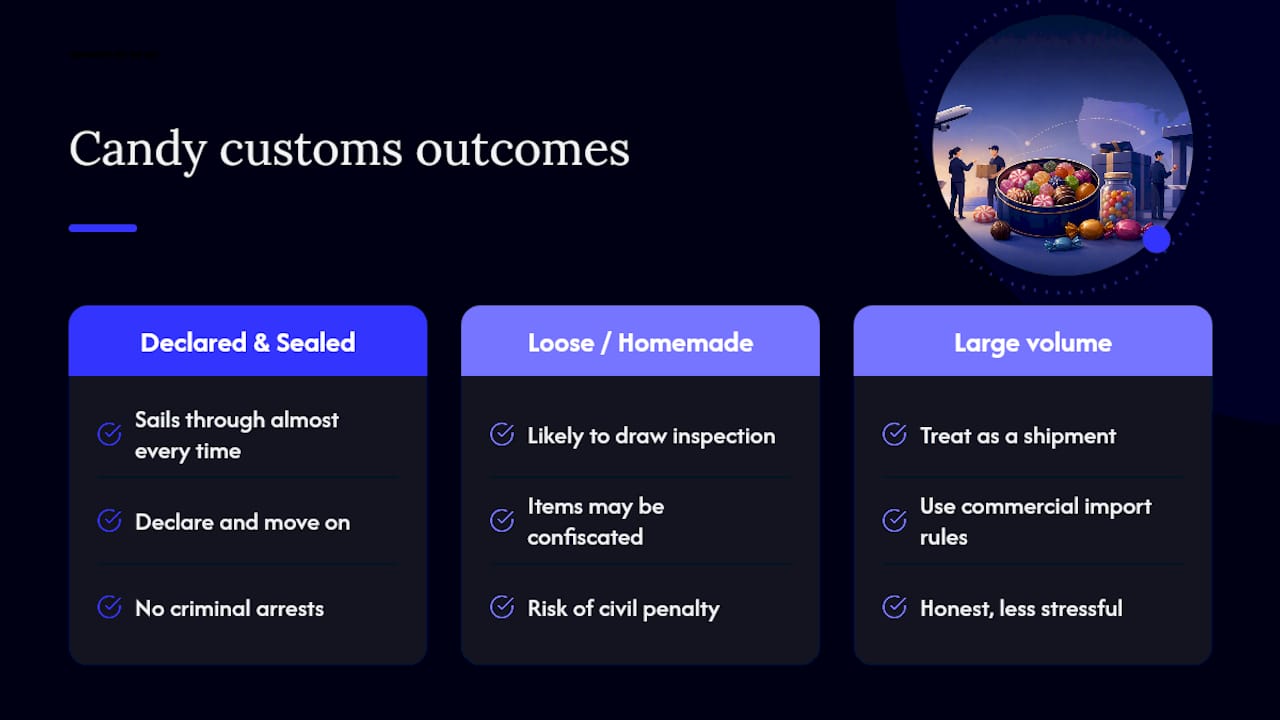
Where conventional travel advice falls short is treating “will my candy get through customs” as a yes-or-no question. It’s a packaging and honesty question. Sealed, labeled, declared candy sails through almost every time. Loose, homemade, or undeclared candy is where things go sideways, regardless of what’s actually inside it.
If you’re bringing home a few bars of chocolate or a bag of gummies, just declare them and move on with your day. If you’re trying to bring back a suitcase of Swedish confectionery for a party or a store, you’re better off treating that volume as a shipment from the start rather than gambling on an inspection line. That’s not a workaround. It’s the more honest and less stressful path, and it’s exactly what commercial import rules exist to formalize.
— Sweets
Why Order Swedish Candy Instead of Carrying It Home
Skipping the customs guesswork altogether is often the simpler move, especially for anything fragile or bought in bulk. Swedish candy and snacks are available from online retailers that offer worldwide delivery, allowing you to avoid weighing down a suitcase or risking a chocolate bar melting between connections.
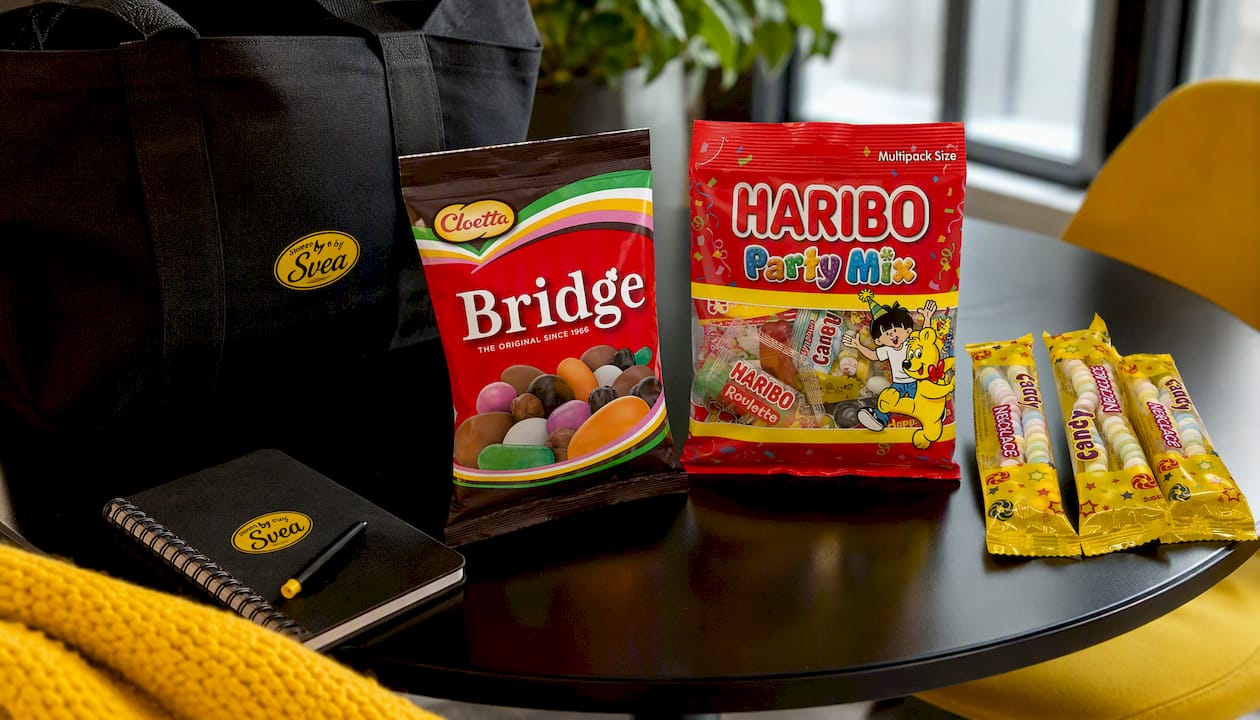
If you’re craving something specific and don’t want to gamble on finding it at a duty-free counter, ordering ahead solves the problem entirely. Reaching for a curated box like the Candy Lovers Favorite mix means no declaration forms, no inspection line, and no wondering whether your gummies are “commercially packaged enough.” Fans of chewier textures might prefer Ahlgrens Bilar Limousines, while chocolate lovers often go straight for Mini Snickers or the nutty crunch of the Nöt-Crème Päron bar. Many products ship without GMOs, parabens, and high fructose corn syrup, arriving fresh at your door instead of at risk in a customs bin. Browse the full catalog and place an order before your next trip, so the candy is waiting for you at home rather than riding in your carry-on.
Where to Verify These Rules Yourself
For the official word straight from the source, check CBP’s guidance on bringing food into the U.S. and the FDA’s import and Prior Notice requirements. Rules can vary slightly by port, so when in doubt, contact the specific port of entry or CBP directly before you fly.
Sources
- Bringing Food into the U.S. | U.S. Customs and Border Protection
- Clearing US customs on the way home from Europe — Rick Steves