
Yes, most of it is genuinely Swedish, but it’s a curated sliver of a much bigger candy world. IKEA stocks real imports from major manufacturers, which makes it a solid, cheap entry point for mainstream chocolate and gummies. It skips the pick-and-mix ritual, deep licorice range, and viral niche brands that define Swedish candy at its best. Buy the staples there; order the rest from a specialty shop.
TL;DR:
- IKEA’s candy largely consists of genuine imports from major Swedish manufacturers, with formulations matching their grocery-store counterparts.
- The main gaps are niche, regional, and high-intensity licorice varieties, as well as the traditional pick-and-mix shopping experience.
- Prices on shared items at IKEA are 20 to 40 percent lower than specialty importers, with no shipping risk or transit melting issues for chocolates.
- Specialty online shops like Sweets by Svea fill in the gaps with authentic, fresh, and more diverse licorice, textures, and pick-and-mix options.
- Consumer reviews confirm IKEA’s candy is good but limited in variety, prompting enthusiasts to seek deeper flavors and textures through specialized stores.
Table of Contents
- IKEA Candy vs Swedish Candy: How the Sourcing Actually Compares
- Where IKEA Actually Wins
- What IKEA Skips: The Specialty Brands and the Licorice Depth
- What to Buy at IKEA vs. What to Order Online
- How Swedish Candy Differs From American Candy
- Filling the Gaps: What Sweets by Svea Adds to the Picture
- What Buyers Actually Say When They Compare the Two
- Discovering Swedish Candy Beyond the IKEA Aisle
- Shop the Swedish Candy IKEA Doesn’t Carry
- Sources
IKEA Candy vs Swedish Candy: How the Sourcing Actually Compares
The authenticity question comes down to one fact: IKEA doesn’t manufacture its own candy. It buys from the same companies that stock grocery shelves across Sweden, then ships those products to its stores worldwide. That’s a meaningfully different model from a private-label snack aisle, and it’s why the “IKEA candy vs Swedish candy” debate isn’t really about fakes versus originals.
Several Swedish manufacturers show up repeatedly on IKEA’s shelves and on the shelves of any ICA or Coop back home:
- Marabou — chocolate bars, including the ubiquitous Daim variations
- Malaco — gummies and foam candies, often the source of IKEA’s fruit-shaped bags
- Cloetta — older heritage brands with roots going back generations
Reviews comparing the two directly have found that many IKEA candy SKUs are genuine imports from these manufacturers, with formulations that match grocery-store versions almost exactly. The recipe in an IKEA bag of Sour Skulls is the same recipe sold in Stockholm.
EU-wide food regulation plays a quiet role here too. Because Sweden and most of IKEA’s markets fall under the same regulatory umbrella for additives and labeling, there’s less room for a manufacturer to quietly reformulate a product for export. What changes is usually cosmetic: pack sizes run smaller for the IKEA food market, labels get English text alongside Swedish, and certain SKUs rotate in and out based on what a given IKEA distribution center ordered that season. None of that touches the actual candy inside the bag. It does mean that if you loved a specific Malaco item in Sweden, the IKEA version might come in a different bag size or under a slightly different SKU name, which can feel like a discrepancy even when the product is identical.
Where IKEA Actually Wins
For casual buyers and first-timers, IKEA solves a real problem: getting a taste of Swedish candy without hunting down an importer or paying shipping on chocolate that might melt in transit. Three things stand out.
- Price on overlapping items. Because IKEA imports at scale and skips per-order shipping fees, prices on shared SKUs tend to run 20 to 40 percent lower than what specialty online importers charge for the same Marabou bar or Malaco bag.
- Zero shipping risk. Chocolate is temperature-sensitive. Buying a Daim bar off an IKEA shelf means no summer delivery gamble.
- Instant gratification. You’re already there for meatballs and a bookshelf. The candy aisle near checkout means no separate purchase decision at all.
The seasonal rotation also works in IKEA’s favor sometimes. Around winter holidays, stores often bring in themed Marabou boxes or limited julmust-adjacent treats that make for good gift bags. And the classic Gott & Blandat mix, Sweden’s answer to an assorted jelly bean bag, is reliably stocked as a starter sampler for anyone who’s never tried Swedish gummies before.
Pro Tip: If you’re building a gift box for someone who’s never had Swedish candy, grab a Daim bar, a bag of Gott & Blandat, and whatever Marabou seasonal item IKEA has out. That trio covers chocolate, gummy, and novelty in one cheap stop.
What IKEA Skips: The Specialty Brands and the Licorice Depth
The gaps matter more the more you actually know about Swedish candy. IKEA curates for broad appeal, which by definition means leaving out anything too niche, too intense, or too regional to justify shelf space in hundreds of stores worldwide.
- Viral and niche brands. Brands that built cult followings through social media and small-batch distribution rarely make it into a global retail chain’s supply contracts. IKEA’s buying model favors established, high-volume manufacturers, not the newer names candy forums argue about.
- Licorice and salmiak range. Swedish salty licorice comes in gradients from mild to genuinely startling, and enthusiasts often shop specifically for the higher-intensity end. IKEA’s licorice selection tends to sit safely in the middle of that scale, skipping the extremes that make salmiak interesting in the first place.
- Lösgodis, or pick-and-mix. This is the biggest miss. The lösgodis tradition, scooping candy from dozens of bins and paying by weight, sits at the center of Swedish candy culture, and it’s a shopping ritual, not just a distribution method. IKEA’s bagged, pre-portioned model can’t replicate it.
- Freshness at lower-traffic locations. A packaged gummy bag sitting on a slow-moving shelf for months loses texture long before it expires. Turnover varies a lot by store, and IKEA candy aisles don’t always move fast enough to guarantee peak freshness.
Distribution economics mostly explain the gap. Specialty and smaller brands often sign exclusive deals with importers who focus entirely on Swedish snacks, rather than negotiating shelf space in a furniture chain’s global supply chain. That’s not a knock on IKEA. It’s just not built to be a specialty candy shop.
What to Buy at IKEA vs. What to Order Online
Think of it as a two-tier shopping list, not an either/or decision.
Buy at IKEA:
- Daim bars and other Marabou chocolate
- Gott & Blandat mixed gummies
- Swedish Fish, when your local store has it in stock
Order from a specialty retailer:
- Niche sour gummies and cornstarch-textured candies
- A broad salmiak and salty licorice lineup, from mild to intense
- Pick-and-mix bundles that recreate the lösgodis experience
- Seasonal or limited releases IKEA doesn’t carry or rotates out quickly
Before buying anything in person, glance at the best-by date printed on the bag. IKEA candy pricing runs 20 to 40 percent below specialty importers on shared items, but that discount only matters if the product is fresh. A discounted bag of stale gummies isn’t a deal.
For online orders, timing matters more than most shoppers expect. Chocolate shipped during summer heat waves can arrive partially melted even with good packaging, so choosing expedited shipping during hot months, or timing an order for cooler weeks, avoids a disappointing unboxing. Specialty online retailers typically carry the brands and pick-and-mix options that IKEA skips entirely, which is the whole reason to order rather than settle for the in-store aisle.
How Swedish Candy Differs From American Candy
Put a bag of Swedish gummies next to a bag of American gummy bears and the difference is obvious within one bite. Swedish candy generally leans less intensely sweet, with more fruit-forward flavor and a strong salty licorice tradition that has no real American equivalent outside of black licorice purists.
- Sweetness and flavor. American candy often chases pure sugar intensity; Swedish candy balances sweet against sour, salty, or bitter notes, especially in salmiak.
- Texture innovation. Cornstarch-based gummies, foam candies, and marshmallow-gummy hybrids show up constantly in Swedish assortments, textures that barely exist in mainstream American candy aisles.
- Ingredients and diets. Recent viral Swedish gummy brands lean into natural colorings and vegan-friendly recipes, partly a response to EU additive rules that differ from American norms.
- The ritual. Lördagsgodis, Saturday candy day, is a genuine cultural institution where Swedish families make a weekly trip to fill a pick-and-mix bag together. It’s less “grab a snack” and more a small weekend tradition. Even heritage items like polkagrisar, the striped peppermint stick invented in Gränna in 1859, still show up at fairs and specialty stores as living pieces of that tradition.
Fruit-forward flavor also shows up outside Swedish candy in comparable global snacks, like orange-flavored fruit candy, which shares that same lean-sweet, fruit-first approach rather than a straight sugar hit.
Filling the Gaps: What Sweets by Svea Adds to the Picture
The gaps IKEA leaves aren’t a dead end, they’re just a different shopping stop. Sweets by Svea exists specifically to cover the range a furniture store’s food market never will.
- Every product is sourced as authentic Swedish candy and grocery items, with ingredient standards that exclude certain additives.
- Orders ship worldwide with attention to freshness and timely delivery, which matters far more for chocolate and gummies than most shoppers realize.
- Many customers have reported being able to enjoy familiar flavors regardless of where they’ve relocated.
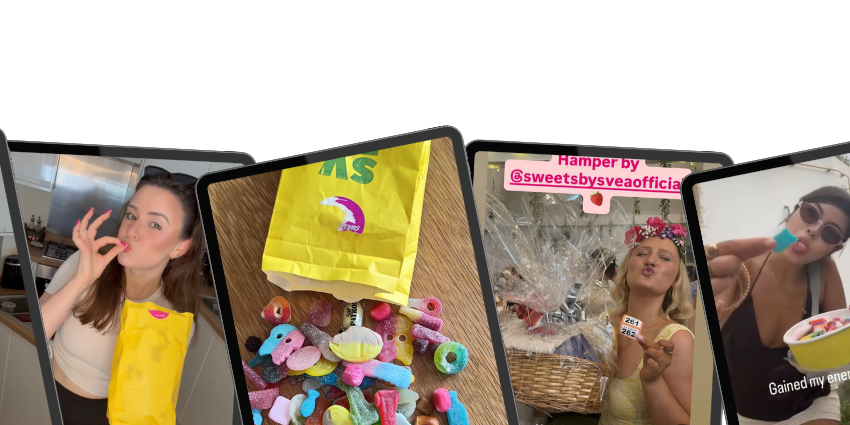
- Ordering online also opens the door to broader salmiak selections and pick-and-mix style assortments that a single IKEA aisle simply can’t stock.
What Buyers Actually Say When They Compare the Two
Anecdotal feedback from candy communities and comparison write-ups tends to converge on the same pattern: IKEA candy earns solid marks for taste and authenticity on the items it carries, and lower marks for depth. Shoppers routinely describe the Daim bars and Marabou chocolate as indistinguishable from what they remember eating in Sweden, which lines up with the sourcing evidence, since it’s the same manufacturer, same recipe.
Where reviews turn critical is selection. Enthusiasts who’ve shopped Swedish grocery stores or ordered from specialty importers consistently note that IKEA’s licorice options feel tame, and that the absence of any pick-and-mix bins makes the in-store experience feel more like a curated sampler than a real candy aisle. Taste-test style comparisons between IKEA gummies and specialty-imported gummies generally find similar sweetness and flavor accuracy, but specialty imports win on texture variety, since they include cornstarch-based and foam-style candies that IKEA rarely stocks.
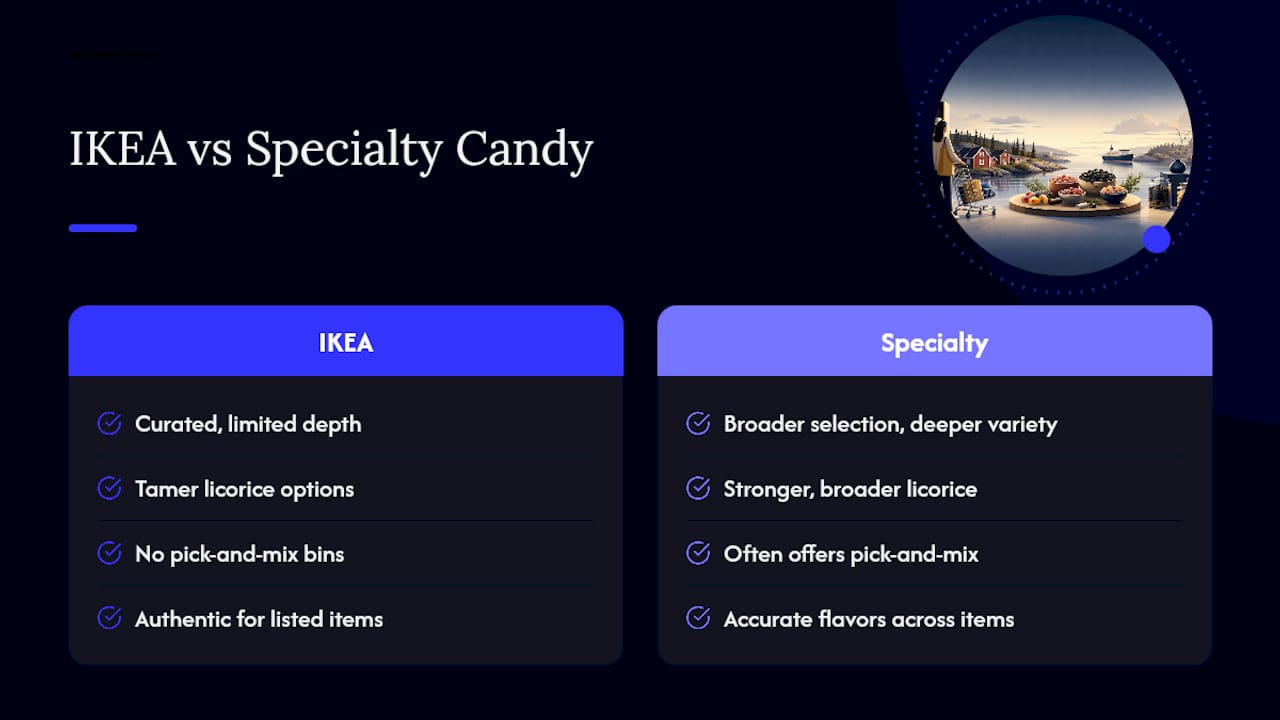
The consistent takeaway across most consumer feedback is that nobody complains about IKEA candy being bad. The complaint, when there is one, is always about what’s missing from the shelf rather than what’s on it.
Discovering Swedish Candy Beyond the IKEA Aisle
An IKEA candy aisle is where a lot of people fall in love with this stuff. That’s a fine start, but the real discovery happens once you go looking for the licorice, textures, and brands IKEA never carried in the first place.
— Sweets
Shop the Swedish Candy IKEA Doesn’t Carry
Sweets by Svea exists for exactly the gap this article just walked through: the specialty brands, deeper licorice range, and pick-and-mix style variety that a furniture store’s food market was never built to stock. Every order ships with a freshness guarantee and lands within 1 to 3 days worldwide, so the chocolate and gummies you get taste like they came straight off a shelf in Stockholm.
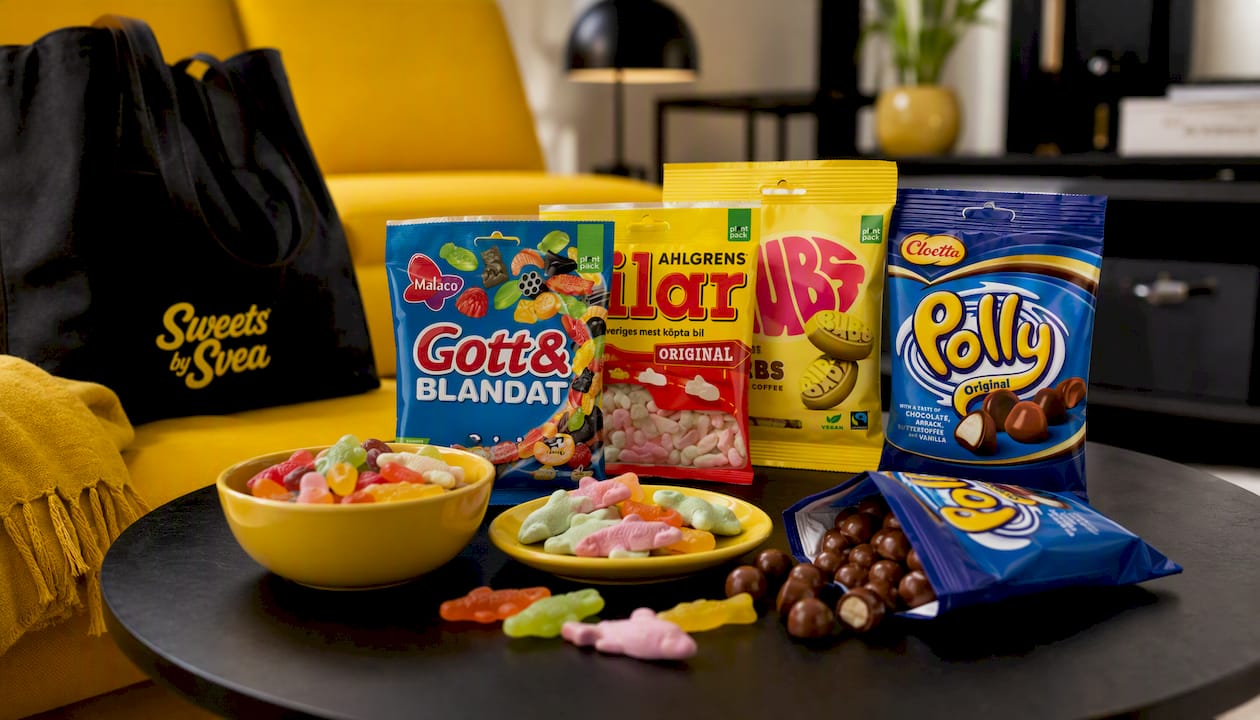
Start with the Candy Lovers Favorite bundle if you want a broad sampler beyond what IKEA offers, or grab Swedish Fish and Ahlgrens Bilar Limousines if you already know what you’re after. Craving something savory instead of sweet? The Falukorv Classic and Göl Classic Salami Snacks round out a proper Swedish grocery order alongside the candy. Browse the full catalog and place an order today to see what an IKEA aisle was always missing.
Sources
This comparison draws on reporting from Parade, Serious Eats, SwedishCrave, and Wikipedia’s entry on polkagrisar. For more shopping guidance, see our flavor guide to Swedish candy types and our complete pick-and-mix guide.
- What Is Swedish Candy? Flavor, Brands, Where To Buy - Parade
- IKEA Candy vs Real Swedish Candy: Is It Authentic? | SwedishCrave
- Swedish candy coverage explaining texture/viral trend - Serious Eats
- Polkagrisar - Wikipedia