
School safe Swedish snacks fall into a handful of reliable categories: crispbread (knäckebröd) topped with cheese or nut-free spread, whole-grain sandwiches, sliced fruit or vegetables, unsweetened dairy or yogurt alternatives, familiar-flavored whole-grain bars, and small portions of Swedish candy saved for occasional treats. Sources like Sweetsbysvea, guidance from the Swedish Food Agency, and allergy protocols from the CDC all point to the same formula: pair a grain, a protein, and a fruit or vegetable, then check labels every time.
TL;DR:
- Packing a safe Swedish snack requires pairing a grain, a protein, and a fruit or vegetable, and always checking labels for allergens or “may contain” warnings.
- Recommended items include rye crispbread with cheese or spreads, whole-grain sandwiches, sliced apples, cucumber sticks, and familiar-flavored bars like oat and cranberry.
- Avoid whole nuts, large candies, and hard or chewy foods for preschoolers, and slice fruits and vegetables into small, manageable pieces to reduce choking risks.
- Using insulated containers and labeling homemade items helps maintain freshness and safety, especially during field trips or in shared classroom spaces.
- Regularly review package labels and allergen information since ingredient formulations can change, and always confirm classroom allergy policies before packing snacks.
Table of Contents
- What Are the Best School Safe Swedish Snacks by Category?
- Why the Swedish Plate Model Should Guide Your Snack Choices
- Allergy Rules Every Parent Packing a Swedish Snack Should Know
- Choking Hazards Hiding in Familiar Swedish Snacks
- How to Pack Swedish Snacks So They Stay Fresh and Get Eaten
- Store-Bought Picks and Three Quick Swedish Snack Recipes
- Blending Swedish Snack Tradition With Modern School Safety
- Where to Find School-Safe Swedish Snacks in One Place
- Sources
- FAQ
What Are the Best School Safe Swedish Snacks by Category?
Packing a Swedish-inspired snack that clears a school’s allergy rules, satisfies a picky 6-year-old, and still tastes like home takes more than grabbing whatever is in the pantry. Below are concrete options grouped by type, with notes on age suitability and allergen flags baked in.
Bread and cracker based:
- Knäckebröd (rye crispbread) with cream cheese. Crunchy and filling, but the dry texture can be tough for kids under 4. Spread it thin to avoid choking on crumbs.
- Half a whole-grain sandwich with turkey or ham. A lunchbox staple. Skip the crusts for younger kids who struggle with denser bread.
- Rice crackers with a nut-free spread. A solid nut-free alternative to almond or peanut butter, and gentler on toddler jaws than rye crispbread.
Dairy and protein:
- Unsweetened yogurt with a spoon of berries mixed in. Fits the Swedish Food Agency’s push toward unsweetened dairy over sugary yogurt cups.
- Cubed cheese (Präst or a mild cheddar). Cut into small pieces for preschoolers; whole cubes are a choking risk for kids under 4.
- Hard-boiled egg, halved. Protein-dense and naturally allergen-light, though always confirm with the school if egg allergies are present in the classroom.
Fruit and vegetable:
- Sliced apple or pear. Skip whole grapes for anyone under 5. Halved and quartered lengthwise is the safer call.
- Cucumber and carrot sticks with a light dip. Cut carrots into thin matchsticks rather than round coins for younger children.
- Clementine segments. Naturally sweet, no added sugar, easy to pre-peel for smaller hands.
Bars and small treats:
- Oat and cranberry whole-grain bars. A study of Danish and Swedish children aged 8 to 11 found familiar-flavored bars like oat/cranberry outperformed unfamiliar Nordic combinations for acceptance, meaning these are more likely to actually get eaten instead of traded away.
- Kamut and pumpkin seed bars. The same study flagged this pairing as one of the better-received unfamiliar options once kids had tried it once or twice.
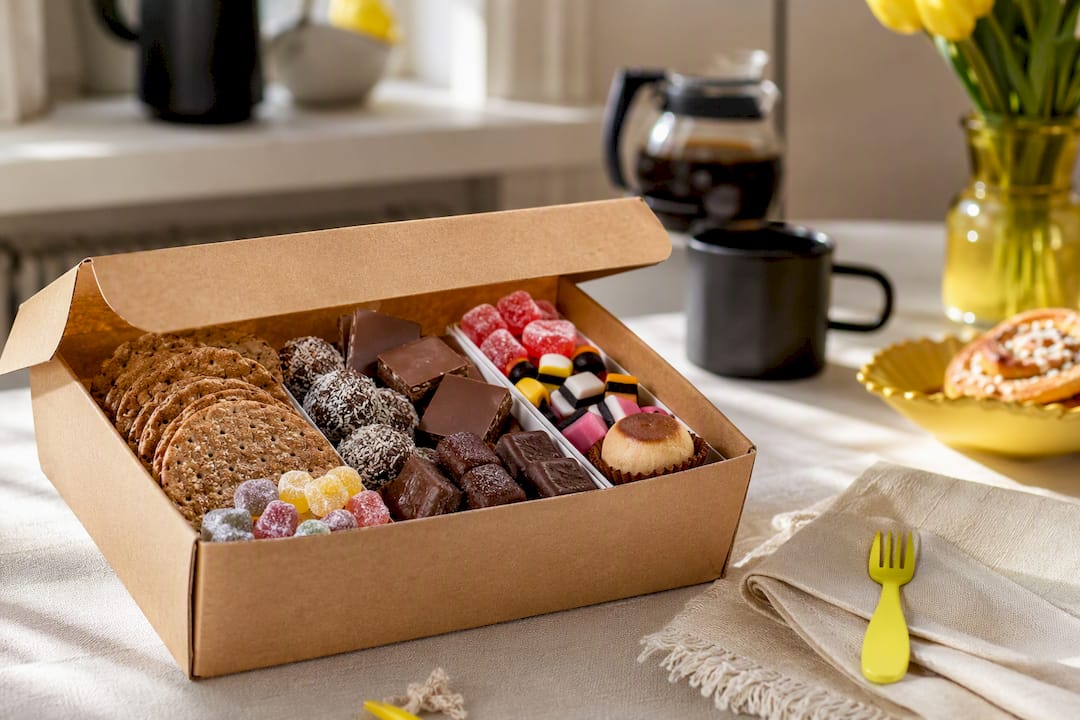
- A small, pre-portioned bag of Swedish Fish or similar chewy candy. Fine as an occasional treat item, not a daily snack, and only where the school’s candy policy allows it.
Pro Tip: Keep a rotating list of 3 to 4 “safe” snacks your child actually likes. Rotating a short list beats packing something new every day, since kids eat more of what’s familiar and you waste less food.
Every item above maps onto a simple structure: something from the bread or cereal group, something with protein, and something fresh. That structure isn’t arbitrary. It’s the backbone of how Sweden itself thinks about snacks, and it’s worth understanding before you build your own combinations.

Why the Swedish Plate Model Should Guide Your Snack Choices
Sweden doesn’t leave snack planning to guesswork. The Swedish Food Agency’s national guidelines lay out a plate model built on three parts: bread or cereal, a protein source, and vegetables or fruit. The same guidance is explicit about what to leave out: sweet, nutrient-poor foods have no place as a regular snack, even if they’re fine as an occasional extra.
Applying the model is less complicated than it sounds. Pick one item from each column and you’ve got a balanced snack in under a minute.
- Bread or cereal base: knäckebröd, whole-grain bread, oat crackers, or a whole-grain bar.
- Protein layer: cheese, yogurt, a hard-boiled egg, or a nut-free spread.
- Fruit or vegetable: apple slices, cucumber sticks, berries, or clementine segments.
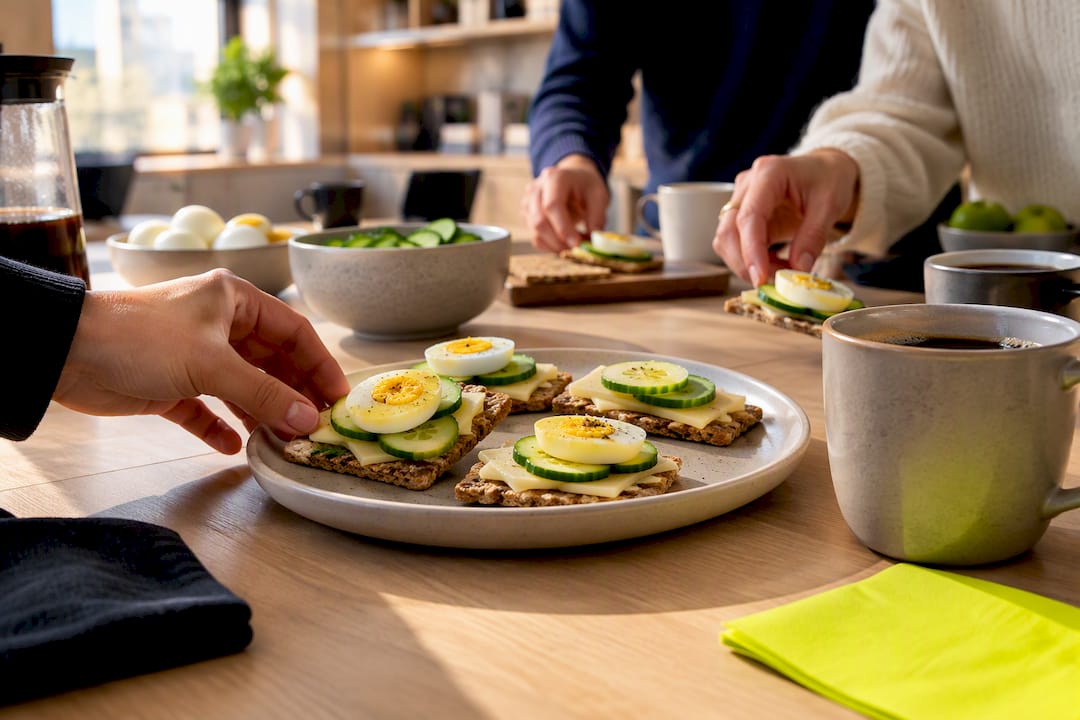
A knäckebröd cracker with cheese and cucumber checks all three boxes in one bite. So does a whole-grain bar paired with yogurt and a handful of berries on the side.
It helps to know how this fits into the bigger picture of a Swedish school day. Most Swedish public schools serve a free hot lunch, so the snack a child brings from home is meant to bridge the gap between breakfast and that lunch, or between lunch and the end of the school day. It’s a supplement, not a meal replacement, which is part of why Swedish guidance leans so heavily against sugary, calorie-dense snacks. The goal is steady energy, not a sugar spike an hour before math class.
Allergy Rules Every Parent Packing a Swedish Snack Should Know
Food allergies in classrooms are not a minor logistical footnote. The CDC’s voluntary guidelines for managing food allergies in schools recommend that schools build a Food Allergy Management and Prevention Plan, train staff on recognizing reactions, prevent cross-contact in shared spaces, and reinforce hand-washing with soap and water. FARE’s school-safety guidance adds a simpler point that’s easy for parents to act on directly: discourage food sharing and support consistent hand-washing at snack time.
Hand sanitizer alone doesn’t cut it here. FARE notes that hand sanitizer does not remove allergen proteins from skin the way soap and water does, which matters if your child’s classroom relies on sanitizer stations instead of a sink.
A short checklist covers most of what a parent needs to do before a snack goes in the bag:
- Read the ingredient label every single time, even on a brand you’ve bought before. Formulations change.
- Skip anything with a “may contain” warning if your child’s classroom has a strict nut-free policy, since shared-equipment risk from those warnings is a real concern for schools, not just a legal disclaimer.
- Choose packaged snacks that explicitly state “nut-free” rather than assuming a product is safe because it doesn’t list nuts as a primary ingredient.
- Send a short ingredient note with homemade items so teachers can verify contents at a glance.
- Confirm your child’s classroom rules directly with the teacher rather than relying on last year’s policy.
If your child’s classroom is nut-free, resources like Wild Foodz’s nut-free recipe collection offer additional swap ideas beyond the Swedish staples covered here.
Choking Hazards Hiding in Familiar Swedish Snacks
Some traditional favorites need modification before they’re safe for younger children. The CDC and USDA flag whole grapes, whole nuts, hard candies, uncut raw vegetables, and sticky foods as higher-risk items for kids still developing their chewing and swallowing skills, generally under age 4.
Several Swedish snack staples fall right into that risk zone. Whole almonds or hazelnuts, common in Swedish baking and snack mixes, should be skipped entirely for preschoolers or crushed if used at all. Gummy candies and chewy fish-shaped treats are dense and sticky, meaning smaller pieces and slower eating for anyone under 5. Hard, thick-cut knäckebröd can crumble into sharp shards; a thinner cut or a softer whole-grain cracker is the safer swap for toddlers.
The fix is almost always the same: slice grapes and cucumber into quarters, mash sticky spreads thin, and hold off on whole nuts until a child is old enough to chew thoroughly and sit still while eating. Most preschool teachers will ask about exactly these items if you mention what is going in the lunchbox.

How to Pack Swedish Snacks So They Stay Fresh and Get Eaten
A great snack that arrives crushed, warm, or unlabeled doesn’t do anyone any good. Portion size matters first: one to two ounces of a bar or cracker item, a quarter cup of fruit, and a tablespoon or two of dip is plenty for most elementary-age kids.
- Use a divided bento box to keep wet and dry items separate, which stops crackers from turning soggy against yogurt or dip.
- Pack an ice pack or insulated pouch for anything dairy-based, cheese, or refrigerated deli-style items, since these need to stay cold for more than two hours in most cases.
- Label homemade items with the child’s name, a short ingredient list, and the date packed, especially for shared classroom snack bins.
- Add a small dip, hummus or a yogurt-based sauce work well, to make plain crackers or vegetables more appealing to reluctant eaters.
- For field trips, stick to sealed, factory-labeled packaging rather than homemade items, since teachers on a bus can’t verify contents as easily as they can in a classroom.
Pro Tip: Reusable silicone pouches or a small stainless tin cut down on packaging waste and hold up better than plastic wrap for crumbly items like knäckebröd.
Store-Bought Picks and Three Quick Swedish Snack Recipes
Not every school morning allows time to slice fruit and build a bento box from scratch. A few ready-made options and simple combinations cover most of the gap.
- Fröknäcke cracker, cream cheese, and cucumber slices. Assemble in under two minutes; keeps well in an insulated pouch for a few hours.
- Oat and cranberry bar, cut in half, paired with a small yogurt cup. Splitting the bar keeps portions reasonable for younger kids.
- A small, pre-measured portion of Swedish Fish as an occasional treat, not a daily item, and only where the classroom’s candy policy allows it.
- For a broader set of ideas built around traditional combinations, Sweetsbysvea’s collection of classic Swedish recipes offers ready reference points for busy weeks.
- Always double check labels and “may contain” statements before adding a new packaged item to the rotation, even one you’ve used before.
Blending Swedish Snack Tradition With Modern School Safety
Sweden’s snack culture has always leaned on simple, unprocessed staples: rye bread, dairy, fruit. What’s changed is the safety layer around it, from allergy protocols to choking guidance most parents didn’t grow up with. Swedish snack providers at that intersection source familiar flavors while treating label transparency and ingredient quality as non-negotiable, not an afterthought bolted onto marketing copy.
— Sweets
Where to Find School-Safe Swedish Snacks in One Place
Finding Swedish snacks that are both authentic and school-appropriate usually means hunting across import shops, specialty grocers, and questionable online marketplaces. Some retailers serve as direct sources for Swedish candy, snacks, and groceries, made without GMOs, parabens, or high fructose corn syrup, shipped worldwide in 1 to 3 days.

If you’re building a rotation of school-safe options, start with the classic Swedish recipes collection for combination ideas, browse refrigerated items for chilled snacks that need cold-chain care, or check out Swedish Fish as a portion-controlled treat for days the classroom policy allows it. Whatever you pick, read the label before it goes in the lunchbox. Head to Sweetsbysvea’s full catalog to see what’s in stock this week and get it packed by Friday.
Sources
- National guidelines for school meals — Swedish Food Agency
- Voluntary Guidelines for Managing Food Allergies in Schools — CDC
- Food Allergy Safe Schools: The Basics — FARE
- Acceptance of Nordic snack bars in children aged 8–11 years
FAQ
What is a popular Swedish snack for kids?
Knäckebröd (rye crispbread) topped with cheese or a nut-free spread is one of the most common everyday snacks in Sweden. Whole-grain bars with familiar flavors like oat and cranberry are also well accepted by kids, according to a study of Swedish and Danish children.
What are good options for a top 10 school snack list?
A solid list mixes bread-based items (knäckebröd, half a sandwich), protein (cheese, yogurt, egg), fruit or vegetables (apple slices, cucumber sticks), and a whole-grain bar, following the three-part structure in the Swedish Food Agency’s plate model. Rotating four or five of these covers most weeks without repeating the exact same combination daily.
Is Swedish candy healthier than American candy?
Swedish candy often uses different sweeteners and coloring rules than typical American candy, and many brands, including Sweetsbysvea’s selection, avoid high fructose corn syrup. That said, candy is still candy, and Swedish nutrition guidance treats it as an occasional item rather than a regular snack, regardless of the recipe.
What are some popular Swedish sweet treats?
Swedish Fish, chocolate-covered licorice, and pick-and-mix candy bags are among the best-known sweet treats, alongside classic pastries like kanelbullar. For school settings, these belong in the occasional-treat category rather than the daily snack rotation, and portioning them small keeps them within most classroom candy policies.
How much does Sweetsbysvea cost for a Home, Delivered Monthly plan?
Pricing for the Home, Delivered Monthly plan is listed directly on Sweetsbysvea’s site rather than published separately, so current rates are best checked there before ordering.