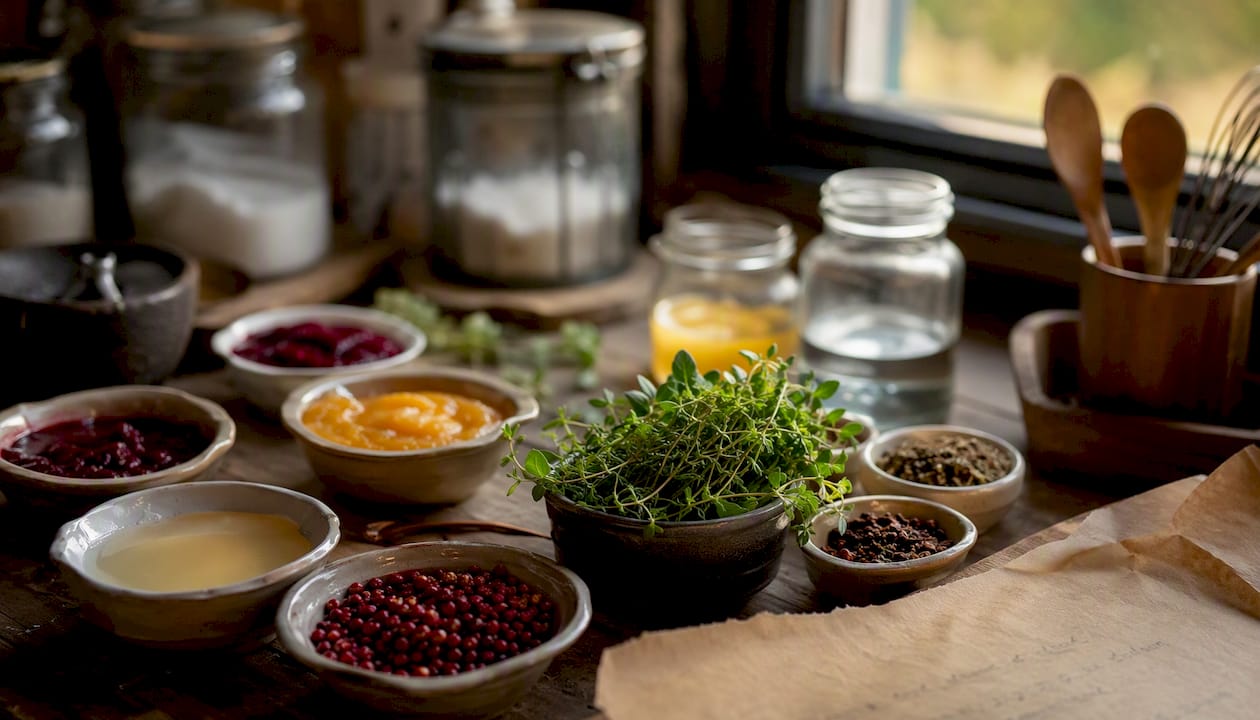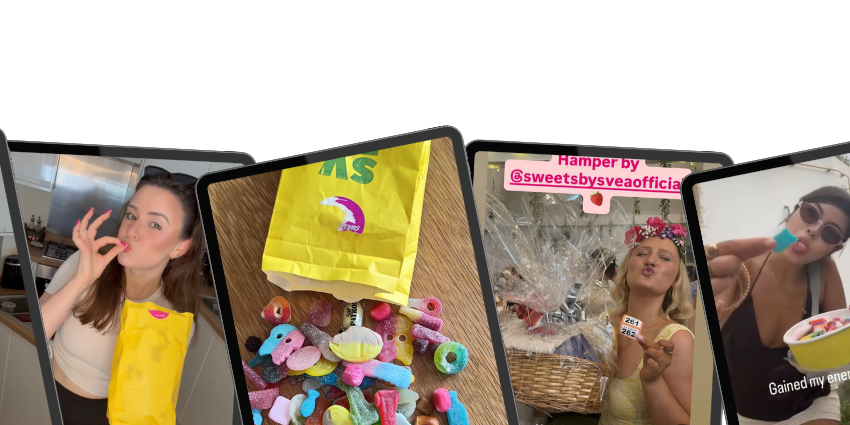

The eight candies that define a Swedish Christmas are knäck, ischoklad, polkagris, juleskum, pepparkakor, lussekatter, marzipan, and julmust. Buy the shelf-stable classics and any advent mix you want ready-made; make knäck and ischoklad at home because both need fewer than five ingredients and a basic temperature check. Sweetsbysvea ships authentic versions of nearly all of them to U.S. addresses within 1–3 days, free from GMOs and high fructose corn syrup.
Quick reference for the essentials:
- Knäck — butterscotch toffee with chopped almonds, poured into paper cups
- Ischoklad — thin chocolate-and-coconut-oil wafers that melt on contact
- Polkagris — the red-and-white peppermint stick from Gränna, now carrying EU protected geographic status per BBC Travel
- Juleskum — strawberry-flavored seasonal marshmallows, a Christmas-only release
- Pepparkakor — crisp, paper-thin gingerbread spiced with cinnamon, ginger, and cardamom
- Lussekatter — saffron buns baked for Lucia Day on December 13
- Marzipan — almond paste shaped into pigs, fruits, or log slices for the julbord
- Julmust — a spiced seasonal soda that pairs with almost every candy on this list
Pro Tip: Buy polkagris, juleskum, and pepparkakor ready-made. Make knäck and ischoklad at home. The homemade versions taste noticeably fresher and cost less than imported equivalents.
Key Takeaways
The most reliable path to an authentic Swedish Christmas is to make knäck and ischoklad at home and buy polkagris, juleskum, and pepparkakor from a verified importer who ships fresh product with full ingredient transparency.
| Point | Details |
|---|---|
| Top candies to make | Knäck and ischoklad (chocolate plus coconut oil) are the easiest homemade options. |
| Top candies to buy | Polkagris, juleskum, and pepparkakor are best purchased from a specialist importer. |
| Authenticity check | Look for Swedish-language labels, named Swedish manufacturer, and EU PGI mark on polkagris. |
| Storage tip | Keep knäck in an airtight tin at room temperature; humidity makes toffee sticky. |
| Sweetsbysvea | Ships authentic Swedish Christmas candy to U.S. buyers with 1–3 day delivery and no HFCS. |
Table of Contents
- What makes each Swedish Christmas candy special?
- Where can you buy authentic Swedish Christmas candy in the U.S.?
- How do you make knäck and ischoklad at home?
- How do Swedes serve and store these candies?
- Swedish candy terms you’ll see on packaging
- How do you tell a trustworthy Swedish candy seller?
- Why these sweets carry more weight than their ingredients suggest
- Authentic Swedish Christmas candy, shipped to your door
- Sources
What makes each Swedish Christmas candy special?
Swedish Christmas food traditions center on a mix of baked goods and handmade sweets served across December, from the first Sunday of Advent through Christmas Eve’s julbord. Each candy has a specific role.
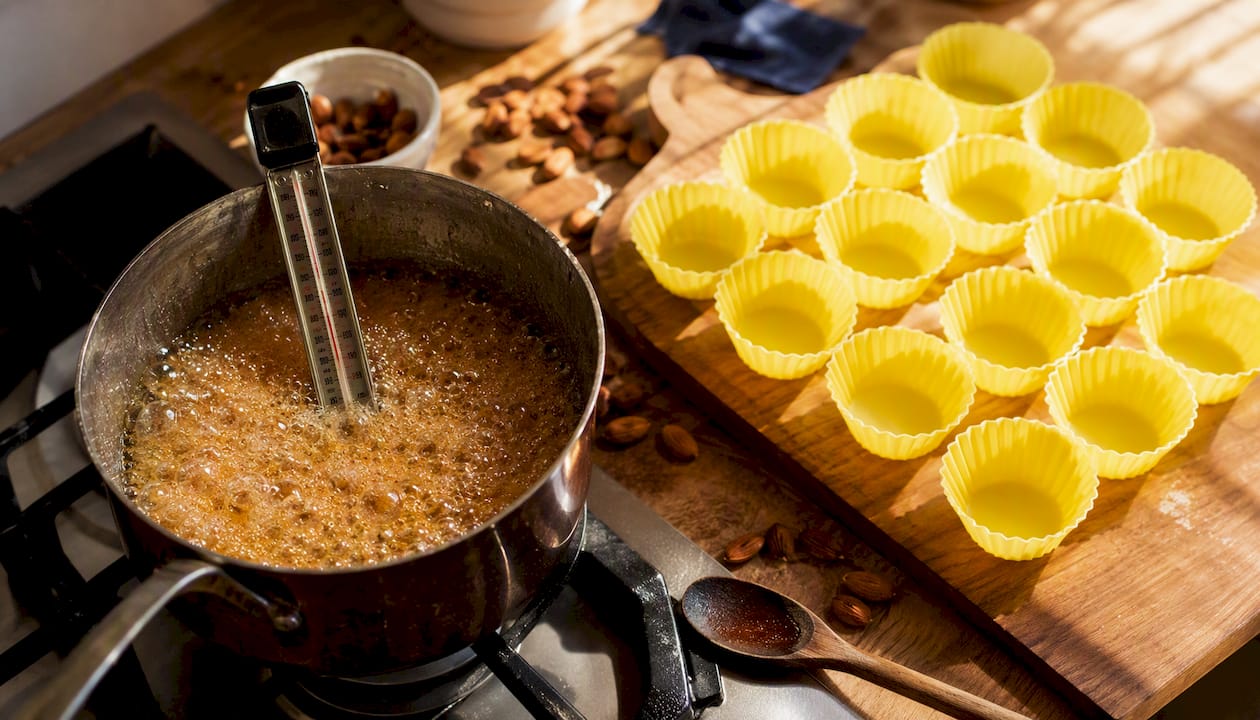
Knäck is the centerpiece of the homemade candy tray. Golden syrup, cream, sugar, and almonds cook down to a toffee that gets poured into tiny paper cups while still liquid. The cups are non-negotiable in Sweden — they are part of the presentation, not just a convenience. Texture ranges from soft and chewy to firm and brittle depending on how high you take the temperature.
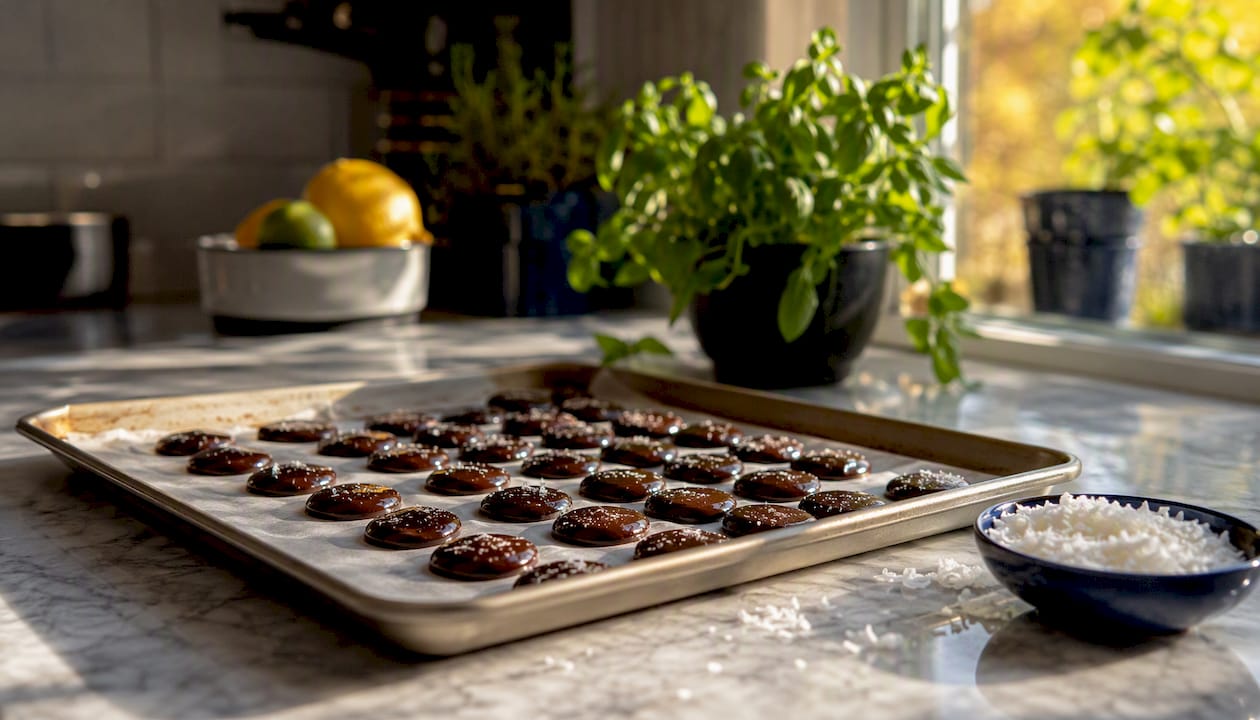
Ischoklad translates literally as “ice chocolate,” which describes the sensation perfectly. A thin disc of dark or milk chocolate mixed with coconut oil sets at room temperature but melts the instant it hits your tongue. Swedish families make dozens of these in a single afternoon.
Polkagris has a documented origin: Amalia Eriksson created the first batch in Gränna in 1859, and the town has been making them by hand ever since. The Wikipedia entry on polkagrisar details the traditional production method and the EU protected geographic indication that now governs the name. Only producers in Gränna can legally sell polkagris under that designation.
Juleskum is a strawberry-flavored marshmallow candy that has been a seasonal staple since the 1930s. It appears only at Christmas, which is part of why Swedes treat it as an event. The name translates awkwardly into English, but the candy itself is mild, soft, and genuinely popular — The Local notes it consistently ranks among Sweden’s top-selling seasonal candy bags.
Pepparkakor are thinner and crispier than most American gingerbread cookies. The spice blend leans heavily on cardamom alongside the usual cinnamon and ginger. Swedes use them to build pepparkakshus (gingerbread houses) and hang them as tree ornaments, which means they need to be hard enough to hold a shape.
Lussekatter are saffron buns, not candy, but they belong on any honest list of Swedish Christmas sweets. Baked for Lucia Day on December 13, they are soft, golden, and faintly sweet. The saffron gives them a color and flavor that nothing else replicates.
Marzipan shows up on the julbord in shaped forms: pigs for luck, fruits, or sliced logs dusted with powdered sugar. Swedish marzipan tends to have a higher almond content than the German variety, which makes it less sweet and more intensely nutty.
Julmust is a carbonated drink flavored with hops, malt, and spices. It tastes nothing like cola despite a similar color. Swedes drink it throughout December alongside every candy and baked good on this list.
| Candy | Type | Key Flavor | Holiday Occasion |
|---|---|---|---|
| Knäck | Homemade toffee | Butterscotch, almond | Julbord, candy tray |
| Ischoklad | Homemade chocolate | Dark or milk chocolate | Candy tray, gifting |
| Polkagris | Regional specialty | Peppermint | Advent, decoration |
| Juleskum | Seasonal marshmallow | Strawberry | Christmas only |
| Pepparkakor | Spiced cookie | Cinnamon, cardamom | Advent through Christmas |
| Lussekatter | Saffron bun | Saffron, vanilla | Lucia Day, December 13 |
| Marzipan | Almond confection | Almond, sugar | Julbord |
| Julmust | Seasonal soda | Spiced malt | Paired with all of the above |
Seasonal packaging is a reliable cue. Juleskum and polkagris appear in holiday-themed bags with red and gold graphics. Pepparkakor tins often carry a traditional Dala horse motif. If a product claims to be a Swedish Christmas item but carries no Swedish-language text on the label, treat that as a warning sign.
Where can you buy authentic Swedish Christmas candy in the U.S.?
Finding genuine Swedish holiday treats in the U.S. takes more than a trip to the international aisle. Here is where to look and what to check.
Specialist importers are the most reliable source. They stock products with original Swedish-language labels, correct EU markings, and production dates you can verify. Sweetsbysvea ships directly to U.S. addresses with a 1–3 day freshness guarantee and publishes full ingredient lists for every product, including clear notes on GMO and HFCS status. Their best Swedish candy guide is a useful starting point for first-time buyers.
Nordic grocery stores in cities like Minneapolis, Chicago, and Seattle sometimes carry seasonal Swedish items, but stock is inconsistent and turnover can be slow. Check production dates carefully.
General online marketplaces carry Swedish-branded products, but authenticity varies. Some listings use Swedish-sounding names on products manufactured outside Sweden. The price is often the tell: authentic imported candy costs more to ship and store than a domestic imitation.
Checklist for spotting authentic product:
- Swedish-language text on the primary label (“Ingredienser,” “Bäst före”)
- Manufacturer address in Sweden
- EU protected geographic indication mark for polkagris
- Production and best-before dates that suggest recent manufacture
- Sealed, undamaged packaging with no signs of moisture damage
- No high fructose corn syrup or artificial preservatives in the ingredient list
Red flags to avoid:
- Prices significantly below what comparable imports typically cost
- Shipping windows of three weeks or longer (fresh toffees and marshmallows degrade)
- No ingredient list in any language
- Generic “Scandinavian candy” branding with no named Swedish manufacturer
Authentic Swedish advent calendars, in particular, tend to carry a higher price in the U.S. market. A suspiciously cheap calendar often signals old stock or a product assembled outside Sweden with non-original contents.
Pro Tip: Request the lot or batch date from any online seller before purchasing perishable items like knäck or juleskum. A reputable importer will provide it without hesitation.
How do you make knäck and ischoklad at home?
Both recipes are genuinely simple. The only place people go wrong with knäck is temperature, and that is easy to fix with a candy thermometer.
Knäck (Swedish Christmas toffee)
The Guardian’s Christmas recipe collection and Swedish Spoon’s knäck guide both confirm the same core method: cook cream, sugar, and golden syrup together, add almonds near the end, and pour into paper cups before the mixture sets.
Ingredients (makes approximately 40 cups):
- 1 cup heavy cream
- 1 cup granulated sugar
- ½ cup golden syrup (Lyle’s Golden Syrup works well in the U.S.)
- ½ cup blanched almonds, roughly chopped
- 40 small paper candy cups
Steps:
- Combine cream, sugar, and golden syrup in a heavy-bottomed saucepan over medium heat.
- Stir until the sugar dissolves, then stop stirring and let the mixture cook.
- Clip a candy thermometer to the side of the pan. Watch the temperature carefully.
- For soft, chewy knäck: pull the pan at a temperature that yields a soft toffee consistency. For firmer toffee: cook to a slightly higher temperature for a firmer texture.
- No thermometer? Drop a small amount of syrup into a glass of cold water. Soft-ball stage (pliable ball) means soft knäck; firm-ball stage means firmer toffee.
- Remove from heat and stir in the chopped almonds quickly.
- Pour immediately into paper cups using a small ladle or a heatproof measuring cup with a spout.
- Let cool at room temperature for at least one hour before handling.
Pro Tip: Work fast once the almonds go in. The mixture starts setting within two minutes of leaving the heat. Have your paper cups arranged on a flat tray before you start cooking.
Ischoklad (Swedish ice chocolate)
- Melt 200g of dark or milk chocolate (roughly 7 oz) in a heatproof bowl over simmering water, or in 30-second microwave bursts.
- Stir in 2 tablespoons of refined coconut oil until fully combined and smooth.
- Pour into small paper candy cups or a silicone mold.
- Refrigerate for 20 minutes until set.
- Store at room temperature once set — refrigerating them long-term makes them sweat when brought back to room temperature.
For a richer result, use a good Swedish milk chocolate like Marabou Mjölkchoklad as your base.
Quick notes on pepparkakor and lussekatter
Pepparkakor dough needs to rest overnight in the refrigerator before rolling, and the cookies bake at a high temperature for a very short time — usually 175°C (350°F) for 6–8 minutes. The margin between perfectly crisp and burnt is narrow. For a gingerbread-themed decoration idea, Baxter Murray’s gingerbread chocolate lollipop shows how the aesthetic translates into a gift-ready format if you want a shortcut.
Lussekatter require saffron dissolved in warm milk, a soft enriched dough, and a specific S-shaped roll. They are not difficult, but the shaping takes practice. Both are worth making once; both are also worth buying if time is short.
How do Swedes serve and store these candies?
Presentation matters as much as the candy itself in Swedish holiday tradition. Knäck sits in its paper cups on a tiered tray or a flat plate, never unwrapped. Candy bowls filled with a mix of juleskum, polkagris, and chocolate appear at fika gatherings throughout December. The julbord, Sweden’s Christmas Eve buffet, typically ends with a dessert spread that includes marzipan shapes, pepparkakor, and ischoklad alongside rice pudding and fruit.
Advent calendars are a separate tradition. Swedish advent calendars often contain small bags of candy rather than chocolate squares, and the best ones include a rotating selection of seasonal sweets across the 24 days.
Storage by candy type:
- Knäck: Room temperature in an airtight tin, up to two weeks. Humidity is the enemy — it makes toffee sticky and soft.
- Ischoklad: Room temperature once set, away from direct heat. Keeps well for up to a week.
- Polkagris: Cool, dry place. Avoid plastic bags that trap moisture.
- Juleskum: Original sealed packaging until serving. Once opened, consume within a few days.
- Pepparkakor: Airtight tin at room temperature. They actually improve slightly after a day or two.
Gifting tips:
- Layer knäck cups in a flat tin with parchment paper between layers.
- Wrap ischoklad in a small cellophane bag tied with red ribbon.
- Combine a few polkagris, some pepparkakor, and a small bag of juleskum in a kraft paper box for a Swedish-inspired candy assortment.
- Always label homemade gifts with an ingredient list. Knäck contains almonds; marzipan is almost entirely almond paste.
Allergen notes: Knäck and marzipan both contain tree nuts (almonds). Pepparkakor and lussekatter contain gluten. For nut-free guests, ischoklad and juleskum are the safest options, provided the chocolate used in ischoklad is processed in a nut-free facility. Always check the label on any commercial product for cross-contamination warnings.
Pro Tip: For gluten-free pepparkakor, substitute a 1:1 gluten-free flour blend. The texture is slightly more fragile, but the flavor holds up well.
Swedish candy terms you’ll see on packaging
Key label terms:
- Ingredienser = Ingredients
- Bäst före = Best before
- Mandel = Almond (allergen alert)
- Glutenfri = Gluten-free
- EU Protected Geographical Indication (PGI) mark on polkagris confirms Gränna origin
Swedish ingredient lists follow EU labeling rules: the heaviest ingredient by weight appears first. If sugar leads the list on a toffee, that is expected. If glucose syrup or corn syrup leads on a product claiming to be traditional Swedish candy, that is a sign it was not made in Sweden.
How do you tell a trustworthy Swedish candy seller?
The difference between a reliable importer and a reseller moving old stock usually comes down to a handful of verifiable details.
Trust signals that matter:
- Full ingredient list published on the product page, not just a photo
- Freshness guarantee with a specific timeframe (1–3 days is the standard for perishable items)
- Visible best-before or production dates, either on the package or available on request
- Swedish-language labels visible in product photos
- Named Swedish manufacturer on the packaging
- Clear return and contact policy on the seller’s website
- No high fructose corn syrup or artificial preservatives in the ingredient list
Verification steps before you buy:
- Search the manufacturer name from the label to confirm it is a real Swedish producer
- Check whether the seller lists storage and transport conditions for temperature-sensitive items
- Ask for the lot or batch date on items like knäck or juleskum before ordering
- Look for customer reviews that mention packaging condition on arrival, not just flavor
Sweetsbysvea meets these standards directly: dedicated Swedish inventory, full ingredient transparency, and express shipping that gets orders to U.S. customers within 1–3 days. Their Swedish candy types guide explains ingredient categories and common label terms, which is useful for buyers decoding an unfamiliar product for the first time.
| Point | Details |
|---|---|
| Ingredient transparency | Look for full ingredient lists with no HFCS and a named Swedish manufacturer. |
| Freshness guarantee | A 1–3 day delivery commitment is the clearest signal of a seller who stocks fresh product. |
| Label verification | Swedish-language labels and EU PGI marks confirm origin for polkagris. |
| Allergen awareness | Knäck and marzipan contain almonds; ischoklad and juleskum are the safest nut-free options. |
| Sweetsbysvea | Ships authentic Swedish candy to U.S. buyers with ingredient transparency and express delivery. |
Why these sweets carry more weight than their ingredients suggest
There is a version of this article that treats knäck as a toffee recipe and polkagris as a peppermint stick. That version misses the point entirely.
Swedish Christmas candy is not about novelty. The same eight or nine items appear on every julbord, in every advent calendar, and on every fika table across December, year after year. That repetition is the mechanism. The flavor of saffron in a lussekatter or the specific butterscotch note in a knäck is not just pleasant — it is a sensory trigger that connects the present moment to every previous December. Swedes do not tire of these sweets because they are not eating them for variety. They are eating them for continuity.
For U.S. buyers, that context changes the purchase decision. You are not just buying candy. You are buying a specific cultural artifact that happens to taste good. That is why authenticity matters more here than it does with most imported foods, and why a cheap imitation with the right packaging but the wrong ingredients is a worse outcome than simply making knäck at home from scratch.
The homemade route is genuinely accessible. Knäck requires a thermometer and 20 minutes, while Ischoklad requires a bowl and a refrigerator. Both reward the effort with something that tastes exactly right in a way that no shelf-stable import quite matches.
Authentic Swedish Christmas candy, shipped to your door
Real Swedish holiday candy is harder to find in the U.S. than it should be. Sweetsbysvea fixes that with a dedicated inventory of authentic Swedish products, full ingredient transparency, and 1–3 day express shipping to U.S. addresses. Every product is free from GMOs, parabens, and high fructose corn syrup.
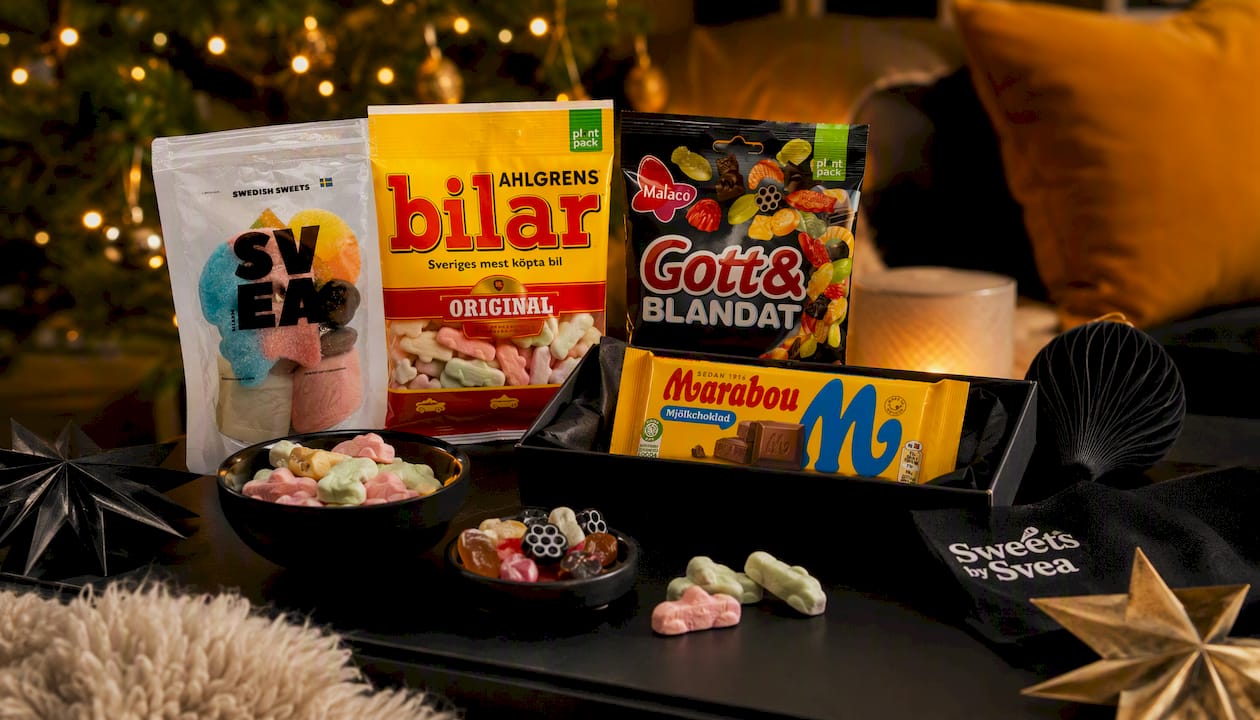
Three products worth starting with:
The Candy Lovers Favorite is a curated assortment built for gifting. It covers the range of Swedish candy styles in one box, which makes it the easiest way to introduce someone to Swedish holiday treats without having to pick individual items.
The Fredagsmys Swedish Mix Small 50g is a compact sampler. At 1.76 oz, it is the right size for stocking stuffers or for trying a new flavor before committing to a larger order.
Ahlgrens Bilar Limousines are a Swedish candy institution. The car-shaped gummies are recognizable to anyone who grew up in Sweden, and they travel well, which makes them a reliable choice for mailing to family or friends.
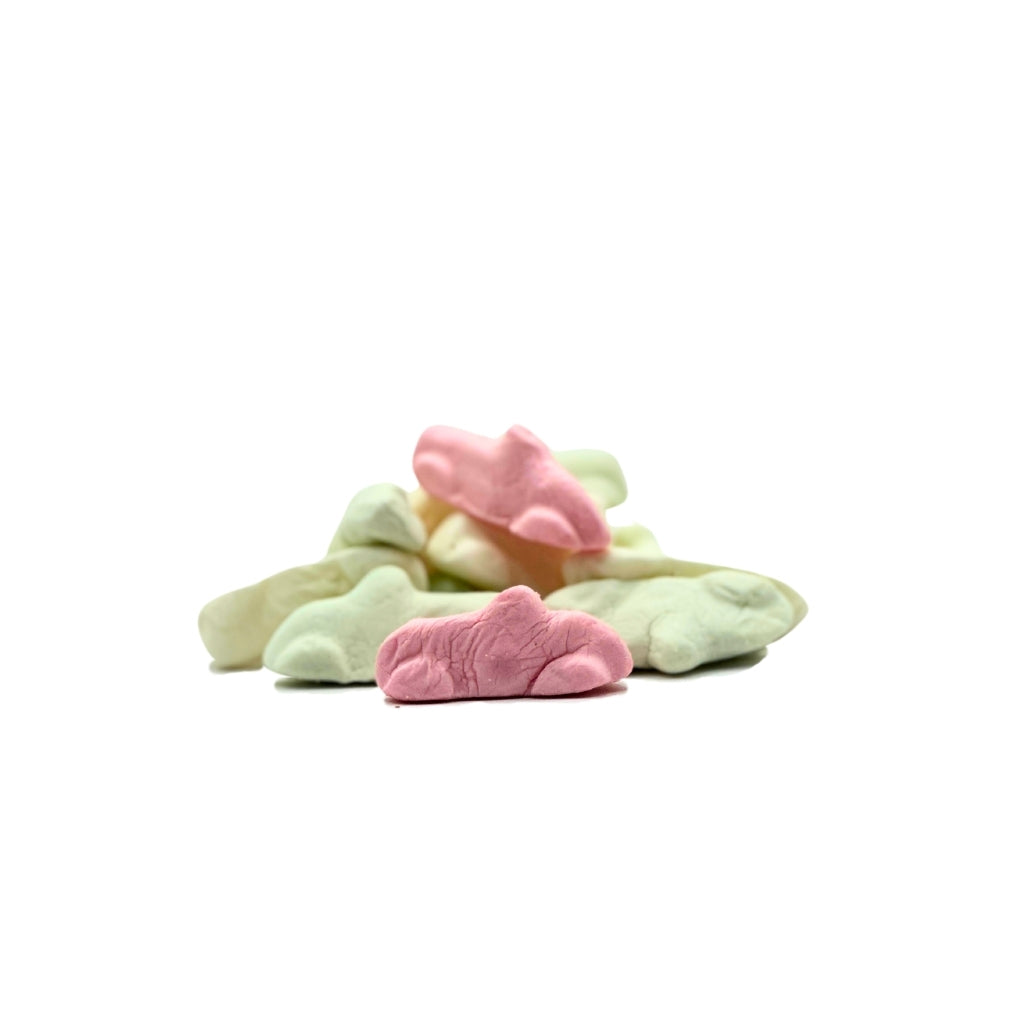
Browse the full selection and place your order at Sweetsbysvea for express delivery before the holidays.
Sources
- Christmas recipes
- A festive sweet treat with surprising Swedish origins
- Swedish Christmas food – get a taste of the traditional treats | Visit Sweden
- Swedish Christmas toffees—knäck – Swedish Spoon
- Polkagrisar
- #SwedishChristmas: A Christmas candy with an unfortunate name