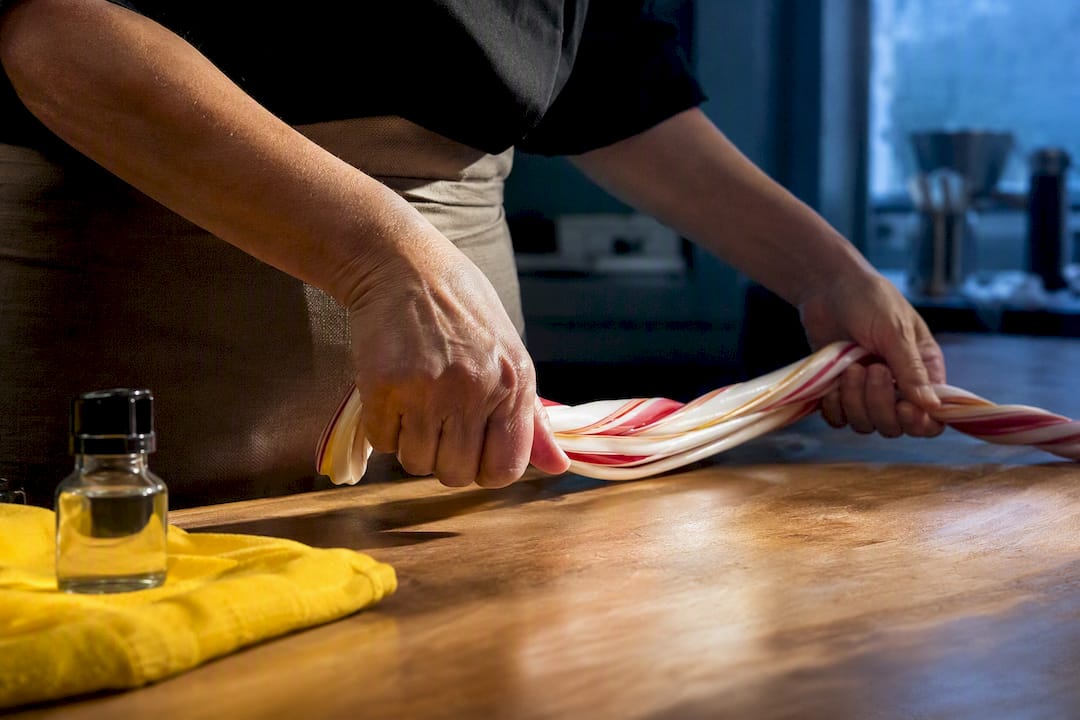

Daim is a Swedish chocolate bar built around a brittle almond caramel center wrapped in smooth milk chocolate. The name is pronounced “DYME,” and if you’re picturing something close to a toffee bar, you’re on the right track, though the almond bits are what set it apart. It started life in Sweden in the early 1950s and now belongs to Mondelēz International, sold widely across the Nordic region and beyond.
TL;DR:
- Daim’s core caramel center is a crystallized almond toffee, giving it a brittle texture that holds up well in baking and dessert applications.
- The candy is now owned by Mondelēz International, which allowed it to expand beyond Scandinavia into international markets with consistent quality and distribution.
- Authentic Daim is best sourced fresh from Swedish suppliers or specialty importers, as freshness preserves its signature snap and flavor.
- Substituting full-size bars with mini pieces is recommended for first-timers to better appreciate its brittle-almond texture and prevent overwhelming sweetness.
- Daim’s unique texture and flavor contrast make it a versatile ingredient for ice cream, cakes, cookies, and garnishes, beyond just being a standalone candy.
Table of Contents
- What Is Daim, at a Glance?
- What’s Actually Inside a Daim Bar
- How Daim Went From a Swedish Test Kitchen to a Global Brand
- What Daim Actually Tastes and Feels Like
- Daim Variants and What People Actually Do With Them
- Where to Find Daim and How to Buy It
- Why Sourcing Authentic Daim Actually Matters
- Which Daim Format Should You Actually Try First?
- Get Authentic Daim Delivered, No Import Store Required
- Sources
What Is Daim, at a Glance?
Here’s the fast version for anyone who wants the facts without the backstory:
- Introduced: in the 1950s, originally spelled “Dajm”
- Original maker: Marabou, a Swedish chocolate company
- Current owner: Mondelēz International, after passing through Kraft Foods
- Core structure: almond caramel center, milk chocolate coating
- Common formats: single bars, mini pieces, and chocolate bars with Daim bits folded in
- Primary markets: Sweden and the wider Nordic region, with steady export presence in the UK and other select countries
That ownership chain matters more than it might seem. A candy bar that started as a small Swedish product now has the manufacturing and distribution muscle of one of the largest food companies on earth behind it, which is part of why you can find it well outside Scandinavia today.
What’s Actually Inside a Daim Bar
The center is where Daim earns its reputation. It’s a cooked, crystallized almond caramel, made by combining sugar, butter, and chopped almonds, then cooking the mixture until it hardens into a glassy, brittle structure. That’s fundamentally different from the soft, chewy caramel found in a lot of other candy. Cook sugar past the soft ball stage and let almond pieces distribute through it, and you get something closer to almond brittle than to caramel candy in the traditional sense. Milk chocolate covers the whole thing, giving you a smooth contrast against the shattered texture underneath.
Ingredient categories generally break down like this:
- Sweeteners: sugar and glucose syrup, cooked to a hard crack stage
- Fats: butter and cocoa butter, contributing to both flavor and mouthfeel
- Almonds: chopped or ground, providing the crunch and a toasted, nutty note
- Cocoa components: cocoa mass and cocoa butter in the milk chocolate shell
- Milk solids: standard for milk chocolate, softening the cocoa’s bitterness
Pro Tip: If you’re baking with Daim, freeze the bar for about 15 minutes before crushing it. The caramel shatters cleanly instead of gumming up your knife or food processor.
How Daim Went From a Swedish Test Kitchen to a Global Brand
Marabou developed Daim in Sweden during the 1950s, and the inspiration is no secret: the American Heath bar, another almond toffee candy, clearly shaped the concept. Marabou’s team tested versions of the recipe in Stockholm before settling on what would become the finished product, originally sold under the name “Dajm.”
The rebrand to “Daim” happened later, largely to standardize the name across international markets. In some English-speaking markets, it was sold for a stretch as “Dime,” which caused some confusion due to the unrelated meaning of that word.
Ownership changed hands more than once:
- 1950s: Developed and launched by Marabou in Sweden
- Later 20th century: Marabou became part of Kraft Foods’ international portfolio
- 2012 onward: Kraft’s global snacks business split off, and Daim became a Mondelēz International brand
Corporate ownership under Mondelēz gave Daim the manufacturing scale to reach far more markets, while the recipe and Scandinavian branding stayed intact. That’s a rarer outcome than you’d think when a regional candy gets absorbed by a multinational.
What Daim Actually Tastes and Feels Like
The defining trait is contrast. You bite through smooth milk chocolate first, then hit the almond caramel center, which shatters rather than chews. That snap is the whole point. Reviewers consistently point to this brittle-then-smooth texture as the reason Daim stands apart from softer caramel bars that just melt in your mouth.
Flavor-wise, expect buttery notes, toasted sugar bordering on light caramelization, and a distinct almond presence that reads more nutty than sweet. It’s less cloying than a lot of caramel candy because the almond caramel isn’t gooey. It behaves more like almond brittle, so the sweetness comes with texture that makes you work for it a little.
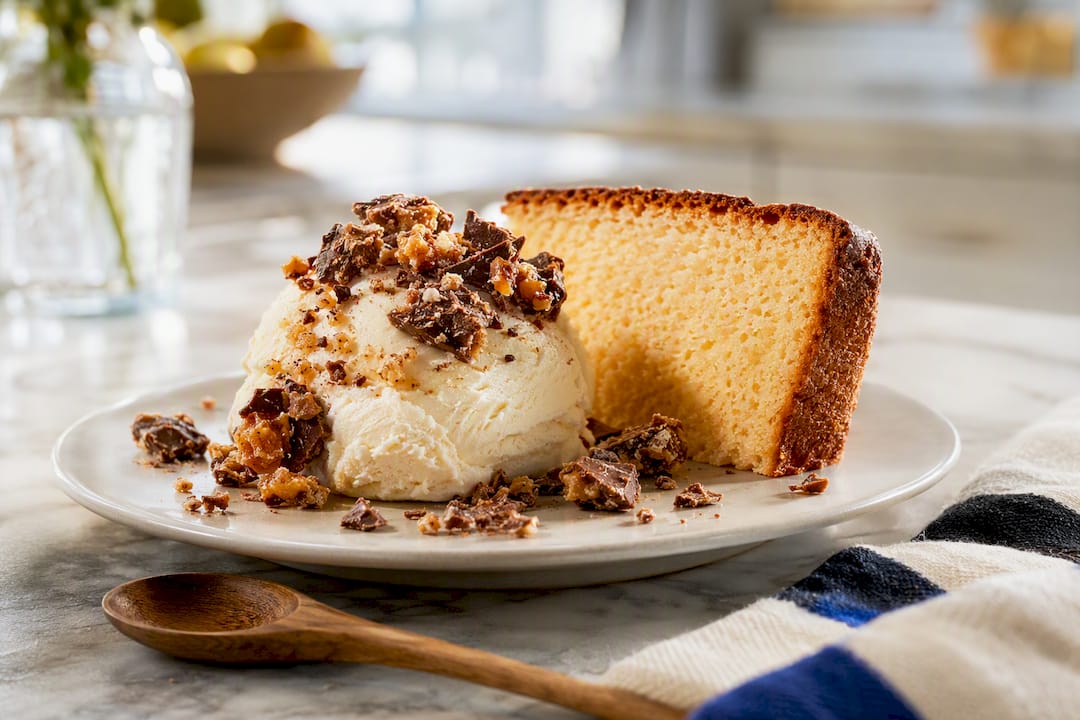
That structural quirk is exactly why Daim shows up so often as a baking or dessert ingredient rather than staying strictly a stand-alone candy bar. Crushed Daim holds its crunch even when folded into ice cream or scattered over a cake, unlike caramel bars that turn sticky or dissolve.
Daim Variants and What People Actually Do With Them
Daim comes in a few recognized formats, though availability shifts by market:
- Mini pieces: bite-sized versions sold in bags, popular for snacking or baking
- Chocolate bars with embedded Daim bits: standard milk chocolate studded with crushed Daim pieces instead of a solid caramel center
- Limited or seasonal flavors: occasional regional releases, not consistently available everywhere
Where Daim really earns its keep is in the kitchen, especially when using a silicone break-apart chocolate bar mold square for homemade confections. Crushed into ice cream, it holds its crunch far longer than most candy mix-ins. Sprinkled over frosted cakes or brownies, it adds both bite and visual texture. Bakers also fold it into cookie dough or use it as a garnish on cheesecake, where the almond caramel snap plays against something soft. If you’re trying a mini format for the first time specifically to bake with, it’s easier to portion than breaking down a full-size bar.
Where to Find Daim and How to Buy It
Daim’s home turf is Sweden and the rest of the Nordic region, where it sits on shelves next to other domestic staples. From there, distribution reaches the UK and a handful of other markets with either dedicated import channels or specialty grocers.
IKEA deserves real credit for spreading Daim’s reputation outside Scandinavia. Stocking it in IKEA food halls introduced millions of non-Swedish shoppers to the bar, often as an impulse buy near checkout, long before it had broader retail presence in those countries.
If your local grocery doesn’t carry it, your best options are:
- Specialty Nordic or Swedish import shops, if one exists near you
- Online retailers focused on Swedish products, which tend to carry both the standard bar and mini formats
- IKEA food sections, still a reliable fallback in many countries
Why Sourcing Authentic Daim Actually Matters
Not every “Swedish candy” listing online is what it claims to be. Sweetsbysvea sources directly from Swedish suppliers and holds every product to standards that exclude GMOs, parabens, and high fructose corn syrup, so what arrives matches what’s sold on Swedish shelves, not a reformulated export version.
Freshness is the other half of the equation. Chocolate that sits in a warehouse for months develops bloom or a stale, waxy texture, which ruins that signature almond caramel snap. Sweetsbysvea ships within one to three days specifically to avoid that problem, backed by feedback from thousands of customers who’ve ordered repeat batches. For a candy where texture is the entire selling point, that turnaround isn’t a minor detail.

Which Daim Format Should You Actually Try First?
If you’ve never had Daim, skip the full-size bar as your starting point and grab the mini pieces instead. They give you the same almond caramel snap in smaller doses, which is useful if you’re not sure how much you’ll like that brittle texture on the first try.
The honest reaction most first-timers have is surprise at how little it resembles a typical soft caramel candy. It’s closer to almond brittle wearing a chocolate coat. Once that clicks, the rest of the catalog makes a lot more sense.
— Sweets
Get Authentic Daim Delivered, No Import Store Required
Sweetsbysvea ships the real Swedish product straight to your door in one to three days, so you skip the guesswork of import shops with inconsistent stock or grocery aisles that never carry it.
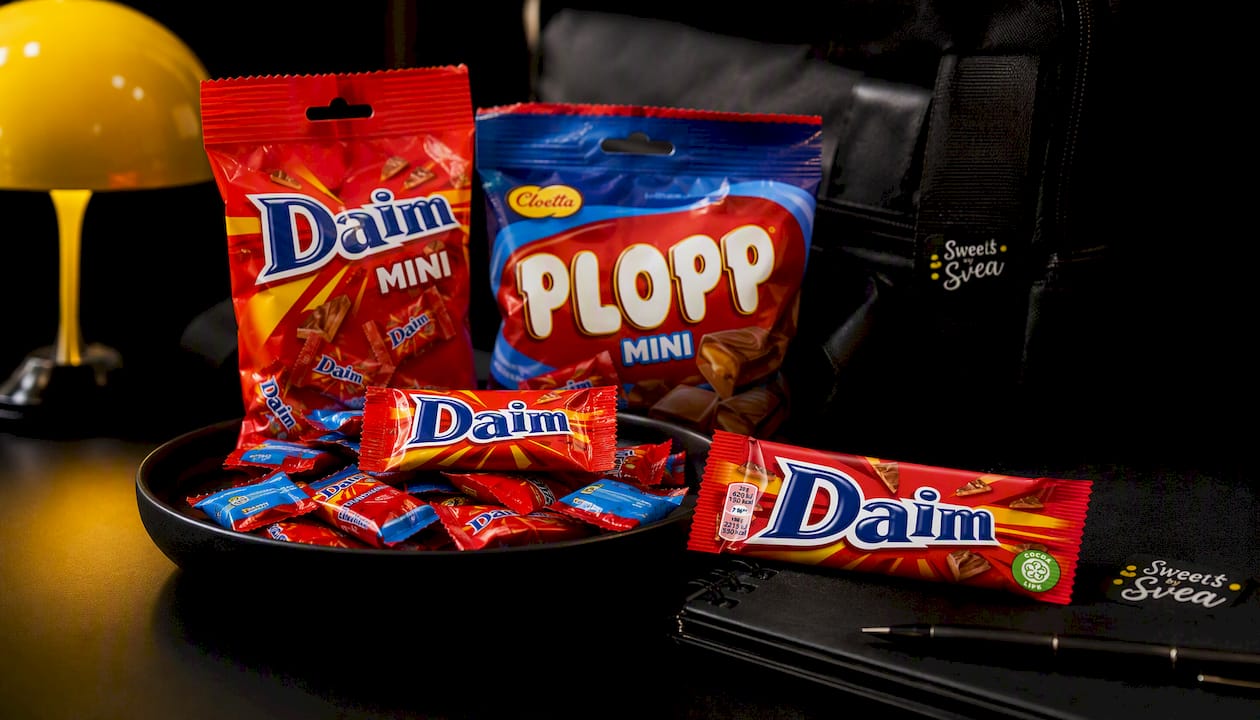
The Marabou Daim Chokladbit 28g bar is the classic single-bar format, the one most people picture when they think of Daim. For sharing or baking, Daim Mini packs give you portioned pieces that work equally well as a snack or a cake topping. And if you want to compare Daim’s brittle crunch against a softer Scandinavian caramel bar, Cloetta Plopp Mini is worth adding to the same order. Every product ships fresh, free of GMOs, parabens, and high fructose corn syrup. If you’re stocking a pantry with Swedish treats, planning a bake, or just craving that almond caramel snap, place your order and it lands within days, not weeks.
Sources
- Daim bar - Wikipedia
- Daim | Mondelēz International, Inc.
- Daim Bar History: Origins, Flavors & Facts | SnackHistory