
Swedish candy history runs through three hinge points: artisan roots like the 1859 invention of polkagris, an industrial boom led by Cloetta and Malaco, and a 1950s dental study called Vipeholm that accidentally invented Sweden’s most beloved weekly ritual. What started as small-batch craft became a public-health experiment, then a Saturday tradition, and now a global export phenomenon driven by pick-and-mix bins and TikTok.
TL;DR:
- Swedish candy tradition is rooted in artisan polkagris and was shaped by large-scale brands like Cloetta and Malaco, blending European techniques with local tastes.
- The Vipeholm experiments revealed that frequent, sticky sugar intake causes more tooth decay than the total amount, leading to the Saturday candy ritual.
- Modern Swedish candy culture emphasizes scheduled indulgence and portion control, with open-bin pick-and-mix shops reinforcing the Saturday tradition.
- Signature Swedish candies include hand-pulled polkagris, salty licorice salmiak, and softer starch-based gummies made with beet sugar and natural colors.
- Globally, Nordic candy’s popularity surged via social media, especially TikTok, while public dental care and timing restrictions keep Swedes’ dental health strong despite high consumption.
Table of Contents
- The Origins of Swedish Candy: Artisan Roots and Early Industry
- What Was the Vipeholm Experiment and Why Does It Matter?
- How Did Lösgodis (Pick-and-Mix) Change Swedish Candy Culture?
- What Are the Signature Candies of Sweden?
- How Did Swedish Candy Become a Global Trend?
- Why Do Swedes Still Eat So Much Candy, and How Are Their Teeth Fine?
- How Sweetsbysvea Connects Candy History to Authentic Products
- Why This History Should Change How You Shop for Candy
- Bring Lördagsgodis to Your Own Kitchen
- Primary Sources and Further Reading
- Sources
The Origins of Swedish Candy: Artisan Roots and Early Industry
Before Sweden had candy factories, it had Amalia Eriksson. In 1859, this widowed baker in the small town of Gränna started twisting sugar and peppermint oil into striped sticks, creating polkagris, a candy that still defines the town’s identity. She ran her business without a husband’s name attached, a rare feat in 19th-century Sweden, and the hand-pulled technique she developed is still demonstrated in Gränna candy shops today.
Industrialization arrived a few years later and changed the scale of everything. Cloetta was founded in 1862, followed decades later by Malaco in 1934, and both companies pulled candy production out of kitchens and into factories capable of consistent, large-scale output. Mechanization didn’t erase craft traditions; it ran alongside them; Gränna’s polkagris makers kept their methods manual even as national brands scaled up.
Much of what people call “traditionally Swedish” candy actually reflects broader European influence. Confectioners of the era borrowed techniques and recipes from other European centers, blending them with local tastes.
- Hand-pulled polkagris preserved artisan technique even after factories emerged.
- Cloetta and Malaco introduced consistent recipes and wider distribution.
- Cross-European technique sharing shaped what became “distinctly” Swedish.
What Was the Vipeholm Experiment and Why Does It Matter?
Between 1945 and 1953, Swedish researchers ran one of the more ethically troubling studies in food science history. Patients at the Vipeholm mental institution, unable to give informed consent by modern standards, were fed heavy doses of sticky, sugary candy between meals to study its effect on teeth. The Vipeholm experiments produced a finding still cited in dental research: the frequency and stickiness of sugar intake, not the total amount, drives tooth decay.
The core insight wasn’t that sugar is bad. It’s that sugar eaten constantly throughout the day, especially in sticky forms that cling to teeth, causes far more damage than the same amount eaten all at once.
By the 1930s, dental decay was already widespread across Sweden, which is partly what justified the study in the first place. Public-health officials and dentists took the Vipeholm findings and built a simple recommendation: confine candy to one day a week instead of grazing on it daily. That single piece of guidance became lördagsgodis, Saturday candy, and turned a restriction meant to protect teeth into the most anticipated ritual in Swedish home life.
How Did Lösgodis (Pick-and-Mix) Change Swedish Candy Culture?
Retail rules loosened over subsequent decades, and candy shops began letting customers scoop their own selections from open bins, paying by weight rather than by piece. That shift, known as lösgodis, reshaped how Swedes bought and thought about sweets.
- Weight-based pricing let shoppers control portions instead of buying pre-packaged amounts.
- Open bins turned candy buying into a sensory, hands-on experience rather than a quick transaction.
- Variety within a single visit meant one Saturday haul could include licorice, gummies, and foam candy side by side.
- Candy shops became informal social spaces, especially for kids and teenagers picking out their own mix.
Lösgodis and lördagsgodis reinforce each other. The Saturday-only rule sets the occasion; the pick-and-mix bin makes that occasion feel like an event rather than an errand. Portion control and ceremony, oddly, work together instead of against each other.
What Are the Signature Candies of Sweden?
Three categories define Swedish confectionery, and each tells a different part of the story.
Polkagris remains the most visible link to the 19th century. Gränna’s shops still hand-pull the peppermint sticks using Amalia Eriksson’s original method, and the town treats the recipe as a piece of living heritage, not just a tourist souvenir. Salmiak, salty licorice, is the flavor most foreigners either love instantly or can’t get past; the sharp, mineral bite comes from ammonium chloride and sets it apart from the sweeter licorice found elsewhere in Europe. Gummies round out the trio, and Nordic gummy candy tends to use a softer, more starch-based texture than the firmer gelatin gummies common in the United States, often paired with beet sugar and natural colorings instead of corn syrup and dye. For a deeper breakdown of these categories, this flavor guide to Swedish candy types covers the differences in detail.
- Polkagris: hand-pulled peppermint sticks, still made using 1859-era technique.
- Salmiak: ammonium-chloride licorice with a sharp, salty edge.
- Starch-based gummies: softer bite, often made with beet sugar and natural coloring.
Pro Tip: If a gummy candy feels unusually soft and slightly matte rather than glossy and rubbery, that’s a good sign it’s made in the Nordic starch-based style rather than an imitation.
How Did Swedish Candy Become a Global Trend?
Swedish candy stayed mostly a domestic pleasure through the late 20th century, with modest exports and a handful of specialty importers catering to expats. That started shifting in the 1990s and 2000s as niche retailers began stocking Nordic sweets abroad, and e-commerce made ordering directly from Sweden realistic for the first time.

The real inflection point came later. Social media, particularly TikTok, turned salty licorice and sour gummy laces into viral discovery content in the 2020s, and demand spikes followed almost overnight. Retailers and online sellers had to scramble to keep popular items in stock, since distinctive textures and bold berry flavors gave Nordic candy a cult following far outside its original market. Supply chains built for a small domestic audience suddenly had to serve a global one.
Why Do Swedes Still Eat So Much Candy, and How Are Their Teeth Fine?
Sweden remains one of the heavier candy-consuming nations, with sweets, snacks, and fizzy drinks making up roughly 15% of the average Swede’s caloric intake. That number would alarm a dentist anywhere else. Yet Swedish dental health didn’t collapse alongside high consumption, and the explanation traces straight back to Vipeholm’s core lesson.
- Fredagsmys (“cozy Friday”) and lördagsgodis concentrate candy into scheduled windows rather than all-day snacking.
- Universal public dental care in Sweden catches decay early and reinforces prevention habits.
- Timing, not total volume, remains the variable that matters most for tooth decay.
Food historians at the Nordic Museum trace this consumption pattern directly to the ritual’s institutionalization since the 1980s, when Saturday candy stopped being a health directive and became simply how Swedish families spend the weekend. Readers curious whether that volume translates to better or worse choices can dig into whether Swedish candy is actually healthier than typical mass-market alternatives.
How Sweetsbysvea Connects Candy History to Authentic Products
That same discipline, timing over excess, quality over shortcuts, shapes how Sweetsbysvea sources and ships its candy. Every product skips GMOs, parabens, and high-fructose corn syrup, and orders arrive within one to three days so freshness matches what you’d get straight from a Swedish candy shop. Thousands of customers, many of them Swedish expats, have confirmed the taste holds up an ocean away from Gränna.

Why This History Should Change How You Shop for Candy
History explains why ingredient choices matter here. Beet sugar, starch-based textures, and natural coloring aren’t marketing language; they’re what separated Swedish candy from mass-market alternatives for over a century. Buying with that in mind, and saving your haul for one deliberate occasion instead of grazing all week, honors both the craft and the Vipeholm lesson at once. Start with a curated pick of top Swedish candy and build your own Saturday ritual from there.
— Sweets
Bring Lördagsgodis to Your Own Kitchen
Sweetsbysvea ships the exact pick-and-mix experience Swedish kids have grown up with, packed fresh and delivered in one to three days instead of sitting in a warehouse for weeks. That speed matters when freshness is the whole point of the candy in the first place.
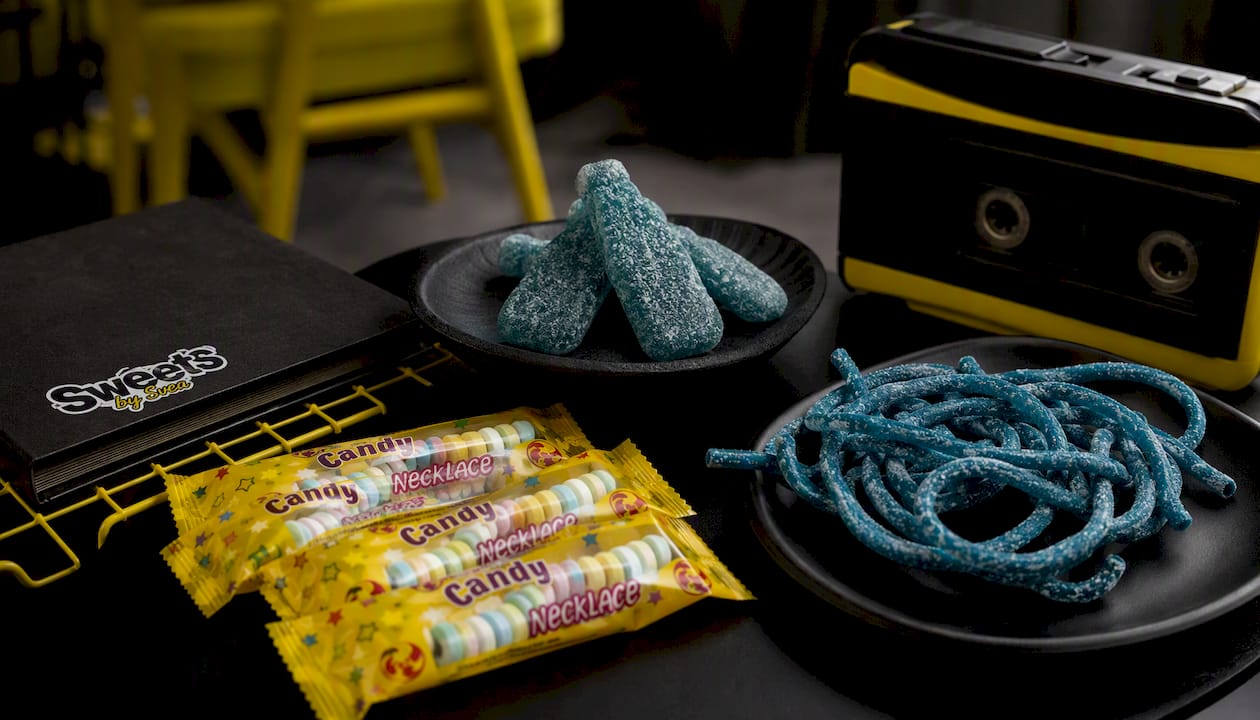
Start a Saturday tradition with classic candy necklaces for a nostalgic, giftable option, or go sour with the fizzy blue raspberry bottle and Bebeto fizzy blue raspberry laces for a lösgodis-style sampler that mixes textures the way a Gränna candy bin would. Building a gift box or a party mix? Check where to buy Swedish candy for shipping details, then place your order and get it on your table before the weekend arrives.
Primary Sources and Further Reading
For the historical claims and statistics covered here, consult the Nordic Museum’s page on lördagsgodis, Atlas Obscura’s account of the Vipeholm experiments, and Business Sweden’s overview of Swedish candy and consumption data. These sources offer the primary documentation behind the dates and figures cited throughout.
Sources
- An adorable Swedish tradition has its roots in human experimentation (Atlas Obscura)
- Amalia Eriksson — Wikipedia
- 11 of the best-loved Swedish candy, and healthy alternatives to sweet treats — Business Sweden
- Lördagsgodis — Nordic Museum
- From Europe’s far north, candies with a cult following — TasteCooking