
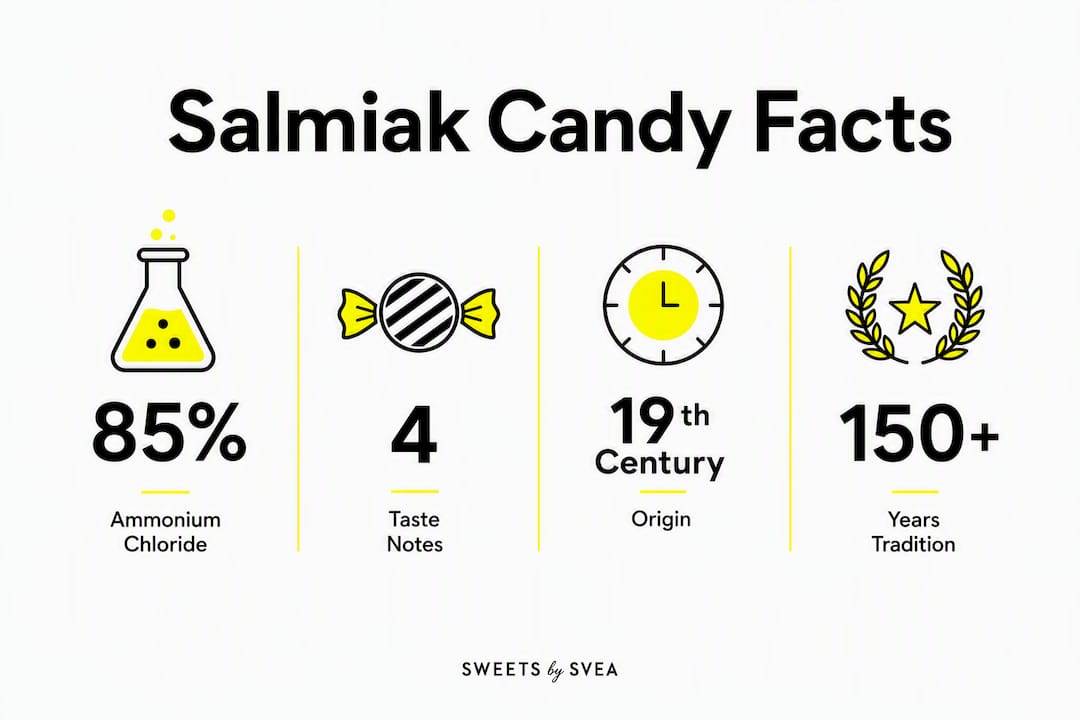
Salmiak is the food name for ammonium chloride (NH4Cl) used to flavor salty licorice, the intensely savory candy beloved across Scandinavia and Northern Europe. Three things to know immediately: the defining ingredient is ammonium chloride, not extra table salt; the flavor hits as salty, mineral, and astringent with a sharp edge that can genuinely sting; and it comes in pastilles, chewy bars, powder-coated drops, and lozenges. The candy traces back to 19th-century pharmacies, where ammonium chloride was added to licorice cough medicines, and Northern Europe accounts for roughly 90% of the world’s salty licorice consumption today. If you want to try it, Sweetsbysvea stocks authentic Swedish and Nordic salmiak products and ships internationally.
- Ingredient: ammonium chloride (also called sal ammoniac or salmiac)
- Flavor shorthand: salty, mineral, astringent, with an ammonia-like sting that softens into licorice earthiness
- Common forms: hard pastilles, soft chewy bars, powder-coated drops, lozenges, and salmiak-flavored chocolate
Table of Contents
- What is salmiak made of, exactly?
- How does salmiak actually taste?
- What forms does salmiak come in?
- Where did salmiak come from?
- Why is salmiak such a polarizing flavor?
- Is salmiak safe to eat?
- How to taste salmiak for the first time
- Where can you buy salmiak in the U.S.?
- Key Takeaways
- The case for giving salmiak a real chance
- Authentic salmiak from Sweetsbysvea, shipped to your door
- Useful sources
What is salmiak made of, exactly?
The single decisive ingredient is ammonium chloride. In a standard salmiak candy, that means ammonium chloride combined with licorice extract or licorice root, a sweetener such as sugar or glucose syrup, a starch binder, and sometimes anise oil for extra depth. The ammonium chloride is what separates salmiak from regular licorice, which relies on the compound glycyrrhizin from Glycyrrhiza glabra root for its characteristic sweetness.
Chemically, ammonium chloride behaves nothing like sodium chloride. Where table salt delivers a clean, neutral saltiness, ammonium chloride produces a mineral, slightly astringent profile with a faint ammonia edge. That edge is what creates the “sting.” When it meets licorice compounds in the candy matrix, the result is a layered, savory-bitter mouthfeel that no other candy ingredient replicates.
On a label, look for any of these terms: ammonium chloride, sal ammoniac, salmiak, or salmiac. They all point to the same compound.
| Ingredient | Role in the candy | Sensory effect |
|---|---|---|
| Ammonium chloride | Primary flavor agent | Mineral, astringent, sharp sting |
| Licorice extract/root | Base flavor and color | Earthy, slightly sweet, bitter undertone |
| Sugar or glucose syrup | Sweetener and texture | Balances astringency, adds chew |
| Starch | Binder and texture | Firm or chewy body |
| Anise oil (optional) | Flavor accent | Herbal, anise-forward note |
How does salmiak actually taste?
The honest sensory summary: salty, mineral, astringent, and slightly bitter, with a sharp ammonia-like edge that settles into licorice earthiness if sweetener is present. That sequence is the whole experience in one sentence.

What makes it unusual is the order of those sensations. The first contact delivers a sting, almost like touching your tongue to a battery terminal. Then comes astringency, a drying, tannic feeling similar to a big red wine or very dark chocolate. Finally, depending on the formulation, a mellow sweetness or deep licorice flavor rounds things out. Food-culture reporting compares salmiak’s mouthfeel directly to tannins in red wine, and that comparison holds up: both experiences reward patience over a quick bite.
You’ll see the candy labeled under several names in stores and online: salty licorice, salmiak, salmiac, salmiakki (Finnish), and saltlakrits (Swedish). All of them signal ammonium chloride as the key ingredient.
Pro Tip: Treat your first salmiak tasting like a wine or dark-chocolate tasting. Start with a very small piece, keep your palate neutral, and breathe through your nose. The sting fades faster than you expect, and the flavor underneath is what fans keep coming back for.
What forms does salmiak come in?
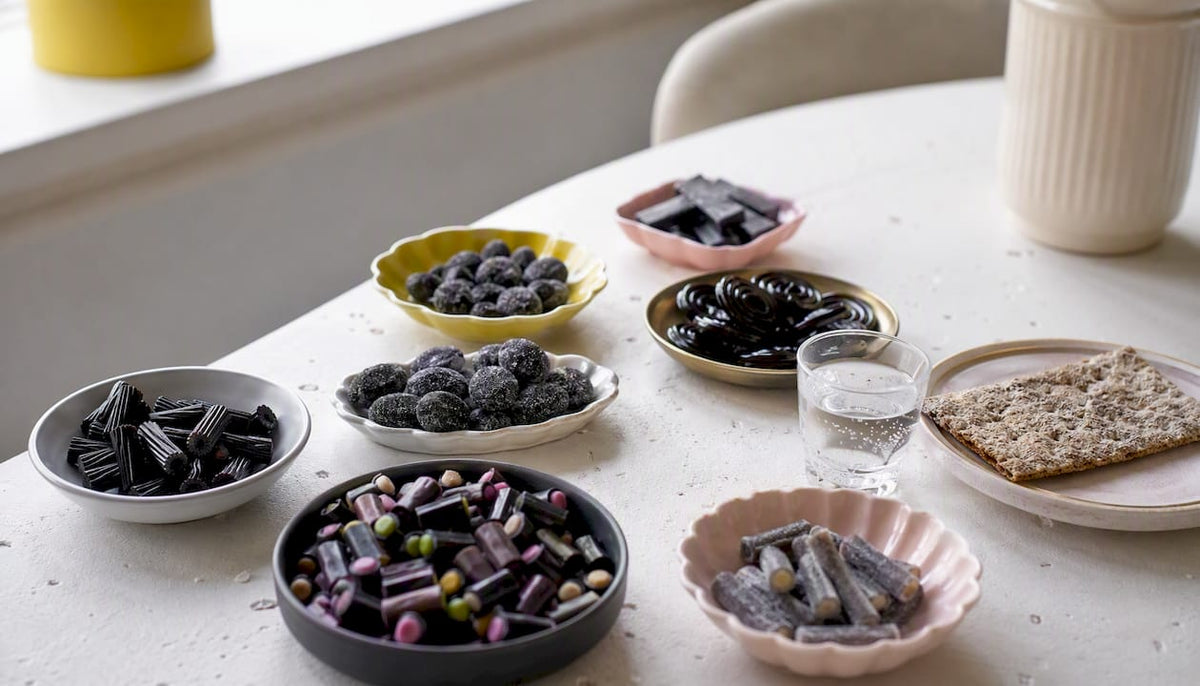
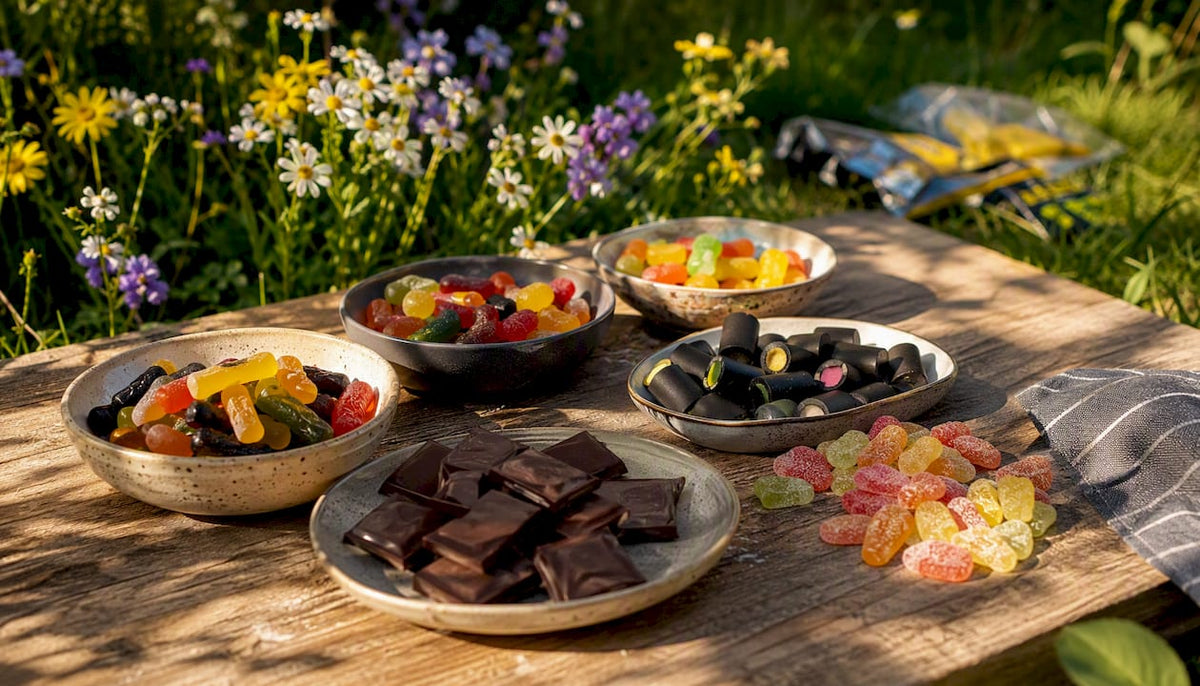
Salmiak appears across a wide range of product types, from classic hard pastilles to ice cream and alcoholic beverages. For candy buyers, the most common forms are:
- Hard pastilles/lozenges: the original pharmacy form, small and intensely flavored, often diamond-shaped
- Soft chewy bars or blocks: a more approachable texture, common in Swedish and Danish brands
- Powder-coated drops: dusted with salmiak powder for extra intensity on the outside
- Sugar-coated salmiak drops: a slightly milder entry point where a sweet shell meets the salty core
- Salmiak-flavored chocolate bars: the gentlest introduction, where chocolate buffers the sting
- Non-candy forms: ice creams, syrups, chewing gum, and some Scandinavian spirits
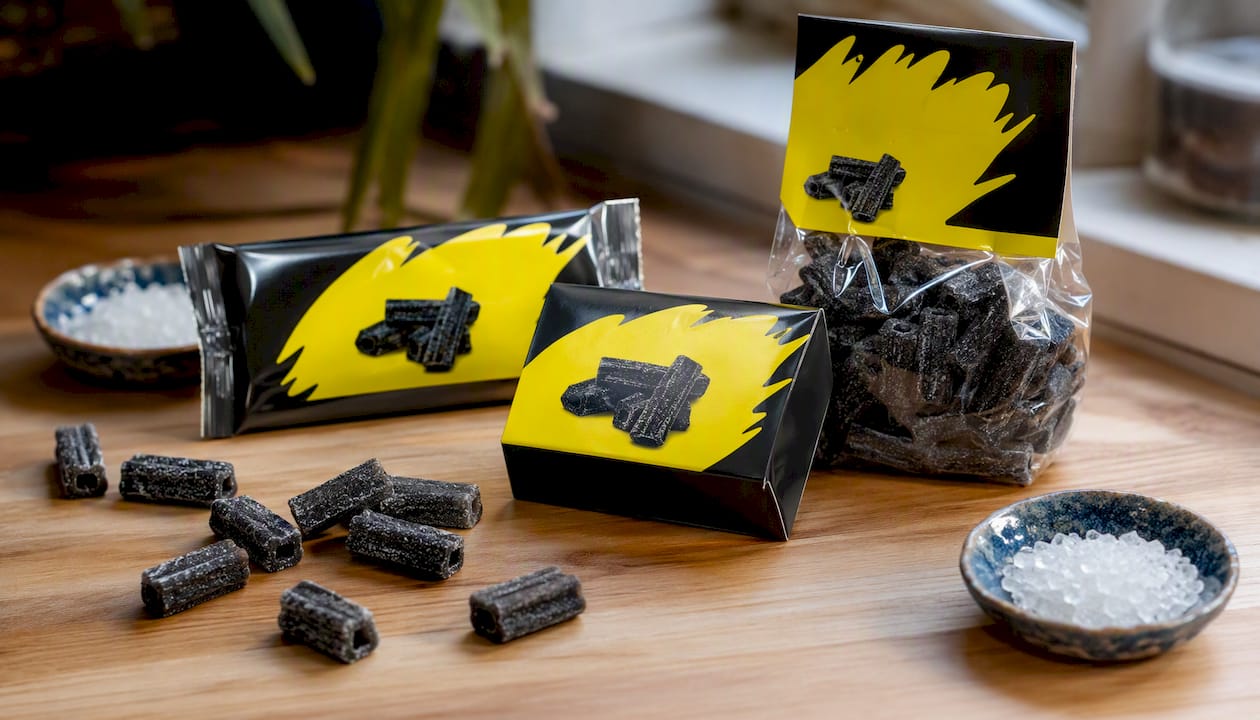
Packaging cues to look for: the word salmiak or salmiaksalt on the label, black or very dark packaging (a near-universal Nordic signal for salty licorice), extra salty markings, and the classic diamond pastille shape. Higher ammonium chloride concentration is usually flagged with extra salty or a strength indicator on Nordic packaging.
Three products available at Sweetsbysvea illustrate the range well. Cloetta Salmiakbalkar are soft, chewy salmiak bars, a classic Swedish format. Lakrisal Salmiak Salty Liquorice Sweets 26g is a small-pack pastille format, ideal for a first taste without committing to a large quantity. Salmy 50g sits in the middle, a mid-sized pack for readers who want a proper tasting session. For a filled-candy format, the Toms Pingvinstång Haxvral shows how salmiak works as a filling inside a salty licorice shell.
Where did salmiak come from?
The origin is firmly pharmaceutical. In the 19th century, apothecaries across Northern Europe added ammonium chloride to licorice-based cough medicines because it acted as an expectorant, loosening mucus. Patients liked the taste. By the early 20th century, confectioners in Finland, Sweden, Denmark, and the Netherlands had commercialized the flavor, pulling it out of the pharmacy and into candy shops.
| Period | Development | Cultural note |
|---|---|---|
| 19th century | Ammonium chloride used in pharmacy licorice cough medicines | Medicinal, not yet a candy |
| Early 20th century | Candy manufacturers adopt the flavor commercially | Finland, Sweden, Denmark, Netherlands lead adoption |
| Mid-20th century | Industrial production scales up; regional brands emerge | Becomes a childhood staple in Nordic countries |
| Late 20th century to present | Expands into ice cream, spirits, syrups, and export markets | ~90% of world consumption stays in Northern Europe |
That geographic concentration is striking. Despite growing export interest, salty licorice remains a deeply regional food, tied to childhood nostalgia in ways that make it function more like comfort food than novelty candy for most Northern Europeans. It shows up in school lunch boxes, corner stores, and holiday gift bags across Scandinavia in a way that has no real equivalent in the American candy tradition.
Why is salmiak such a polarizing flavor?
Salmiak is an acquired taste because ammonium chloride produces a sensory sequence that has no close parallel in standard sweet candy. The sting, the astringency, the mineral edge: none of those signals register as “candy” to someone raised on chocolate or gummy bears. The brain initially reads the experience as a warning rather than a reward.
Britannica’s food-culture entries distinguish salmiak’s mineral ammonium-chloride profile sharply from ordinary licorice, which relies on glycyrrhizin for sweetness. That distinction matters because it means salmiak isn’t just “extra salty licorice.” It’s a chemically different experience, closer to the astringency of tannins in a Barolo than to the sweetness of a Twizzler.
Cultural conditioning does most of the heavy lifting. For a Finnish or Swedish child, salmiak is the taste of a school trip or a grandparent’s candy dish. That emotional context rewires the initial aversion into something warm. For an American adult tasting it cold, none of that scaffolding exists, which is why the first reaction is so often “why would anyone eat this?” and the second reaction, a few tries later, is frequently very different.
Is salmiak safe to eat?
Ammonium chloride used in candy is a permitted food additive in many countries, including across the EU, and is used at levels considered food-safe by regulatory standards. For most healthy adults eating salmiak in normal candy quantities, there is no specific concern tied to the ammonium chloride itself. Always check current product labeling and relevant FDA guidance for U.S.-specific use.
The separate concern is licorice root, which contains glycyrrhizin. Some salmiak products include licorice root extract, and glycyrrhizin carries its own health advisories at higher consumption levels. Check the ingredient list carefully.
Who should limit or avoid licorice-root-containing products:
- People taking blood pressure medications, as glycyrrhizin can interact with certain drugs
- Pregnant people, for whom high glycyrrhizin intake is not recommended
- Anyone with cardiovascular conditions or a history of hypertension
- People with kidney or liver conditions
Label-reading checklist:
- Look for ammonium chloride, salmiak, or sal ammoniac to confirm the salmiak ingredient
- Check separately for licorice extract, licorice root, or glycyrrhizin if you have any of the above health concerns
- Note that some salmiak candies use only licorice flavor (anise oil) rather than actual licorice root, which removes the glycyrrhizin concern entirely
If you have a specific medical condition or take prescription medications, consult a healthcare provider before eating salmiak products regularly.
How to taste salmiak for the first time
The most common mistake is biting off a large piece and expecting something sweet. Salmiak rewards a slow, attentive approach, the same way you’d taste a new whiskey or a piece of 90% dark chocolate.
- Start small. Break off or pick up one small piece, roughly the size of a pea.
- Clear your palate. A sip of plain water before you start gives the salmiak a neutral baseline to work against.
- Let it sit. Place it on your tongue and resist chewing for a few seconds. Notice the initial sting.
- Breathe through your nose. The licorice and anise aromatics come through the nose, not just the mouth. This is where the flavor opens up.
- Chew slowly and note the sequence. Sting first, then astringency, then the earthy or sweet finish depending on the product.
For recipe uses, salmiak works surprisingly well in small amounts. Crush a few pastilles and fold them into dark-chocolate truffle ganache for a savory-sweet contrast. A salmiak syrup, made by dissolving pastilles in warm simple syrup, makes a genuinely interesting base for cocktails or mocktails. For a gentler introduction than straight pastilles, a salmiak chocolate bar lets the chocolate carry most of the flavor load while the ammonium chloride adds a background mineral note.
Where can you buy salmiak in the U.S.?
Salmiak is still a niche import in the U.S. market, but availability has grown steadily as interest in Scandinavian food culture has expanded. The clearest buying channels are:
- Online specialty importers like Sweetsbysvea, which stock authentic Nordic brands and ship internationally with 1–3 day delivery
- Nordic or Scandinavian grocery stores in cities with larger Scandinavian-American communities (Minneapolis, Seattle, Chicago)
- International food sections of some larger grocery chains, though selection is inconsistent
- Specialty candy retailers that carry European imports
When searching online, use the terms salmiak, salmiak liquorice, salty licorice, or salmiakki to find authentic products. Generic searches for “licorice” will mostly return American-style sweet licorice, which is a completely different product.
At Sweetsbysvea, the three most direct entry points are Cloetta Salmiakbalkar for a classic chewy bar experience, Lakrisal Salmiak 26g for a small starter pack, and Salmy 50g for a mid-sized tasting quantity. All three are clearly labeled with their ammonium chloride content and come from established Nordic brands. For a broader look at where salmiak fits in the Swedish candy tradition, the Swedish candy flavor guide on the Sweetsbysvea blog is a useful next read.
Key Takeaways
Salmiak is ammonium chloride-flavored licorice candy, defined by a salty, mineral, astringent taste that is an acquired but genuinely rewarding experience for curious candy buyers.
| Point | Details |
|---|---|
| Core definition | Salmiak equals ammonium chloride (NH4Cl) added to licorice candy, not simply extra table salt. |
| Flavor shorthand | Expect a sting, then astringency similar to tannins in red wine, then earthy licorice finish. |
| Safety note | Watch for licorice root (glycyrrhizin) in the ingredient list if you have cardiovascular or blood pressure concerns. |
| Where to buy in the U.S. | Specialty online importers are the most reliable channel; salmiak remains niche in mainstream U.S. retail. |
| Sweetsbysvea options | Cloetta Salmiakbalkar, Lakrisal Salmiak 26g, and Salmy 50g are all stocked and ship internationally. |
The case for giving salmiak a real chance
Most American candy buyers who try salmiak once and dislike it made the same error: they treated it like a sweet candy and were blindsided by the sting. That’s a framing problem, not a flavor problem.
The more useful comparison is dark chocolate or aged cheese. Nobody expects those to taste like milk chocolate or cream cheese, and nobody judges them by that standard. Salmiak deserves the same framing adjustment. It’s a savory-forward, mineral-rich flavor experience that happens to come in candy form. The “acquired taste” label isn’t a warning; it’s a description of how the brain learns to appreciate complexity over time.
What’s genuinely underestimated about salmiak is how much variation exists within the category. A powder-coated extra-salty drop and a salmiak chocolate bar are almost incomparable experiences, even though both carry the same core ingredient. Starting at the mild end, with a small-pack pastille or a chocolate-format product, and working toward higher intensity is the approach that converts skeptics into fans. Jumping straight to the most intense version and deciding the whole category isn’t for you is like tasting a 100% cacao bar and concluding you don’t like chocolate.
The Nordic world figured this out over a century of eating the stuff. There’s no reason American candy buyers can’t get there too, with a little patience and the right starting point.
Authentic salmiak from Sweetsbysvea, shipped to your door
Sweetsbysvea is the direct route to authentic Nordic salmiak for U.S. buyers who don’t have a Scandinavian grocery store nearby. Every product is sourced from established European brands, free from GMOs, parabens, and high fructose corn syrup, and ships with a freshness guarantee.
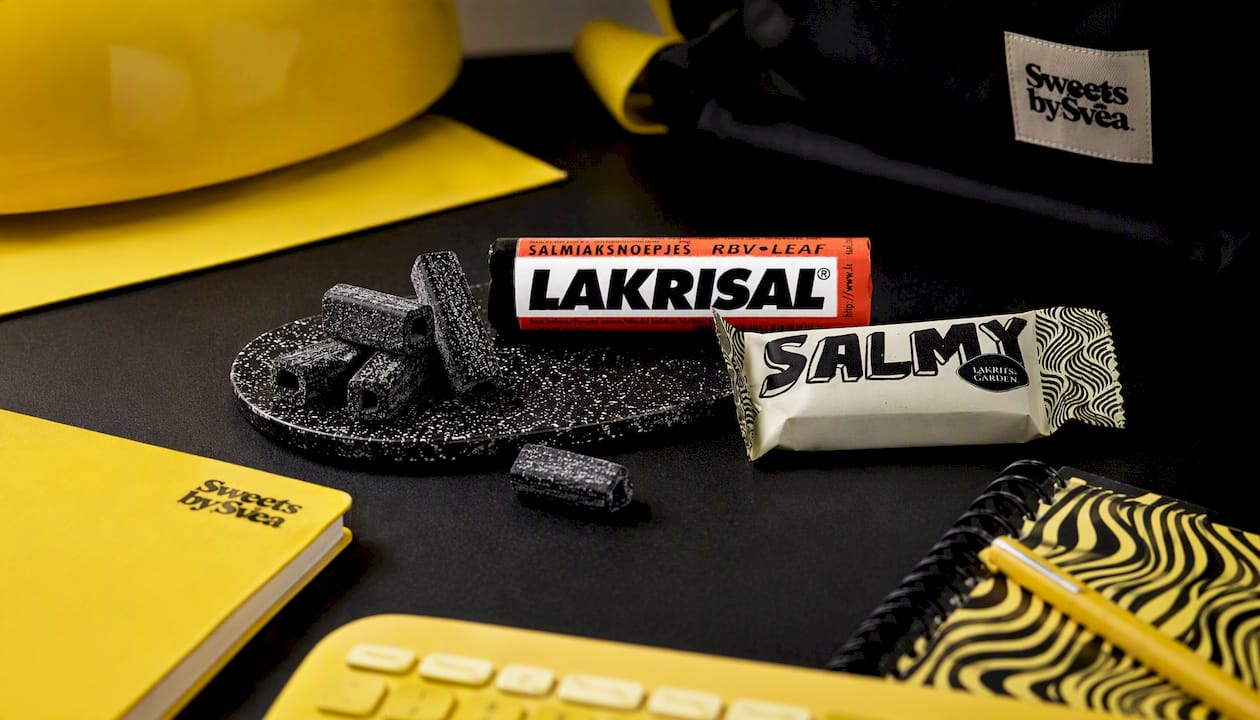
Three products to start with: Cloetta Salmiakbalkar, the classic Swedish chewy salmiak bar; Lakrisal Salmiak 26g, a small introductory pack of salty licorice pastilles; and Salmy 50g, a mid-sized pack for a proper tasting session. All three are clearly labeled with their ammonium chloride content and arrive within 1–3 days. Browse the full salty licorice selection at Sweetsbysvea and pick your starting intensity.
Useful sources
- Salty liquorice, Wikipedia — comprehensive overview of ingredients, regional names, product forms, and cultural context
- Salmiakki, Wikipedia — Finnish-specific entry covering ingredient names, alternative spellings, and common candy shapes
- Why Some Northern Europeans Are So Into Salty Licorice, Mental Floss — history of the pharmacy-to-candy transition and regional consumption data
- Salty licorice: The not-so-sweet sweet, BBC News — food-culture feature on why salmiak is an acquired taste and how Northern Europeans relate to it
- Britannica food culture entry — distinguishes salmiak’s ammonium-chloride profile from standard licorice and glycyrrhizin-based sweetness