
Yes, you can buy candy without corn syrup, and plenty of it. Sucrose, tapioca syrup, honey, and beet sugar all show up as reliable alternatives on ingredient panels every day.
Your first move: flip the package over and look for an explicit “No high fructose corn syrup” claim, then confirm the ingredient list backs it up.
- Fastest route: shop retailers that already screen for this, like Sweetsbysvea, which sources Swedish and European candy made without HFCS.
- Backup check: if there’s no claim on the front, read the full ingredient list before you buy.
Key Takeaways
Corn-syrup-free candy is widely available once you know the label terms and where European sourcing gives you an edge.
| Point | Details |
|---|---|
| Check labels first | Look for an explicit “No high fructose corn syrup” claim, then confirm it against the full ingredient list. |
| Know the substitute names | Sucrose, tapioca syrup, brown rice syrup, and honey are the most common corn syrup replacements. |
| Hard candy is easiest | Boiled sugar candies and imported European sweets are naturally more likely to skip corn syrup. |
| DIY comes down to heat control | Hitting the hard-crack stage and preventing crystallization matters more than any single substitute ingredient. |
| Sweetsbysvea stocks it directly | Products like Candy Necklaces, the Fazer Tutti Frutti Stång, and Fizzypop ship HFCS-free within 1 to 3 days. |
Table of Contents
- Step-by-Step Checklist for Buying Candy Without Corn Syrup
- What Does Corn Syrup Look Like on a Label?
- Which Types of Candy Skip Corn Syrup Most Often?
- Can You Make Corn-Syrup-Free Candy at Home?
- Why Do Manufacturers Use HFCS in the First Place?
- How Do You Verify Allergy Safety and Cross-Contact Risk?
- Why We Curate HFCS-Free Sweets
- Where to Buy HFCS-Free Candy Today
- Frequently Asked Questions
- Sources
Step-by-Step Checklist for Buying Candy Without Corn Syrup
Work through this before you add anything to your cart.
- Look for a front-of-package claim: “No high fructose corn syrup” or “No corn syrup added.”
- Read the ingredient list top to bottom. Ingredients are listed by weight, so the first three or four matter most.
- Scan for substitutes you recognize: sucrose, cane sugar, tapioca syrup, beet sugar, brown rice syrup, or honey.
- Favor brands with organic, gluten-free, or kosher certifications. These labels usually come with tighter ingredient documentation.
- Buy from specialty retailers or direct brand pages rather than bulk bins, where labeling can be inconsistent.
Pro Tip: Bookmark two or three retailers you trust and check their new arrivals monthly. HFCS-free candy from Europe tends to rotate seasonally, and specialty importers restock faster than big-box stores.
Many shoppers default to giant grocery chains out of habit, but that’s usually the slowest way to find corn-syrup-free options. Category pages built around imported or specialty candy, like a Swedish candy flavor guide, tend to pre-filter for exactly this.
What Does Corn Syrup Look Like on a Label?
Corn syrup hides behind a few different names, and knowing them saves you from a false sense of security. Watch for high fructose corn syrup (HFCS), corn syrup, glucose-fructose syrup, and isoglucose, the term the European Union uses for the same category of liquid sweetener. Corn syrup solids count too, even in powdered form.
Once you rule those out, the substitutes tell their own story:
- Sucrose (cane or beet sugar) sweetens cleanly but doesn’t hold moisture the way corn syrup does.
- Tapioca syrup and inverted sugar add the viscosity and chewiness that candy makers usually get from corn syrup.
- Brown rice syrup and molasses bring a deeper flavor and lower sweetness, often used in artisanal batches.
“No HFCS” on the front of a bag tells you what’s missing, not what’s actually in the recipe. A product can skip high fructose corn syrup entirely and still list a glucose-fructose syrup further down the panel, which is a related but distinct ingredient.
Pro Tip: If you see “inverted sugar” and no further explanation, that’s usually just sucrose broken down with heat and acid, not a corn derivative. It’s one of the more misunderstood terms on candy labels.
Which Types of Candy Skip Corn Syrup Most Often?
Some candy categories make this search a lot easier than others.
- Hard candies and lozenges are often just sugar, water, and flavoring, which makes them naturally easy to produce without corn syrup.
- Imported European sweets frequently rely on sucrose or tapioca syrup instead, since HFCS use is relatively low across most EU countries than in the U.S.
- Honey lollipops and artisanal licorice or taffy, especially anything marketed as small-batch, tend to lean on honey or cane sugar.
- Gummies are a mixed bag. Some brands use tapioca-based syrups, others still use corn syrup blends, so this is the category where reading labels matters most. A sour candy roundup can help narrow the search to brands that already publish clean ingredient lists.
Can You Make Corn-Syrup-Free Candy at Home?
Making your own hard candy without corn syrup comes down to controlling heat, not swapping in a magic ingredient. Here’s the basic sequence:
- Combine sugar and water in a heavy saucepan, roughly a 3:1 sugar-to-water ratio for standard hard candy.
- Cook over medium heat, brushing down the sides of the pan with a wet pastry brush to stop stray crystals from forming.
- Use a candy thermometer and cook to the hard-crack stage, generally around 300°F to 310°F.
- Remove from heat, stir in flavoring and color, then pour immediately onto a lined surface before it sets.
Crystallization is the main risk once corn syrup is out of the picture, since corn syrup normally interferes with sugar crystals forming. A splash of lemon juice or a small amount of inverted sugar does the same job. Humidity matters too. Cook on a dry day if you can, since sugar pulls moisture from the air.
For gummies, gelatin or pectin paired with sucrose or tapioca syrup as the binder gets you close to a corn-syrup gummy’s chew, though the texture usually sets up slightly firmer.
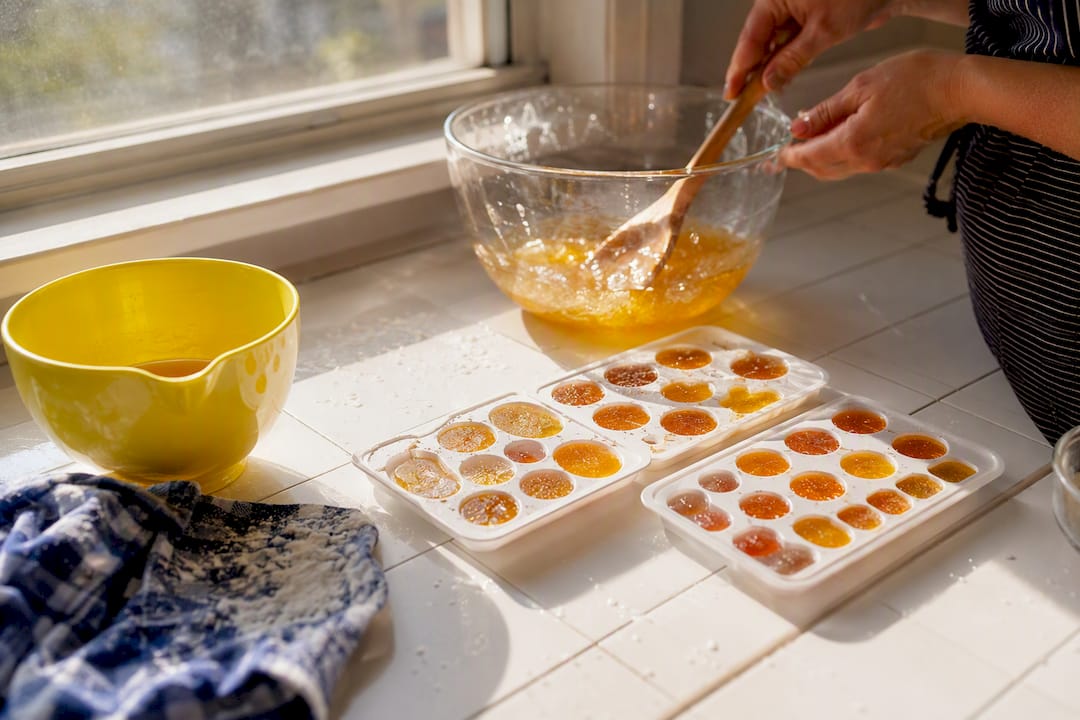
Pro Tip: Keep a small bowl of ice water next to the stove. Drop a bit of syrup in it. If it snaps clean, you’ve hit hard-crack. If it bends, give it another minute.
Why Do Manufacturers Use HFCS in the First Place?
Cost and handling, mostly. HFCS is manufactured in the U.S. in a few standard formulations, typically containing about 42% or 55% fructose, and it’s cheap, liquid, and blends easily into automated production lines. That’s a real manufacturing advantage most home cooks never need to think about.
The regional split is sharp. U.S. candy leans heavily on HFCS, while European products have historically used more sucrose, a legacy of different sugar policies rather than any health-driven choice.
Current evidence doesn’t isolate HFCS as uniquely harmful compared to other added sugars. Most guidance points toward cutting total added sugar intake rather than targeting one sweetener by name.
That’s a food-labeling and shopping distinction, not medical advice. If you have specific health concerns about sugar intake, talk to a doctor or dietitian.
How Do You Verify Allergy Safety and Cross-Contact Risk?
A “No HFCS” label doesn’t guarantee a product is safe for every allergy, so check a few more things before you buy:
- Look for a clear allergy statement, including cross-contact warnings for facilities that also process corn.
- Favor brands with full, unambiguous ingredient panels and organic, gluten-free, or kosher certifications.
- Watch for red flags: vague “natural flavors” with no elaboration, or powdered sugar coatings, which sometimes contain cornstarch.
- When a label is unclear, contact the manufacturer directly rather than guessing.
Why We Curate HFCS-Free Sweets
We built Sweetsbysvea’s catalog around transparent labeling because Swedish and European candy traditions already favor sucrose over corn syrup. Every product ships with clear ingredients and arrives fast, so you’re never guessing what you’re getting.
Where to Buy HFCS-Free Candy Today
Grocery store aisles make this harder than it needs to be. Sweetsbysvea takes the guessing out of it by stocking Swedish and European candy that’s already free of high fructose corn syrup, GMOs, and parabens, with full ingredient transparency on every product page.
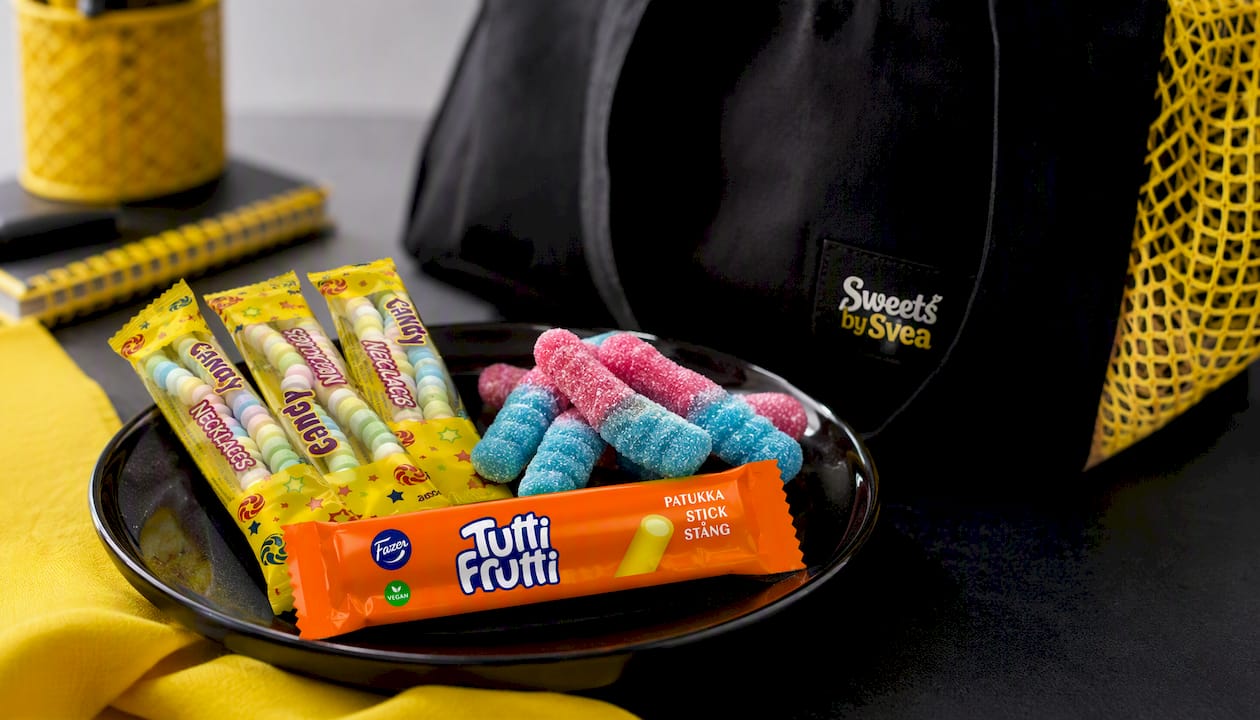
A few places to start: Candy Necklaces for a nostalgic, HFCS-free novelty pick, the Fazer Tutti Frutti Stång fruity candy stick for a classic Swedish import, and Fizzypop if you want something fizzy and different. Prices generally run in a typical range for specialty imported candy elsewhere, and orders typically ship quickly. If you’re weighing other novelty gift options too, L’amour Toujours Flower Boutique’s cotton candy box is a nice complement for a gifting occasion.
Browse the best Swedish candy picks and place your order to get real HFCS-free candy on its way to your door.
Frequently Asked Questions
Is candy without corn syrup harder to find than regular candy? Not really, especially outside the U.S. European and Swedish candy traditions lean on sucrose and other sweeteners by default, so imported candy often skips corn syrup without even marketing it as a feature.
Does “no corn syrup” mean the candy is healthier? Not automatically. It still contains added sugar from another source. The health distinction is about total added sugar intake, not which sweetener delivers it.
What’s the difference between corn syrup and high fructose corn syrup? Corn syrup is pure glucose with no fructose. HFCS has fructose added, typically in the 42% or 55% range depending on the formulation.
Can I substitute honey for corn syrup in a candy recipe? Yes, though honey brings its own flavor and slightly different moisture behavior, so expect a softer set and a more pronounced taste than a neutral syrup would give you.
Are gummies usually made with corn syrup? It depends on the brand. Many gummies use tapioca syrup or glucose syrup instead, but corn syrup is still common enough in mass-market brands that checking the label is worth the ten seconds it takes.
Sources
- High-Fructose Corn Syrup Questions and Answers | FDA
- Sugar reforms, availability and possible health impacts (peer-reviewed review) | PMC
- Glucose-fructose syrup brochure | Starch EU
- Consumption and impact of high-fructose syrups in Europe | European Commission (extract)