
Yes, chocolate can melt in the mail. Left in a hot truck or a sun-baked mailbox, it will soften or turn to a puddle inside its wrapper, no question about it. But it doesn’t have to. Three controls stop most melting: an insulated liner, frozen gel packs (or dry ice for special frozen shipments), and expedited transit like 2-day or overnight service instead of ground shipping.
- Insulated liner: buys hours of protection against outside heat
- Frozen gel packs: keep the inside of the box cold longer than ice ever could
- Fast transit: less time in a truck means less time to melt
Sweets by Svea ships in 1 to 3 days and packs chocolate in insulated materials for that exact reason.
Key Takeaways
Chocolate melts in the mail when heat, time, and poor insulation combine, and all three are controllable with the right packing and shipping choices.
| Point | Details |
|---|---|
| Know the melt threshold | Chocolate softens near 75–78°F and melts between roughly 86–93°F, with milk and white chocolate more sensitive than dark. |
| Ship early in the week | Sending Monday through Wednesday avoids weekend storage delays that trap packages in heat. |
| Build a real cold chain | Combine an insulated liner, a large sealed gel pack, an absorbent pad, and an air gap for the best protection. |
| Choose speed over ground shipping | 2-day or overnight service cuts the hours chocolate spends exposed to uncontrolled temperatures. |
| Shop from a shipper built for this | Sweets by Svea uses insulated packaging with 1 to 3 day delivery, including options like Chocolate Coins suited to safe transit. |
Table of Contents
- Why Chocolate Melts: Temperatures and Types
- How Likely Is Melting in Transit?
- Step-by-Step: Pack and Ship Chocolate to Avoid Melting
- Shipping Chocolate Long Distances or to Hot Climates
- If Your Chocolate Arrives Melted or Bloomed
- Does Chocolate Melt in the Mail? Our Honest Take
- How Sweets by Svea Ships Chocolate So It Arrives Whole
- Frequently Asked Questions
- Sources
Why Chocolate Melts: Temperatures and Types
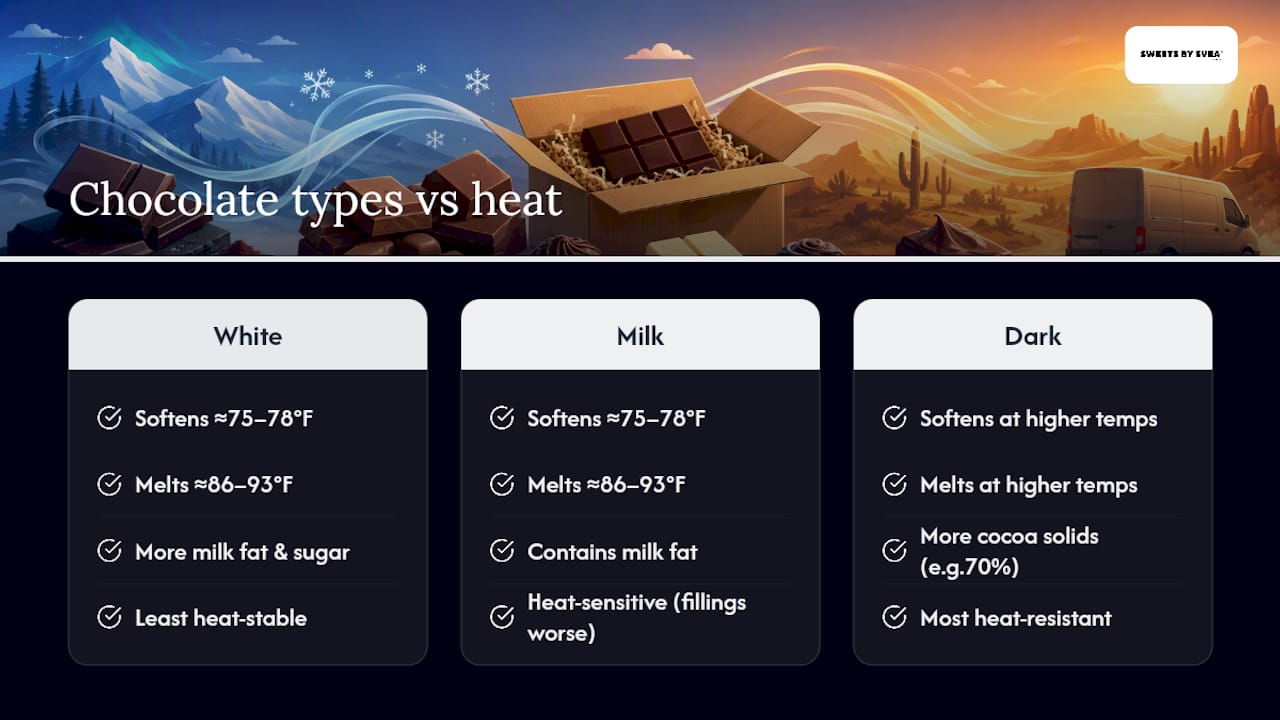
Chocolate is basically solidified fat, and fat doesn’t have a strong opinion about staying solid once it gets warm. Most chocolate starts softening around 75 to 78°F (24 to 26°C) and fully melts somewhere between 86 and 93°F (30 to 34°C), depending on the recipe. That’s a summer car interior, a mailbox in direct sun, or the back of a delivery truck on a July afternoon.
The temperature threshold that matters most: chocolate softens at 75–78°F and melts between roughly 86–93°F, and milk and white chocolate cross that line faster than dark chocolate does. White chocolate has more milk fat and sugar and less cocoa solids, so it turns glossy and soft at lower temperatures. A 70% dark bar can survive a warmer ride than a milk chocolate truffle.
Two different problems get confused constantly: temper and bloom. Losing temper means the cocoa butter’s crystal structure breaks down from heat, which causes bloom, a chalky white or gray film on the surface once it resolidifies. It looks alarming. It is not a safety issue. Chocolate loaded with nuts, caramel, or cream fillings is more heat sensitive than a plain bar, since those inclusions often melt or separate before the chocolate itself does.
How Likely Is Melting in Transit?
Risk isn’t random. A handful of factors stack on top of each other, and once you know them, you can size up any shipment in about ten seconds.
- Ambient temperature at every stop. A box doesn’t just experience the weather where it starts and ends. It sits in a sorting facility, rides in an unrefrigerated truck, and might wait on a hot loading dock for hours.
- Transit time, especially over a weekend. A package that ships on Thursday and doesn’t move again until Monday can spend three days baking in a warehouse or a delivery van.
- Delivery placement. A porch in direct sun, a metal mailbox, or a parked car are all mini ovens. Even a package that survived the truck can melt in the last 20 feet.
Ship Monday through Wednesday. That single habit avoids most weekend storage delays. On a hot day without insulation, chocolate can start melting in as little as 2 to 4 hours, which is faster than most people assume, and it’s exactly why ground shipping in summer is a gamble.
Step-by-Step: Pack and Ship Chocolate to Avoid Melting
Good packing isn’t complicated. It just has an order that matters.
Materials to gather:
- Insulated foil or foam liner sized to your box
- Metalized reflective bubble wrap for an extra heat barrier
- Gel ice packs, sized to the shipment (one large pack beats several small ones)
- An absorbent pad
- Sealed plastic bags for the gel packs
- A sturdy outer corrugated box
Assembly, in order:
- Pre-chill the chocolate itself if possible, ideally overnight in a refrigerator before packing.
- Line the box with the insulated liner, then place an absorbent pad on the bottom. Condensation between the liner and the box can dampen and weaken the cardboard, and the pad catches that moisture before it becomes a problem.
- Seal each gel pack inside its own plastic bag so condensation never touches the chocolate directly.
- Place the chocolate with cold packs positioned below and beside it, never resting directly on top where its own weight can cause pressure marks.
- Leave a small air gap between the product and the box walls. That gap is part of the insulation, not wasted space.
- Seal every seam tightly so no warm air sneaks in through a gap in the tape.
For the carrier, choose 2-day or overnight service whenever the weather is warm, and avoid standard ground shipping between May and September if you can help it. Dry ice is reserved for shipments that need to stay frozen; it can extend cooling time by keeping gel packs solid longer, but it can also transfer odor to chocolate and needs venting per carrier rules, so use it deliberately, not as a default.
Pro Tip: If you’re shipping a gift and can’t control the delivery date, pack as if the box will sit in full sun for six hours. Experienced shippers build a cold chain rather than hoping for a mild day.
Shipping Chocolate Long Distances or to Hot Climates
Some routes simply aren’t worth the risk without extra help. Peak summer heat combined with a transit time over three days, especially without a refrigerated option, is a setup for a melted mess no matter how well you pack.
- Skip standard shipping during heat waves or when transit will exceed three days with no cold chain in place.
- Use refrigerated freight or a temperature-controlled service for long domestic or international routes; DHL and similar carriers offer thermal or refrigerated container options for exactly this scenario.
- Consider local fulfillment when a destination is consistently hot, so the product spends less total time outside a controlled environment.
- Declare chocolate as a food item on any customs paperwork; requirements vary by destination, so check the receiving country’s import rules before shipping internationally.
Shipping chocolate to a place that’s hot most of the year isn’t the same problem as a one-off summer heat wave. Plan for the climate, not just the season.
If Your Chocolate Arrives Melted or Bloomed
First, don’t panic and don’t toss it immediately. Most heat damage is cosmetic, not dangerous.
- Check the texture and smell. Bloom shows up as a white or gray, slightly chalky film on the surface. It smells normal and tastes normal, just less snappy in texture. Actual spoilage smells off, sour, or rancid, which is rare with chocolate but worth ruling out.
- Let a softened package rest at room temperature, unopened, for an hour or two. Many bars firm back up close to their original shape once they cool evenly.
- Reuse melted chocolate as an ingredient. Chocolate meant for tempering is often fully recoverable by re-melting and re-tempering it properly, or simply using it in baking, hot chocolate, or a ganache where texture doesn’t matter.
- Document the damage with a photo and, if you know it, the outdoor temperature that day. That record makes any conversation with the seller faster and clearer. If you ordered from Sweets by Svea, that documentation is exactly what customer support asks for when arranging a replacement.
Does Chocolate Melt in the Mail? Our Honest Take
Most advice about shipping chocolate treats packaging like an afterthought, a few ice packs tossed in as insurance. That’s backward. The research is clear that insulation, cold mass, and transit speed function as one system, not three separate options to pick from. Skip any one of them and the other two have to work twice as hard.
The overrated piece of advice is dry ice. It sounds like the serious, professional choice, but it’s overkill for most chocolate shipments and can leave an odor behind if it’s not handled with care. Save it for genuinely frozen products.
What actually matters, in order: ship early in the week, use one large gel pack instead of three small ones, and pick 2-day shipping over ground the moment the forecast says warm. Get those three right and the fancier packaging tricks barely move the needle. Get any one wrong, and no amount of reflective wrap saves the shipment.
How Sweets by Svea Ships Chocolate So It Arrives Whole
Sweets by Svea built its shipping process around the exact risks covered above: heat, time, and handling. Orders go out with insulated packaging and arrive within 1 to 3 days, which keeps chocolate out of the danger zone that ground shipping can’t avoid in summer.
That speed matters more than most customers realize. A shorter trip means fewer hours where a box can sit in a hot warehouse or a delivery van, and it’s the single biggest lever in preventing the kind of bloom or softening this article just walked through. Sweets by Svea’s packing follows the same logic as the checklist above: protective liners, careful placement, and attention to how chocolate behaves once it leaves a temperature-controlled space.
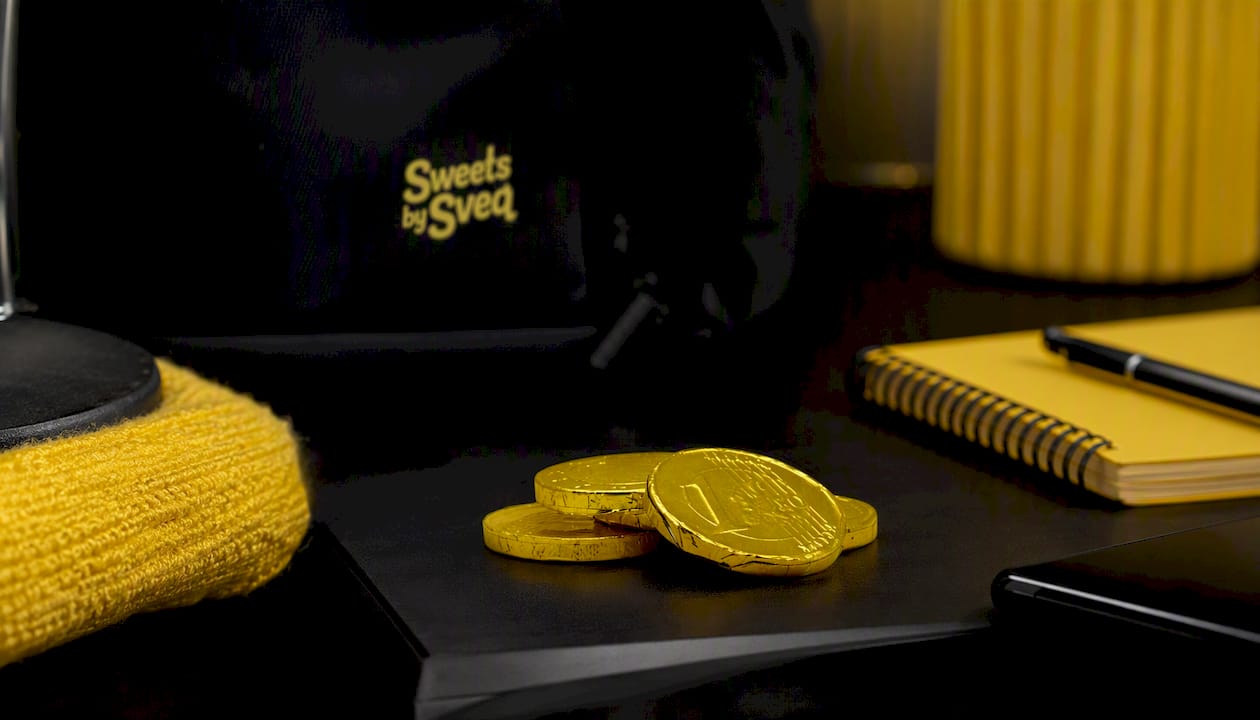
If you want a low-risk pick to test that out, the Chocolate Coins are a solid place to start, sturdy, well-suited to shipping, and a fun option for a gift box or a care package. Order now and choose expedited shipping at checkout if you’re sending them somewhere warm.
Frequently Asked Questions
Does chocolate melt in the mail during winter? It’s far less likely. Cold months remove most of the heat risk, though chocolate can still be affected by extreme cold or by heated delivery vehicles and indoor sorting facilities in some regions.
How long can chocolate sit in a hot mailbox before it melts? On a warm day without insulation, chocolate can begin softening in as little as 2 to 4 hours, so a mailbox in direct sun is one of the riskiest final steps in the entire shipping process.
Is melted chocolate safe to eat? Usually, yes. Melting and bloom are cosmetic issues tied to the cocoa butter’s crystal structure, not food safety problems, unless the chocolate also smells sour or shows signs of actual spoilage.
What’s the best shipping service for chocolate in summer? Expedited 2-day or overnight service beats standard ground shipping every time heat is a factor, since it cuts the total hours the package spends outside a controlled environment.
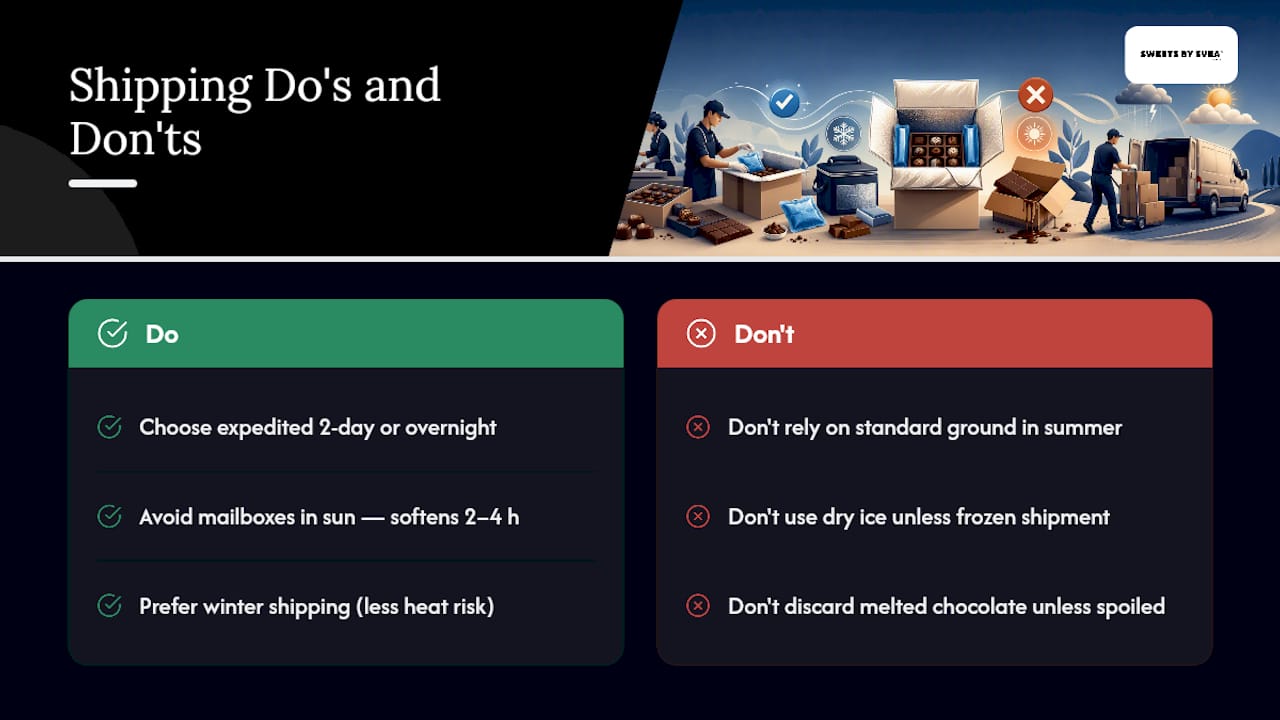
Should I use dry ice to ship chocolate? Only for shipments that need to stay fully frozen. Dry ice can extend cooling time but may transfer odor to chocolate and requires careful handling and venting under carrier rules.
Sources
- How to Ship Chocolate Without Melting: Temperature, Packaging & Timing – The Sweet Tooth
- How to Ship Chocolate Without It Melting | ShippingLabel
- Tip: Shipping Chocolate in the Summer is Possible — Here’s How | Retail Confectioners Association
- Shipping chocolate the right way: what you need to know | Specialty Food Source
- Shipping chocolates internationally | DHL