
Keep most candy in a cool, dry, airtight container, ideally in a pantry or cabinet around 65 to 70°F with moderate humidity. That single rule covers hard candy, gummies, caramels, and most chocolate. The exceptions are worth knowing before you toss anything in the fridge:
- Chocolate dislikes cold, damp air. Refrigerate it only if your home runs hot, and always wrap it airtight first.
- Homemade or cream-filled candy behaves more like food than candy. Treat it with the same caution you’d use for leftover cake.
- If you must chill candy, wrap it airtight, hold it in the fridge for 24 hours, then move it to the freezer. Reverse that order when you thaw it.
Everything below breaks down exactly how long each type lasts and what container actually earns its keep.
Key Takeaways
Proper candy storage depends on matching each candy type’s moisture and fat content to the right container, temperature, and humidity level.
| Point | Details |
|---|---|
| Default rule | Store most candy airtight in a cool, dry pantry around 65 to 70°F. |
| Chocolate needs stability | Avoid the fridge unless your home is too warm; wrap airtight if you must chill it. |
| Separate by moisture | Keep gummies and caramels away from hard candy and candy corn to stop stickiness or hardening. |
| Watch for real spoilage signs | Mold, sour odors, or bloated packaging mean it’s time to discard, not just quality loss. |
| Shop shelf-stable options | Sweetsbysvea’s individually wrapped picks, like the Candy Lovers Favorite bundle, hold up well in home pantry storage. |
Table of Contents
- Shelf Life by Candy Type: How Long Does Candy Last?
- What Are the Ideal Conditions for Storing Candy?
- Which Containers Actually Keep Candy Fresh?
- Should You Refrigerate or Freeze Candy?
- How Should You Store Homemade or Perishable Candy?
- Why Trust This Candy Storage Guide?
- How Do You Prevent Odor Transfer in Chocolate?
- What Do Our Customers Ask About Candy Storage?
- Get Candy That’s Built to Last on Your Shelf
- Sources
Shelf Life by Candy Type: How Long Does Candy Last?
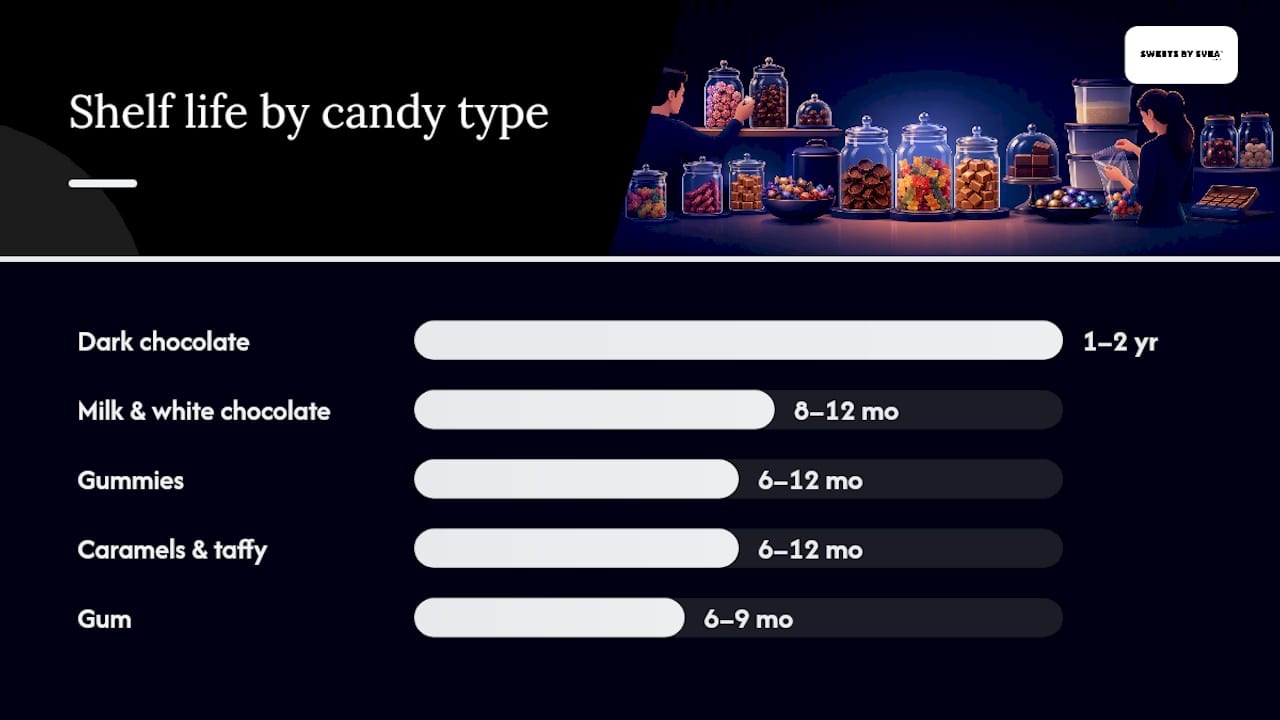
Shelf life swings wildly depending on what’s in the wrapper. Dark chocolate can last up to 1 to 2 years unopened, while milk and white chocolate top out around 8 to 12 months, according to Virginia Tech food science guidance. The extra dairy fat in milk and white chocolate is what shortens the window.
Hard candy is the marathon runner of the candy aisle, often lasting for many months if it stays dry. Its enemy is humidity, not time. If your lemon drops or butterscotch discs start looking cloudy or sticky, toss a spoonful of cornstarch or powdered sugar in the jar. It absorbs surface moisture and keeps pieces from fusing into a single sugar brick.
Gummies and jellied candies are pickier. They need moisture, just not too much. Store them airtight and away from drier candies, which pull humidity right out of a gummy bear and leave it stiff. The shelf life of gummies generally runs 6 to 12 months depending on the packaging quality.
Caramels and taffy do best individually wrapped inside an airtight container. Sealed properly, they’ll hold their chew for 6 to 12 months. Gum lasts 6 to 9 months sealed, and it only needs cool, dry conditions since staleness (not spoilage) is the real threat.
Seasonal picks like candy corn hold up for months unopened but decline fast once the bag is open and air gets in regularly. Nougat, fudge, and anything with a cream or fruit filling live on the short end of the spectrum. Treat these more like baked goods than shelf candy, and lean toward the fridge if your kitchen runs warm.
What Are the Ideal Conditions for Storing Candy?
Candy degrades through physics and chemistry, not bacteria. That’s the part most people miss. A food scientist explains that lipid oxidation and sugar or fat “bloom” (that dusty white film on old chocolate) are what ruin texture and flavor over time, not mold from spoiled ingredients. That’s actually good news: proper storage buys you a lot more quality life than the best-by date suggests.
Three environmental factors matter most:
- Temperature stability. Aim for 65 to 70°F. Swings, not just heat, cause bloom.
- Humidity control. Keep relative humidity around 50 to 55% where you can manage it.
- Light and odor exposure. Cocoa butter absorbs smells readily, so candy stored near onions, coffee, or cleaning supplies will taste like them.
Skip the spot next to the oven, the window ledge that gets afternoon sun, or the cabinet above the dishwasher where heat and steam collect. A closed pantry shelf away from appliances is usually your best bet.
When storing a mixed bag, sort by moisture level before sealing anything up. Hard candy and gummies in the same jar means one gets sticky and the other turns rock hard within days.
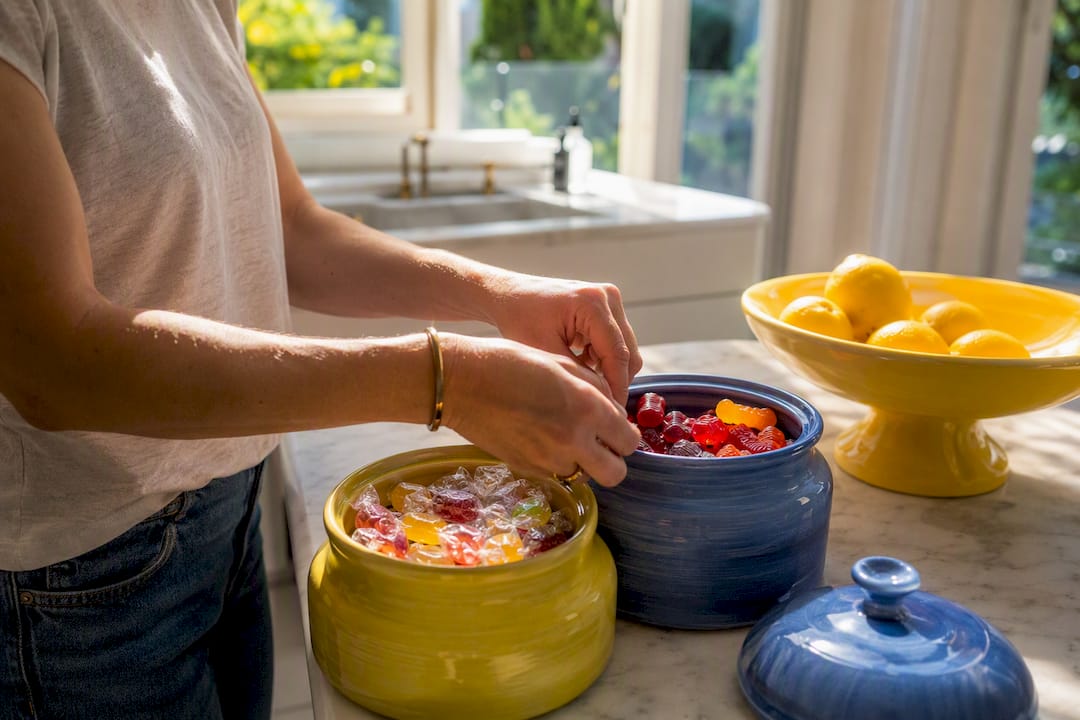
Pro Tip: Keep a small jar of rice or a food-safe silica packet in your candy cabinet during humid summer months. It pulls excess moisture out of the air without touching the candy itself.
Which Containers Actually Keep Candy Fresh?
Glass jars with rubber gasket seals are the gold standard for long-term storage, especially for anything sensitive to odor, since glass doesn’t absorb smells the way some plastics do. For everyday snacking stashes, a plastic snap-top container works fine and is easier to grab from daily.
- Individually wrap sticky candies like caramels or taffy in wax paper or cellophane before boxing them, so they don’t fuse together.
- Store moist candies (gummies, caramels) separately from dry ones (hard candy, candy corn) even within the same cabinet.
- Vacuum-seal bags are worth the extra step for anything headed to the freezer for more than a few weeks.
- Label containers with the date you opened them. Memory is unreliable after month three.
- If you’re refrigerating chocolate, double-wrap it (plastic wrap, then foil) before it goes in an airtight container. That barrier is what prevents condensation from reaching the surface.
Airtight containers prevent moisture absorption, oxidation, and odor transfer all at once, which is why this one habit does more for candy shelf life than almost anything else on this list.
Should You Refrigerate or Freeze Candy?
Refrigerate or freeze candy only when your home runs unusually warm or humid, or when you’re dealing with a perishable filling like cream or fresh fruit. Cold storage isn’t the default. It’s the backup plan.
- Wrap the candy airtight (plastic, then foil, then a sealed bag or container).
- Place it in the refrigerator for 24 hours first.
- Move it to the freezer only after that cooldown period.
- To thaw, reverse the steps: freezer to fridge, then fridge to counter, letting it warm gradually.
This slow transition matters because a fast temperature jump pulls moisture onto the candy’s surface, which is exactly what causes sugar bloom. Some toffees and firmer truffles freeze reasonably well using this method. Fruit and nut candies tend to turn mealy or grainy after freezing, so they’re better left in the pantry.
Quick fact check: shelf-stable candy sold in original sealed packaging often keeps its quality for 6 to 12 months without any freezer at all, per shelf-life data from Virginia Tech, which makes freezing a last resort rather than a routine step.
How Should You Store Homemade or Perishable Candy?
Homemade fudge, caramel apples, and cream-filled chocolates play by different rules than store-bought candy because they contain fresher dairy and produce.
- Fudge typically holds up 1 to 2 weeks at room temperature in an airtight container, longer if refrigerated.
- Caramel apples are best eaten within a few days. The apple itself is the perishable part.
- Cream centers and fresh truffles usually need refrigeration and are safest eaten within a week or two.
- Discard anything showing mold, a sour or off smell, or a package that looks puffed up or bloated, a sign gas is building up inside.
- When gifting homemade candy, use an insulated bag for transport in warm weather and note the make date on the label so the recipient knows the window.
Why Trust This Candy Storage Guide?
Sweetsbysvea ships authentic Swedish candy worldwide and pays close attention to packaging integrity for exactly this reason: freshness in transit and at home matters as much as flavor.
- Every product is free from GMOs, parabens, and high-fructose corn syrup, with delivery typically landing in 1 to 3 days.
- Product pages, including the guide to Swedish candy types, list storage notes specific to each treat.
- The best Swedish candy roundup highlights which picks hold up best for longer storage.
How Do You Prevent Odor Transfer in Chocolate?
Cocoa butter behaves almost like a sponge for smell. Store chocolate next to coffee grounds, onions, or even a strongly scented candle drawer, and it will pick up those notes within days. This is one of the most overlooked causes of “off” tasting chocolate that people mistake for spoilage.
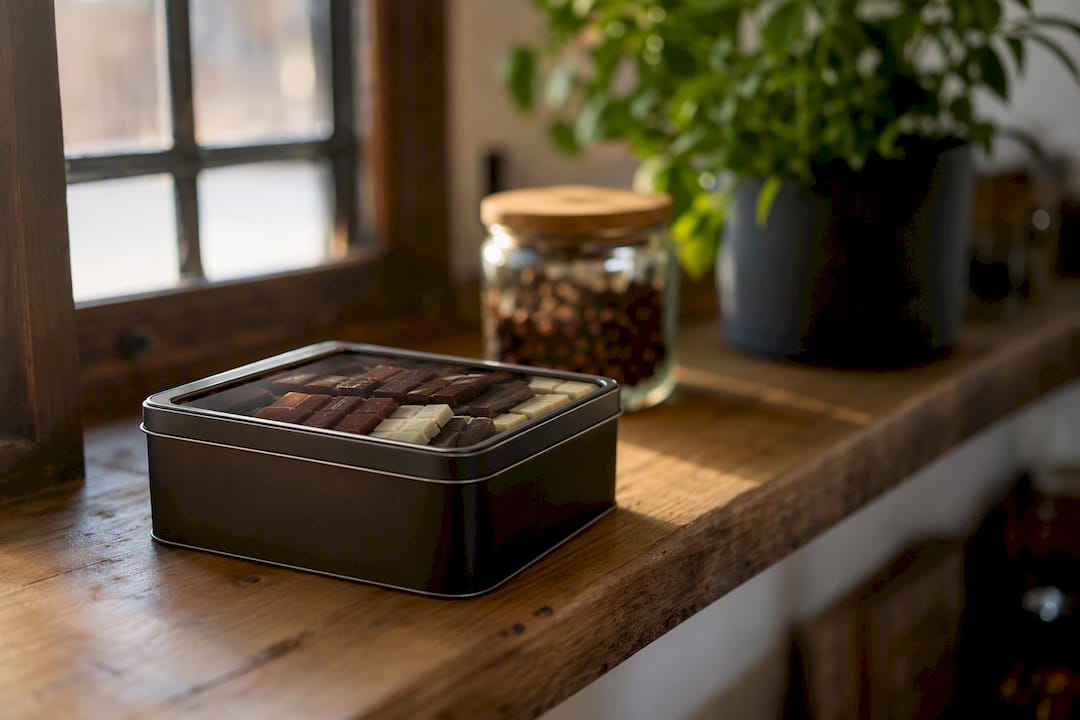
The fix is straightforward: keep chocolate in its own sealed container, separate from the rest of your pantry stock, particularly anything aromatic. If you store multiple candy types together in one bin, put the chocolate in its own zip-top bag or small tin inside that bin, rather than letting it sit loose against gummies, licorice, or spiced treats.
Cross-contamination isn’t only about smell. Sticky candies like caramel or taffy can also transfer moisture to anything they touch, softening hard candy shells or making a chocolate bar’s surface slightly tacky. Real Simple’s storage guidance recommends grouping candies by texture and moisture level rather than by brand or flavor when you’re organizing a shared drawer or bin.
This matters most around holidays, when mixed bags of Halloween or party candy get dumped into one bowl. Within a week, a bowl like that can turn hard candies sticky, dry out gummies, and leave the chocolate tasting faintly of whatever spiced popcorn or citrus candy sat next to it. Separate containers by type solve this in about five minutes of sorting.
What Do Our Customers Ask About Candy Storage?
We hear the same question constantly: “Will this survive my kitchen in July?” It’s why we’re careful about packaging before anything ships. If you’ve got a storage question about a specific product, our customer service team is happy to help.
Get Candy That’s Built to Last on Your Shelf
Storage tricks only get you so far if the candy wasn’t packaged well to begin with. That’s where a bundle like the Candy Lovers Favorite mix comes in. It’s assembled with sealed, individually wrapped pieces that hold up well in a pantry for months, no special containers required beyond what you already have at home.
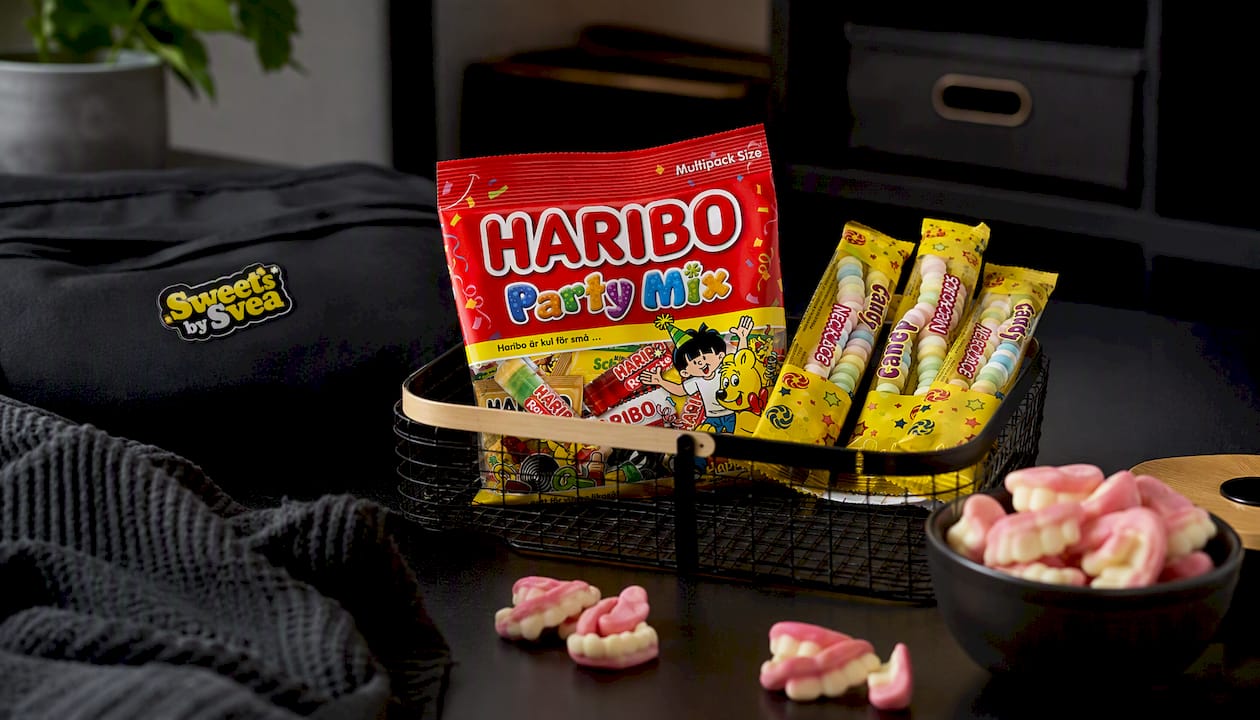
If gummies are your household’s weakness, Swedish Fish ship in packaging designed to resist the humidity swings that make gummy candy go stiff or sticky. For something with a little more crunch and staying power, Ahlgrens Bilar Limousines and the Mini Snickers 50g packs both travel and store well thanks to their individual wrapping. Building a gift box for someone overseas? The Sandwich Bites Gingerbread 50g and Sugared Bricks Strawberry 50g are both sturdy enough to survive shipping and a few months on a shelf afterward.
Browse the full Candy Lovers Favorite selection and pick a bundle that matches how long you actually plan to keep it around.
Sources
- The Best Way To Store Chocolate Bars For Long-Lasting Freshness
- The Only Way You Should Store Chocolate, According to a Food Scientist
- Halloween candy expert guidance (Virginia Tech article)
- How to Store Chocolate (Real Simple)