

Yes, you can bring candy on a plane. Solid candy, whether it’s chocolate bars, gummy bears, or lollipops, is allowed in both carry-on and checked bags with no TSA quantity limit. The catch is anything gel-like, spreadable, or pourable, which must follow the 3-1-1 liquids rule in carry-on. Even then, the TSA officer at the checkpoint makes the final call, and international destinations may add their own customs restrictions on top.
TL;DR:
- Solid candy, including chocolates, gummies, and hard candies, can be carried freely in both carry-on and checked bags with no TSA quantity limit.
- Gel or pourable candy over 3.4 ounces must comply with the liquids rule, fitting into a quart-size bag or moving to checked luggage for larger quantities.
- Pack chocolate with insulation and keep it separate from liquids to prevent melting, and use rigid containers for fragile items to avoid damage during travel.
- Customs restrictions vary by country and often limit dairy-filled, meat-based gelatin, or fresh cream candies, requiring declaration or shipping ahead of arrival.
- Items flagged during security are usually due to packaging ambiguity, not misconduct, and clear labeling and original packaging streamline processing.
Table of Contents
- Which Types of Candy Does TSA Treat as Solid vs. Liquid?
- How Does the 3-1-1 Rule Apply to Gel and Liquid Candy?
- How Do You Pack Candy so It Doesn’t Melt or Trigger Extra Screening?
- Can You Bring Candy Through Customs When Traveling Internationally?
- What Happens if TSA Flags Your Candy at the Checkpoint?
- What Makes Candy Travel Well, According to Sweets by Svea
- Your Quick Checklist Before Heading to the Airport
- Travel-Ready Picks From Sweets by Svea
- Sources
- FAQ
Which Types of Candy Does TSA Treat as Solid vs. Liquid?
TSA sorts candy the same way it sorts everything else at the checkpoint: is it solid, or can it be poured, spread, or squeezed? Most candy clears the bar easily.
Solid candy includes:
- Chocolate bars and boxed chocolates
- Hard candy and lollipops
- Gummies and jelly candies
- Toffee, caramels, and taffy
None of these count as liquids or gels, so TSA confirms solid candy travels freely in carry-on or checked luggage, with airline weight limits being the only real constraint.
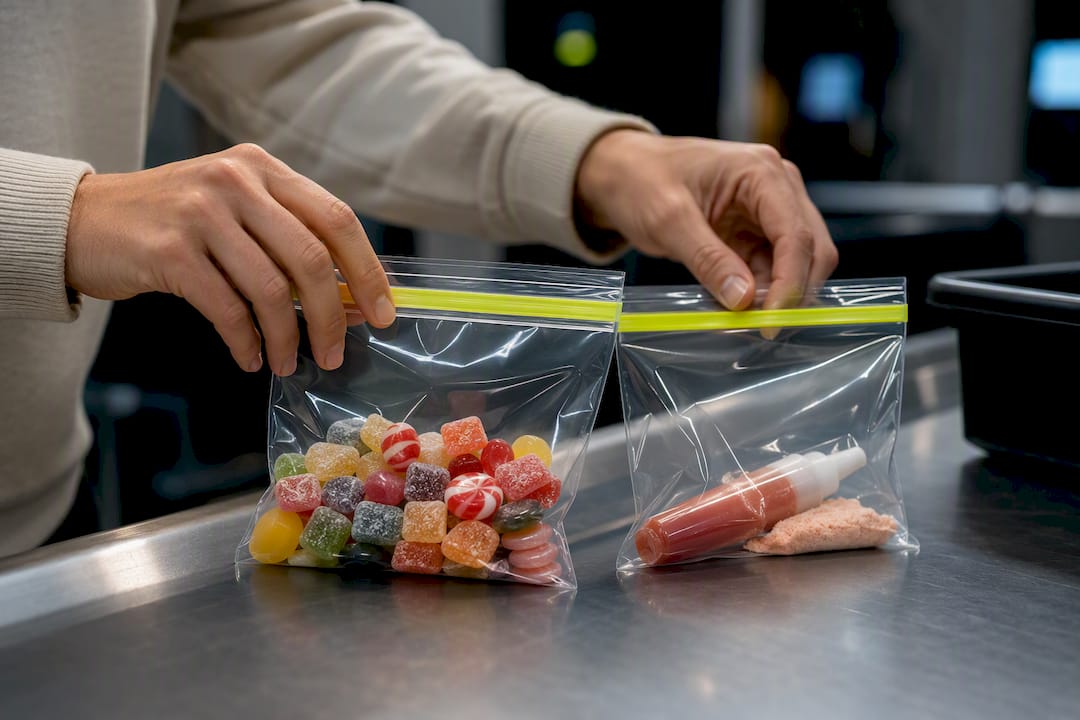
Where things get tricky is anything soft enough to squeeze or pour. Squeezable candy tubes, chocolate spread, dessert syrups, and soft icing all fall under TSA’s liquids and gels rule, because the agency defines “liquid” broadly enough to cover anything spreadable, pourable, or pumpable. Powdered candy and drink mixes occupy a gray zone too. A small bag of sherbet powder rarely draws attention, but a large tub of powdered mix can trigger a manual inspection simply because it obscures the x-ray image.
How Does the 3-1-1 Rule Apply to Gel and Liquid Candy?
Gel-based sweets, drizzled candy toppings, and anything with a syrupy filling must comply with TSA’s liquids rule, which limits containers to a travel-size amount for carry-on, typically within a single quart-size resealable bag. Larger containers are recommended to be placed in checked baggage. 4. If you want to carry a bigger jar on board, decant it into travel-size containers before you leave home. 5. Remember that duty-free liquid candy purchased after security may need re-screening at a connecting airport, especially on international layovers.
Airlines and airports enforce this consistently, but the packaging matters. A sealed duty-free bag with your receipt visible tends to move through connections faster than a jar you’ve already opened.
How Do You Pack Candy so It Doesn’t Melt or Trigger Extra Screening?
Cargo holds and cabin temperatures swing more than most travelers expect, and a bag of chocolate left in the wrong spot for a few hours turns into a puddle. A few packing habits solve most of the problem:
- Pack chocolate in an insulated pouch or with a small travel cold pack, and keep it in your carry-on whenever possible.
- Use rigid boxes or hard-sided containers for anything that crushes easily, like sugar candy shapes or delicate chocolates.
- Seal gummies and soft candy in zip-top bags so a burst wrapper doesn’t turn into a sticky mess in your suitcase.
- Keep solid candy separate from your quart-size liquids bag so you’re not fishing through wrapped chocolate to find your one allowed gel item at the checkpoint.
- If you’re checking chocolate, wrap it with insulation and padding since checked holds run warmer than the cabin and offer less climate control than the seats above.
Pro Tip: Pack your quart-size liquids bag near the top of your carry-on, not buried under clothes. Officers pull it out to inspect visually, and digging for it slows down the whole line behind you.
Business travelers have gotten good at this kind of low-effort snack planning, and the same logic that makes convenience the top priority for road warriors packing food for a trip applies just as well to candy: grab what travels well, skip what doesn’t.
Can You Bring Candy Through Customs When Traveling Internationally?
TSA screening only covers what happens at the security checkpoint. Once you land, a completely different set of rules takes over: customs and biosecurity regulations set by your destination country. Passing airport security tells you nothing about whether your candy is allowed to enter the country you’re flying into.
Some countries restrict candies with dairy fillings, meat-based gelatin, or fresh cream centers, since biosecurity agencies worry about pests and pathogens riding along in food products. A few practical habits keep you out of trouble:
- Keep original packaging and receipts, since unlabeled candy is more likely to raise questions.
- Check the destination country’s customs website before you fly, not after you land.
- Declare food items when the arrival form asks, even if you think the candy is obviously fine.
Sweets by Svea’s own guide on declaring candy at customs walks through when declaration is required and when shipping ahead makes more sense than carrying candy yourself.
What Happens if TSA Flags Your Candy at the Checkpoint?
A dense gift box or a jumbled bag of loose candy can look confusing on an x-ray screen, and that ambiguity is often enough for an officer to pull your bag for a closer look. It’s not a sign you did anything wrong. It just means the image wasn’t clean enough to clear automatically.
Allergy policies add another layer, mostly set by the airline rather than TSA. Some carriers restrict peanut products in the cabin or ask passengers not to open nut-based snacks during the flight because of passengers with severe allergies. If a flight attendant asks you to hold off on the peanut brittle, that’s a safety request worth honoring, not a rule you can argue with. When an officer asks you to repack or move an item to checked luggage, do it calmly. Arguing rarely speeds things up, and the officer’s judgment at the checkpoint is final.
What Makes Candy Travel Well, According to Sweets by Svea
Not all candy survives a trip through security and a few hours in a bag. The sweets that hold up best share a few traits: individually wrapped pieces that don’t melt into each other, shelf-stable recipes that don’t need refrigeration, and packaging sturdy enough to survive a gate check.
That’s the standard we apply when we talk about travel-friendly candy:
- Individually wrapped pieces resist crushing and keep sticky candy from fusing into one lump.
- Shelf-stable recipes skip the refrigeration question entirely, so there’s no melting clock running.
- Sealed bags with clear labeling move faster through both TSA screening and customs checks.
We’ve also written specifically about shipping candy internationally for travelers who’d rather have a package waiting at their destination than carry a suitcase full of sweets through three time zones.
Your Quick Checklist Before Heading to the Airport
Sort your candy into solid and liquid piles first. Solids go anywhere; gels and spreads need to fit your quart bag or move to checked luggage. Pack chocolate with a cold pack if it’s staying in your carry-on, since cabin temperature swings less than the hold but still isn’t cold storage. Keep receipts and original packaging for anything you’re carrying across a border, and be ready to shift a bulky item to checked baggage if an officer asks. None of this is complicated, but skipping one step is usually what turns a five-minute checkpoint wait into a twenty-minute one.
— Sweets
Travel-Ready Picks From Sweets by Svea
Not every candy survives a flight the way you’d hope, which is exactly why Sweets by Svea builds its travel lineup around pieces that stay intact, stay put, and don’t need a cooler. Our Candy Necklaces are individually strung and shelf-stable, so they hold up in a carry-on without turning into a sugary clump.
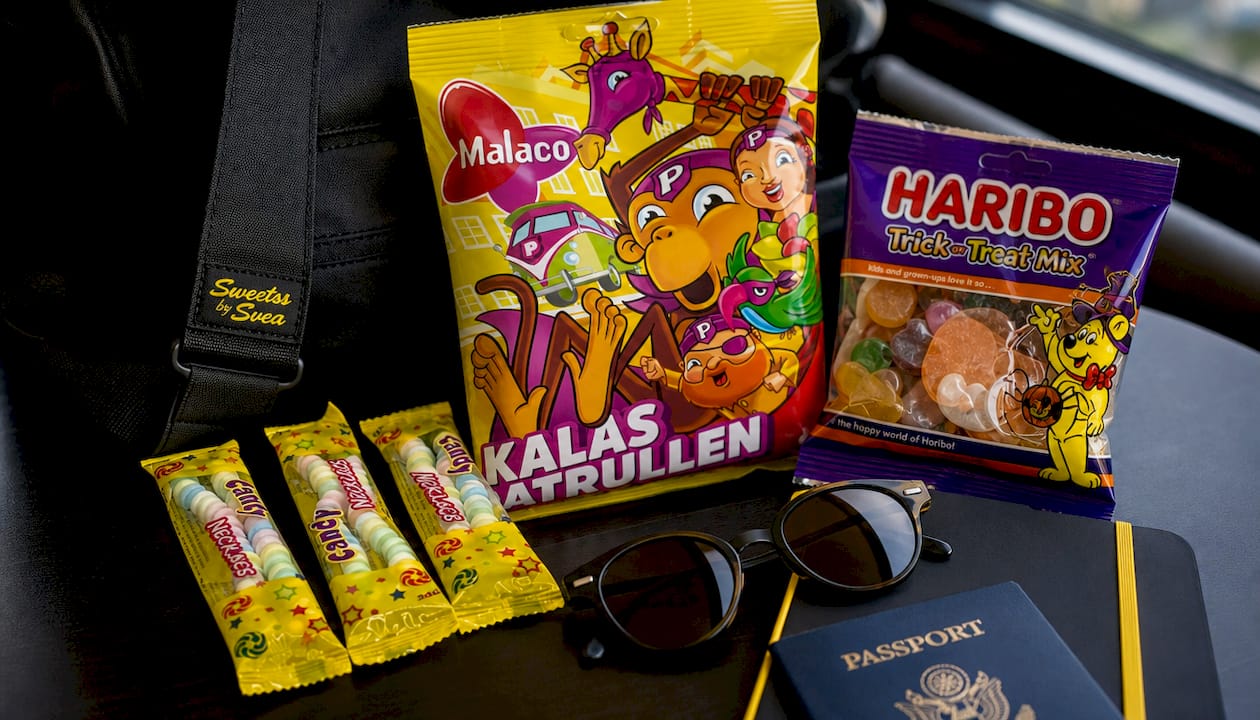
If you’d rather bring a mix, the Malaco Kalaspatrullen candy bag packs 135 grams of assorted Malaco favorites into one sealed bag, easy to tuck beside your liquids pouch without adding bulk. The Haribo Trick or Treat Mix works the same way for gummy lovers, prepackaged and ready to share once you land. All three skip GMOs, parabens, and high fructose corn syrup, and orders ship worldwide quickly, so if a candy stash doesn’t make the packing cut this trip, it can be waiting at your destination instead. Browse the full Sweets by Svea lineup and pick what fits your next flight.
Sources
For the rules straight from the source, check TSA’s candy guidance, TSA’s food and liquids page, and Condé Nast Traveler’s food travel guide for practical, real-world context.
- Candy | Transportation Security Administration - TSA
FAQ
Can You Bring Candy in Your Carry-On Bag?
Yes. Solid candy like chocolate, gummies, and hard candy is allowed in carry-on bags with no quantity limit set by TSA. Gel or spreadable candy over 3.4 ounces needs to go in checked luggage instead.
What Snacks Are Not Allowed on a Plane?
Almost all packaged snacks and solid candy are allowed, but liquid or gel snacks over 3.4 ounces, like large jars of dip, syrup, or spreadable chocolate, aren’t permitted in carry-on under TSA’s liquids rule. Fresh produce and some meat or dairy items can also be restricted depending on your destination’s customs rules.
Why Are Jeans Sometimes Discouraged for Flights?
This isn’t a TSA rule. It’s general travel advice, since rigid denim can be less comfortable during long security lines and extended sitting, and it has nothing to do with what you can pack, including candy.
What Items Did TSA Recently Restrict?
TSA periodically updates guidance on specific electronics, self-defense items, and certain battery types, but candy and most solid foods haven’t been affected by recent restriction changes. Always check TSA’s official list before you pack anything unusual.
How Should You Pack Candy for a Flight?
Keep solid candy separate from your liquids bag, use insulated pouches for chocolate, and choose individually wrapped pieces to avoid melting or crushing. Products designed to be shelf-stable and low-mess, like Sweets by Svea’s travel picks, hold up better across long flights than loose or soft-filled candy.