
Swedish chocolate calls for partners that respect its clean finish and creamy structure rather than fighting it: coffee and strong tea for the fika table, mild-to-aged cheeses depending on cacao level, tart berries and toasted nuts, and, for the adventurous, salty licorice. That last one sounds strange until you try it. These pairings work because Swedish chocolate tends toward higher cocoa butter and real milk powder, giving it a rounder mouthfeel that plays well with both contrast and complement.
TL;DR:
- Swedish chocolate’s high cocoa butter and real milk powder produce a cleaner, less persistent finish that allows subtle flavors to come through.
- Matching chocolate categories to pairing strategies is crucial, with weight, contrast, texture, and tasting together being the core rules.
- Milk, white, and caramel chocolates require different partners: gentle cheeses or fruits for milk, contrasting flavors for caramel, light teas for white.
- Coffee, especially strong low-acid brews, remains the most reliable drink pairing, with additional options like Port, tea, or Nordic spirits offering variety.
- Regional differences and seasonal traditions influence pairings, with North favoring milder bars and the holidays emphasizing spiced drinks or fresh berries.
Table of Contents
- What Makes Swedish Chocolate Different From What You’re Used To
- The Four Rules That Make Any Pairing Work
- Pairings by Chocolate Style: Milk, Dark, White, and Caramel
- Beverage Pairings: Coffee, Tea, Wine, and Spirits
- Cheese and Chocolate: Matching Intensity, Building a Board
- Salmiak and Chocolate: Sweden’s Boldest Pairing
- How to Taste and Test Pairings at Home
- Where Sweets by Svea Fits Into the Pairing Picture
- Pairings With Coffee and Tea: The Fika Tradition
- Pairing Swedish Chocolate With Lingonberries and Cloudberries
- Seasonal and Holiday Chocolate Pairings
- Regional Variations in Swedish Chocolate
- What the Pairing Rules Miss
- Ready to Build Your Own Pairing Board?
- Sources
What Makes Swedish Chocolate Different From What You’re Used To
The pairing logic below only makes sense once you understand what’s actually in the chocolate. Swedish chocolate, and Scandinavian chocolate generally, tends to carry a higher cocoa butter content and real milk powder rather than vegetable fat substitutes, which produces a cleaner finish and less of the waxy or slightly sour “off” note some mass-market American chocolate carries from butyric acid compounds. That difference matters more than it sounds. A cleaner finish means the chocolate doesn’t linger and fight with whatever you pair it against, so subtler partners, like a mild goat cheese or a plain espresso, actually get heard instead of drowned out.
Swedish shelves also skew toward a few distinct product types, and each one calls for a different pairing approach:
- Milk chocolate bars (Marabou, Fazer): creamy, moderately sweet, forgiving with fruit and light coffee.
- Filled and inclusion bars, like Marabou Daim Chokladkaka with crushed toffee: built-in caramel and crunch that already do half the pairing work for you.
- Fruit-and-nut bars, such as Marabou Frukt & Mandel with raisins and almonds: pair these lighter, since the bar already carries its own contrast.
- Chocolate-covered licorice: a category unto itself, and one that rewards a completely different pairing mindset (more on that below).
Know which category you’re holding before you reach for a wine list or a cheese board. A caramel-filled bar next to a tannic red wine is a fight neither one wins.
The Four Rules That Make Any Pairing Work
Once you know your chocolate’s category, four rules cover almost every good pairing decision you’ll make.
- Match intensity first. A 70% dark bar needs a partner with equal presence, an aged cheese, a tannic Port, a strong espresso, not something delicate that disappears next to it. Cheese-pairing experts consistently point to intensity matching as the foundation of a good pairing, and it applies just as well to drinks as it does to cheese.
- Decide: contrast or complement? Salt and acid create contrast, think chocolate-covered licorice or a squeeze of citrus with dark chocolate, while nuts, caramel, and roasted flavors complement by echoing what’s already there.
- Respect texture and temperature. Cheese tastes best at room temperature, while chocolate holds its structure better slightly cool, so the two elements stay distinct on the tongue instead of melting into mush. Warm beverages like coffee do the opposite job, bridging the fat in milk chocolate so it feels lighter rather than heavier.
- Taste both together, not separately. Tasting experts recommend sampling the chocolate and its partner in the same bite, not back to back, since that’s the only way to catch how the flavors actually merge.
Pro Tip: Work from lightest to most intense across a tasting session, milk chocolate before dark, mild cheese before aged, and keep a glass of water or plain cracker on hand to reset your palate between rounds. Your tenth pairing deserves the same clear read as your first.
Pairings by Chocolate Style: Milk, Dark, White, and Caramel
Different chocolate styles want different company, and treating them all the same is the most common pairing mistake.
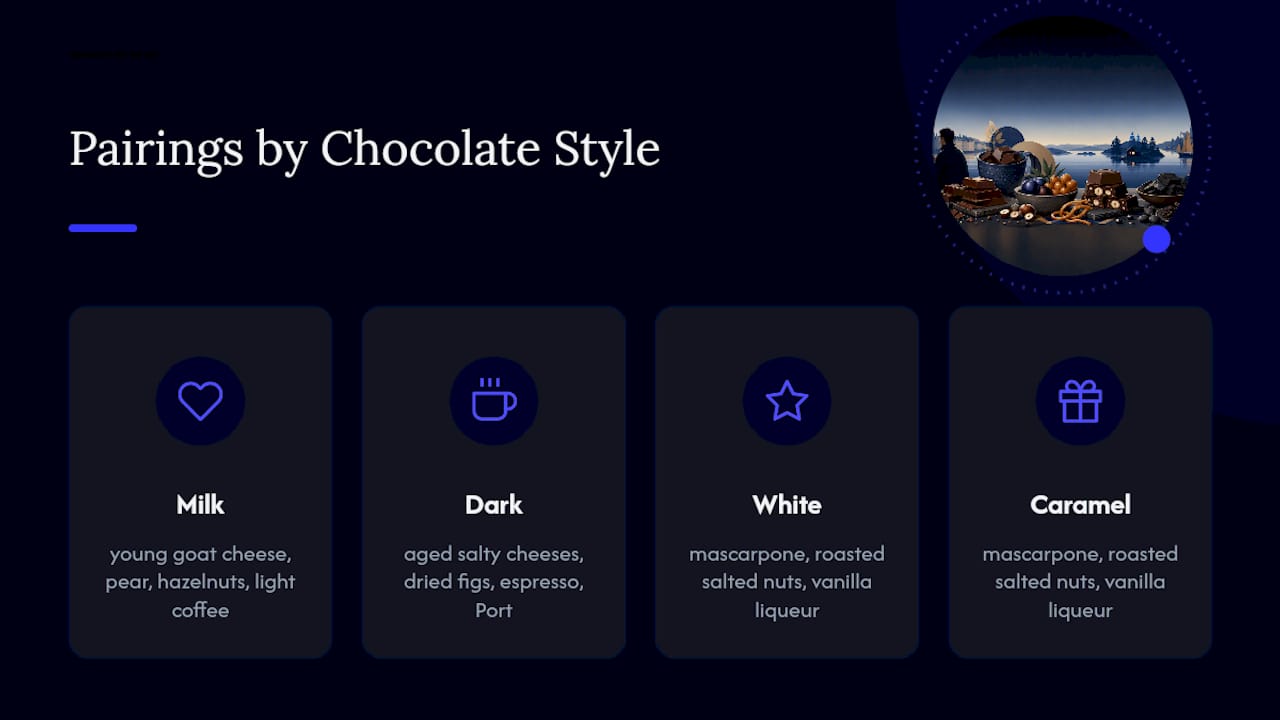
Milk chocolate is forgiving and mild, which means it needs partners with a little brightness or nuttiness to avoid tasting flat. Try a young goat cheese or a mild Gouda, sliced pear or crisp apple, a light breakfast-strength coffee, or toasted hazelnuts. A bar like Marabou Mjölkchoklad is a good baseline for testing these combinations since its flavor is straightforward and clean.
Aged Gouda or a sharp Parmigiano-Reggiano, dried figs or raisins, a shot of espresso, or a glass of Port all hold their own against the bitterness. This is where pairing guides consistently recommend aged, salty cheeses for dark chocolate specifically because both bring comparable intensity to the table. A high-cocoa bar like Marabou Fin 86% premium kakao is intense enough to stand up to any of these without disappearing.
White chocolate and caramel-filled bars skew sweet with no bitterness to balance, so they benefit from something that pulls the other direction: mascarpone, roasted salted nuts, or a vanilla-forward liqueur. These are your contrast plays rather than your complement plays.
Flavored bars (cinnamon, mint, coffee-infused) are easy to overthink. Match the underlying note, a chai tea for cinnamon, a mint tea or dark roast for a mint bar, rather than doubling the same flavor and making the pairing one-dimensional.
Beverage Pairings: Coffee, Tea, Wine, and Spirits
Coffee is the backbone of Swedish chocolate pairing, and there’s a cultural reason for that beyond taste. Fika, the daily coffee-and-something-sweet ritual, built an entire pairing tradition around dark or coffee-infused bars next to a strong, low-acid brew, and that combination remains the most reliable starting point for anyone new to the category.
Beyond coffee, a handful of other beverage categories earn their place on the table:
- Spiced chai or a strong black tea stands up to milk chocolate or cinnamon-flavored bars without getting lost.
- Floral or light green tea suits delicate white chocolate or fruit-and-nut bars better than anything stronger.
- Port or late-harvest dessert wine is the classic match for dark chocolate at 70% or above, the tannin and residual sugar both hold their ground.
- Aquavit or a salmiakki liqueur brings genuine Nordic character to a tasting board, especially alongside chocolate-covered licorice.
- Peated whisky or amaro works surprisingly well with complex dark bars, since the bitterness in both plays as complement rather than clash.
Traditional Swedish desserts like kladdkaka, a dense, sticky chocolate cake, are almost always served with strong black coffee at home, though modern versions of the dessert table increasingly bring in Port or a spiced tea for variety.
Cheese and Chocolate: Matching Intensity, Building a Board
The rule is simple once you say it out loud: aged, salty cheeses belong with dark chocolate, and soft, tangy cheeses belong with milk chocolate. Go the other direction, a delicate cheese next to a heavy dark bar, and the cheese vanishes entirely.
A few combinations to build a board around:
- Parmigiano-Reggiano with a 70% dark bar. The salt crystals in aged Parmesan cut straight through cocoa bitterness.
- Aged Gouda with caramel-filled chocolate, like Marabou Daim. The toffee crunch and the cheese’s nutty edge complement rather than compete.
- Fresh goat cheese with milk chocolate. The tang balances the sweetness without overpowering the bar’s mild profile.
Serve cheese at room temperature and chocolate slightly cool, a combination that keeps both textures distinct on the palate instead of blending into mush. For a tasting board, keep portions small, a half-ounce of cheese and one or two squares of chocolate per pairing, so guests can work through four or five combinations without filling up halfway through.
Salmiak and Chocolate: Sweden’s Boldest Pairing
Salty licorice, or salmiak, is the pairing that trips up newcomers and delights everyone who sticks with it. The salt in salmiak suppresses perceived bitterness and amplifies sweetness at the same time, which is why chocolate-covered licorice has been a fixture in Scandinavian confectionery for generations rather than a novelty item.
- Start with milk chocolate if you’ve never tried salmiak before. It’s the most approachable entry point.
- Move to dark chocolate at 55 to 70% once you’re comfortable. Experienced tasters often prefer this range because it amplifies the licorice’s herbal, almost medicinal notes rather than masking them.
- Try white chocolate for maximum contrast. Removing cocoa bitterness from the equation makes the salmiak’s saltiness the loudest flavor in the room, which some tasters find the most interesting combination of the three.
Keep portions small, a single piece of chocolate-covered licorice is plenty, and pair it with black coffee on the side to reset your palate between bites.
How to Taste and Test Pairings at Home
You don’t need a sommelier’s training to run a real pairing session. You need small portions, a notebook, and a system.
- Cut everything into bite-sized pieces before you start. One square of chocolate, one small piece of cheese or fruit, per pairing.
- Taste each component alone first, then taste them together in the same bite. Note what changes, does the chocolate taste sweeter, does the partner’s flavor sharpen or fade?
- Work from lowest to highest intensity. Milk chocolate pairings first, dark chocolate last, with a sip of water between each round to clear your palate.
- Record four things for every pairing: chocolate name and cocoa percentage, the partner you tried, whether it worked and why, and the serving temperature you used.
Pro Tip: Keep your notes in a simple running list on your phone. After three or four tasting sessions, you’ll start noticing your own personal patterns, maybe you always prefer fruit over nuts, or dark chocolate over milk with cheese, and that’s more useful than any general pairing chart.
Where Sweets by Svea Fits Into the Pairing Picture
Testing these pairings only works if the chocolate itself is the real thing. There are retailers specializing in authentic Swedish candies and food products delivered worldwide, with freshness and delivery inside a few days so the chocolate you’re pairing hasn’t been sitting in a warehouse for months. Many products in this category commit to high-quality ingredients, free from GMOs, parabens, and high fructose corn syrup, which matters for pairing work specifically: additive-heavy chocolate behaves unpredictably next to cheese, wine, or coffee, while a cleaner formulation gives you a consistent baseline to build from. Customer testimonials often reflect that the taste matches what people remember from home.
Pairings With Coffee and Tea: The Fika Tradition
Fika isn’t really about the coffee or the pastry. It’s the pause itself, a mid-morning or mid-afternoon break built around something sweet and something hot to drink, usually shared. That ritual shapes how Swedes think about chocolate pairing more than any formal tasting rule does.
A strong, low-acid coffee is the default fika pairing for a reason: it doesn’t compete with chocolate’s sweetness, and its bitterness balances milk chocolate especially well. If you’re using a filter or French press, aim for a slightly stronger ratio than you’d use for a plain cup of coffee, the chocolate will mute some of the coffee’s intensity, so you want it robust going in.
Tea plays a different role at the fika table. A strong black tea, something like a robust breakfast blend, holds up next to milk or caramel chocolate the same way coffee does. Spiced chai works particularly well with cinnamon-flavored bars, since the spice notes reinforce each other instead of clashing. Save floral or green tea for white chocolate or delicate fruit-and-nut bars, anything heavier will overpower them.
The practical takeaway: match your beverage’s strength to your chocolate’s intensity, and let the pairing be part of a pause rather than a rushed pairing exercise squeezed between tasks.
Pairing Swedish Chocolate With Lingonberries and Cloudberries
Swedish cuisine leans hard on tart, wild berries, and that tartness is exactly what balances chocolate’s sweetness without needing salt or bitterness to do the work.
Lingonberries, tart and slightly bitter on their own, cut through milk chocolate’s sweetness the same way a squeeze of citrus would, but with a more rounded, less acidic edge. A spoonful of lingonberry jam next to a square of milk chocolate is a genuinely underrated combination, closer to how you’d think about pairing a cranberry sauce with something rich, but subtler.
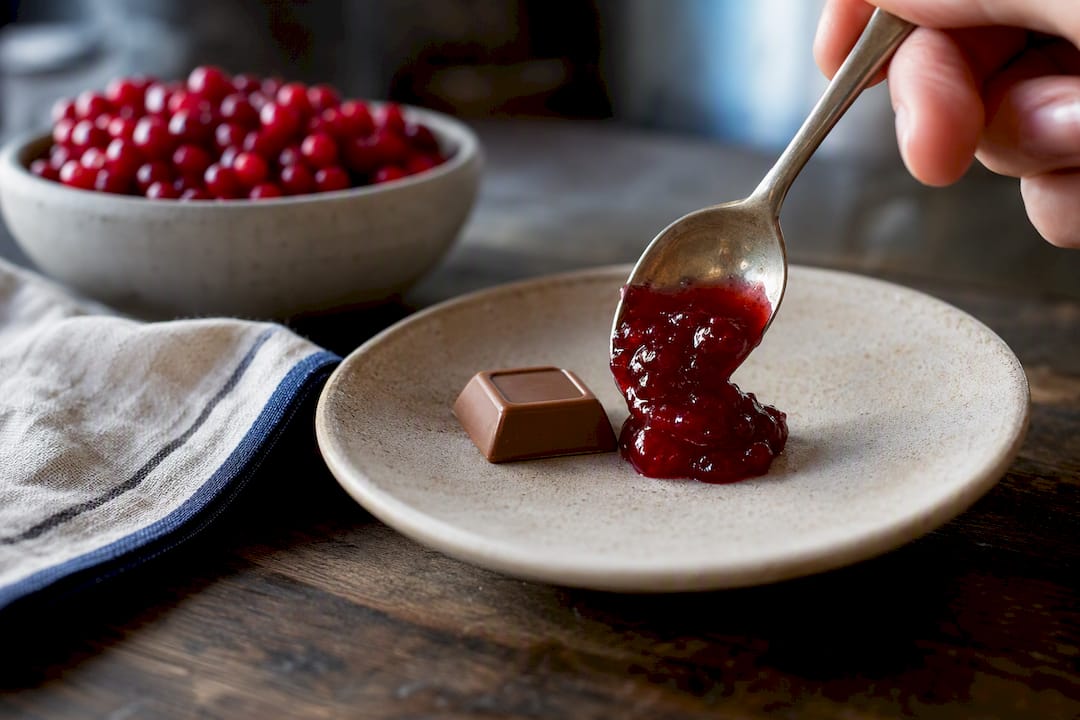
Cloudberries bring a different profile: a honeyed, faintly tart flavor that’s less aggressive than lingonberry. That makes cloudberries a better match for dark chocolate, where you want a partner that adds a note of sweetness back without erasing the cocoa’s bitterness entirely. Cloudberry preserves alongside a 55 to 60% dark bar hits a middle ground that neither pure sugar nor pure bitterness can reach alone.
Fresh berries, when you can get them, work best served slightly chilled next to chocolate at room temperature, that temperature gap keeps the fruit’s acidity bright instead of muddying the chocolate’s finish. If fresh lingonberries or cloudberries aren’t available where you live, a good-quality preserve is a reasonable substitute, and it’s shelf-stable enough to keep on hand for whenever the pairing mood strikes.
Seasonal and Holiday Chocolate Pairings
Swedish chocolate pairing shifts with the calendar, and the shifts aren’t arbitrary, they track what’s actually being served at each holiday table.
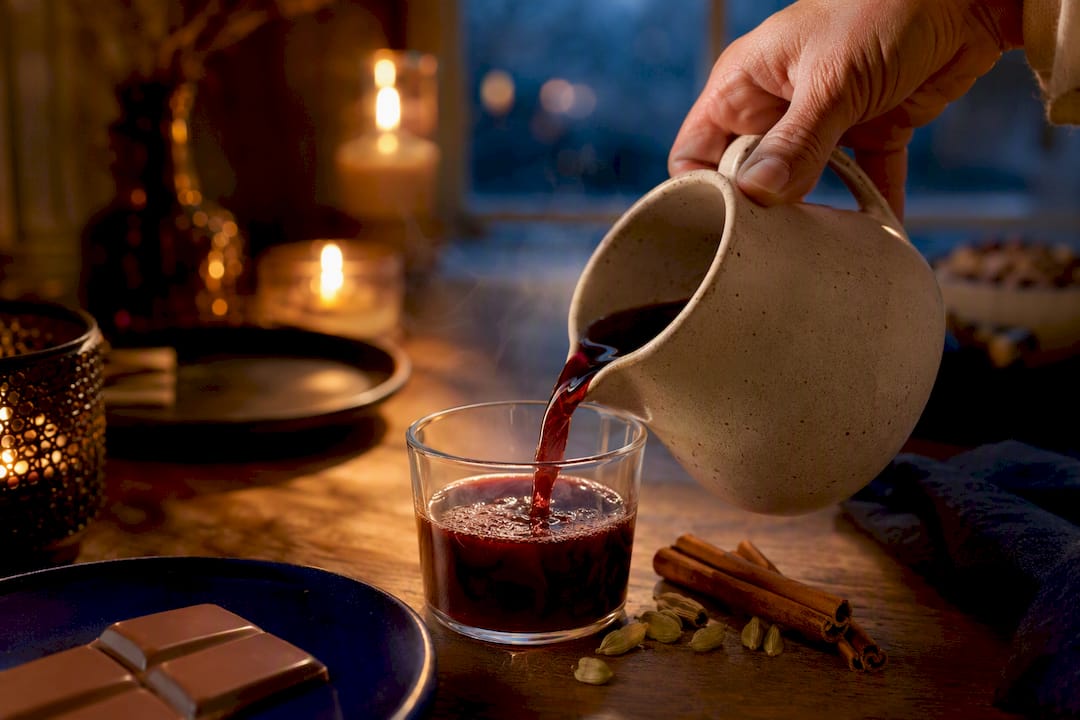
Christmas, or jul, brings glögg (mulled wine) into the picture, and its warm spice profile, cinnamon, clove, cardamom, pairs naturally with milk chocolate or anything cinnamon-flavored. The spices in the drink and the chocolate reinforce rather than compete, which is part of why glögg and chocolate show up together at nearly every Swedish holiday gathering.
Midsummer, by contrast, is a fresh-berry season, and pairings lean toward lighter fare: milk chocolate with fresh strawberries, or a filled bar with fruit and nuts, served alongside a chilled dessert wine rather than anything warm or heavy.
Easter brings marzipan and egg-shaped chocolate into heavy rotation, and the almond notes in marzipan pair naturally with milk chocolate or a fruit-and-nut bar, since both share that toasted, nutty undertone.
Kladdkaka, the sticky chocolate cake mentioned earlier, tends to show up year round rather than at one specific holiday, but it’s especially common at fika gatherings in the darker months, paired with strong coffee and occasionally a spoonful of lingonberry jam on the side to cut the richness.
Regional Variations in Swedish Chocolate
Not all Swedish chocolate tastes the same, and the regional differences actually change which pairings work best.
Northern Sweden’s chocolate traditions lean toward simpler, milk-forward bars, often built to pair with the strong coffee that dominates the region’s fika culture. These bars tend to be less sweet than what you’d find further south, which makes them more forgiving with tart partners like lingonberries.
Southern Sweden, closer to Denmark and mainland European influence, shows a bit more experimentation with filled and flavored bars, cinnamon, cardamom, and other spice-forward combinations show up more frequently on shelves there. These flavored bars call for the spice-matching approach covered earlier rather than a straightforward fruit or cheese pairing.
Licorice culture, meanwhile, isn’t really regional so much as generational and personal, salmiak shows up nationwide, but how intensely people prefer it varies a lot from one household to the next. That’s worth knowing before you build a licorice-forward tasting board for guests: start milder than you think you need to, and let people work up to the stronger combinations themselves.
What the Pairing Rules Miss
Most pairing guides treat chocolate like wine, obsessing over technical intensity charts and treating every match like a chemistry problem. That’s not wrong, exactly, but it misses something the fika tradition gets right: the best pairing is often the one that makes you slow down, not the one that scores highest on a theoretical flavor-matching chart.
The conventional wisdom oversells contrast. Salt and acid pairings get all the attention because they’re dramatic and easy to write about, salmiak and chocolate, citrus and dark bars. But some of the most satisfying combinations in Swedish tradition are quiet complements: a mild goat cheese with milk chocolate, cloudberry jam with a dark bar, glögg spices echoing a cinnamon-flavored square. Nobody writes headlines about those, but they’re what actually gets served at most Swedish tables.
If you’re starting from zero, skip the exotic pairings first. Get comfortable with intensity matching using chocolate and coffee, then work outward toward cheese, then fruit, and save salmiak for last. That order respects how your palate actually builds tolerance and preference over time.
— Sweets
Ready to Build Your Own Pairing Board?
You don’t need a specialty import store or a trip to Stockholm to start testing these combinations, you need chocolate that actually tastes like it came from Sweden, not a version reformulated for a different market. Some companies ship authentic Swedish confectionery worldwide, arriving fresh within a few days, so what lands on your tasting board is the real thing rather than a shelf-worn approximation.
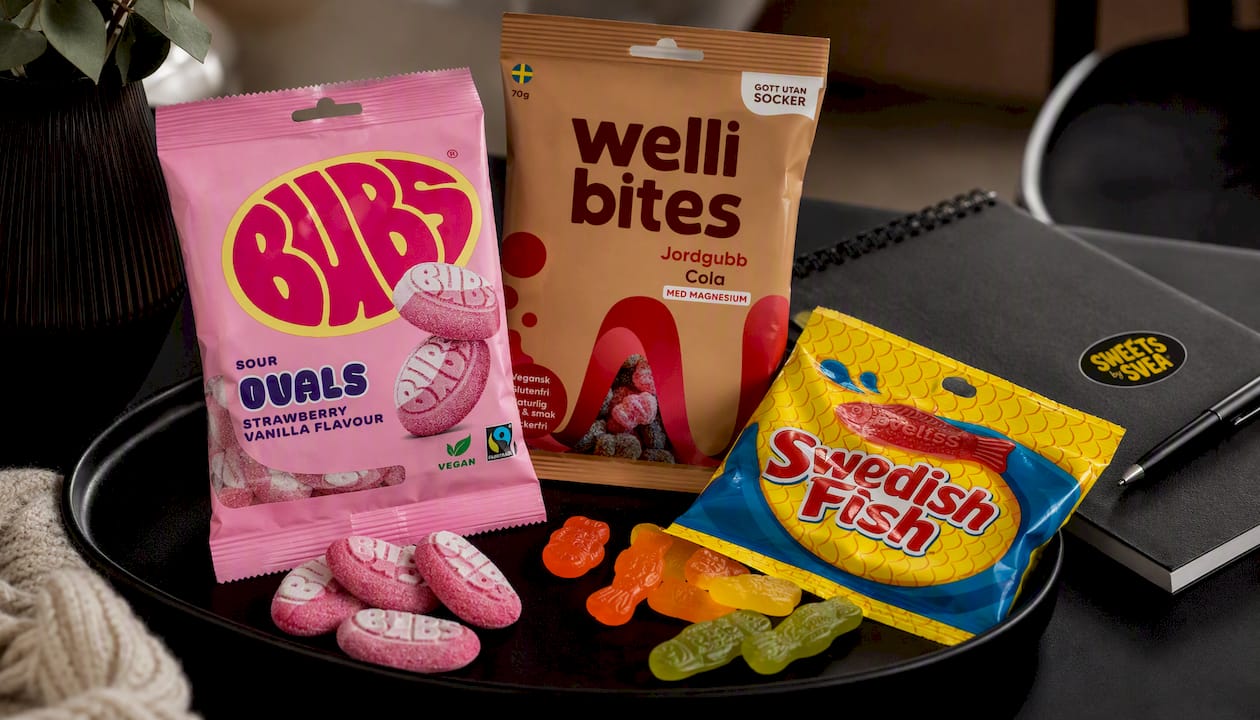
Start simple. A bag of Swedish Fish works well as a palate-cleansing, fruity contrast between heavier chocolate rounds, and it’s an easy way to introduce guests to Swedish confectionery beyond chocolate itself. If you want something with a fresh berry profile to test against a dark bar, the Bubs Foam Strawberry Vanilla brings a bright, fruity note that plays well in the same lineup. And for guests avoiding sugar or animal products, the Wellibites vegan, sugar-free gummies let everyone at the table build a board without exceptions. Pick two or three items, set them next to a bar of milk or dark chocolate, and see what actually holds up on your own palate.
Sources
For deeper pairing logic beyond this guide, Tasting Table’s cheese-and-chocolate breakdown covers intensity matching in detail, Know the Cheese offers a practical cheese-specific reference, and the Haupt Lakrits licorice guide explains the salmiak effect at the root of Sweden’s boldest pairing tradition. For board presentation, Wild Foodz’s plating tips are worth a look.
- Expert tip: How to pair cheese and chocolate — Tasting Table
- Chocolate-and-cheese pairing guide — Know the Cheese
- Chocolate and cheese pairing guide — Better Homes & Gardens