
Swedish candy trends 2026 come down to one word: mouthfeel. Pillowy foams, engineered dual-texture bites, juicier retro-sour fruit flavors, and curated pick-and-mix bags are pushing past classic gummies as the format everyone wants. Sweets by Svea already stocks the proof, from the ever-reliable Swedish Fish to jelly raspberry drops and a vegan, sugar-free gummy line. The rest of this guide breaks down what is driving these shifts and how to shop or merchandise around them.
TL;DR:
- Foam and dual-texture candies are dominating 2026, offering lighter mouthfeel and visual appeal for short-form video content.
- Flavors like lychee, retro sours with juicy centers, and Nordic botanicals are rising, with saltiness and polarizing licorice flavors remaining key.
- Building a pick-and-mix bag should prioritize contrasting textures first, then balancing sweet and sour, and adding one polarizing piece for depth.
- Clean labels, natural ingredients, and reduced sugar are now standard expectations, with vegan gummies improving in texture and flavor quality.
- Viral success depends on visual and audible cues, so brands should focus on eye-catching cross-sections and honest texture reveals in marketing.
Table of Contents
- What Are the Biggest Swedish Candy Trends for 2026?
- Why Foam and Dual Textures Are Defining 2026 Candy
- Which Flavors Are Rising in Swedish Candy Right Now?
- How Do You Build an On-Trend Pick-and-Mix Bag?
- What Health and Sustainability Signals Should Shoppers Look For?
- How Are These Trends Changing Retail and Pricing?
- What Makes a Swedish Candy Moment Go Viral?
- How Does Sweets by Svea’s Catalog Reflect These Trends?
- Texture Is the Signal, Not the Whole Story
- Ready to Try These Trends? Start With a Sampler
- Sources
What Are the Biggest Swedish Candy Trends for 2026?
Texture leads the conversation this year, but it does not stand alone. Five forces are reshaping what shows up on shelves, in pick-and-mix bins, and on your phone screen: texture-first engineering, flavor experimentation, curated assortments, better-for-you formulations, and social media as an actual product-design input rather than an afterthought.
Trade coverage of the Sweets & Snacks Expo’s 2026 Most Innovative New Product Awards points to a wave of foam-textured and dual-layer entries, a category that barely existed five years ago. Industry analysts are calling the moment “Newstalgia,” a mash-up of familiar retro shapes rebuilt with premium ingredients and modern texture engineering. Meanwhile, confectionery trade reporting flags natural colors, sugar reduction, and AI-assisted flavor forecasting as the ingredient-side story running parallel to all this textural experimentation.
Here is the shorthand version of what is moving:
- Texture first: foam and airy centers, crunchy shells over soft fillings, and layered bites built to feel different in three seconds than they did on the first bite.
- Flavor expansion: lychee, retro sours, and Nordic berry profiles pushing past the standard raspberry-and-cola lineup.
- Curated pick-and-mix: consumers and retailers building intentional assortments instead of grabbing whatever is closest to the scoop.
- Better-for-you formulations: natural colorants, reduced sugar, and vegan options moving from niche to expected.
- Social-first design: candies engineered for how they look and sound on video, not just how they taste.
A retro raspberry jelly drop with a slightly chewier bite than its 2020 predecessor. A foam-centered sour gummy that pops on the first press. A sugar-free vegan gummy that tastes close enough to the original that nobody asks questions. Those three archetypes sum up where the category is headed, and each one maps to a real product a shopper can order today rather than a marketing concept still in development.
Why Foam and Dual Textures Are Defining 2026 Candy
Classic gummies rely on a single dense gel structure. Bite in, and you get the same resistance from edge to center. Foam-forward and dual-texture candy breaks that pattern on purpose. Whipped or aerated centers cut the density of a piece without losing the sour or fruity punch on the outside, so the candy feels lighter in the mouth and leaves less of that sticky residue people associate with cheap gummies. Scan Magazine’s reporting on Swedish candy’s global reach singles out sour foam pieces and soft textures as a specific driver of the category’s international popularity, not just a side note.
Dual-texture engineering takes it further. A crunchy sugar-sand shell wrapped around a soft, almost custard-like center. A tangy outer layer that gives way to a foam core. The appeal isn’t only sensory. It is auditory and visual, which matters more than it used to. Expo floor commentary on packaging and product design notes that manufacturers are now engineering for an audible “snap” or “give” on the first bite because that sound and the layered cross-section it reveals are exactly what performs on short-form video.
What makes this possible on the manufacturing side is mostly about process, not exotic ingredients. Aeration during the cooking stage introduces air pockets that firm up as the candy sets, and precise temperature control during layering lets a manufacturer build a firm shell around a softer core without the two textures collapsing into each other. It is closer to pastry technique than old-school gummy production.
A few practical texture cues worth knowing before you buy:
- Foam and aerated pieces are typically lower in overall density, so a bag can feel lighter even at the same piece count.
- Dual-texture pieces store slightly differently than single-texture gummies. Extreme heat can cause the two layers to separate in quality even if they hold shape.
- Classic dense gummies, like Swedish Fish, remain the benchmark texture that newer foam and layered formats are explicitly designed to contrast against, not replace.
Pro Tip: If you are new to foam-textured candy, try one piece at room temperature before judging the whole bag. Refrigeration firms up the foam and mutes the “airy” effect that makes the format worth trying in the first place.
Which Flavors Are Rising in Swedish Candy Right Now?
Lychee is the flavor to watch. Trade analysis of confectionery innovation points to AI-assisted consumer data analysis as part of why lychee moved from a niche Asian-dessert flavor to something Swedish and European candy makers are formulating around well ahead of mainstream demand. It pairs naturally with the sour-foam textures already discussed, since lychee’s floral sweetness needs a sharp acid note to keep it from tasting flat.
Retro sours are having a parallel moment, but with a twist. It is not the same citric-acid blast from a decade ago. The 2026 versions layer sour coatings over softer, juicier centers, which Sweets & Snacks Expo’s award list recognized as a defining feature of this year’s most innovative new products. Fruity jelly drops like the raspberry jelly drops sit right at that intersection: a tangy exterior with a genuinely juicy, less-processed-tasting fruit center rather than a one-note sugar hit.
Nordic botanicals are the quieter story, but they matter for anyone paying attention to where flavor development is headed longer term. Lingonberry and sea buckthorn, both native to Sweden, are showing up more in candy formulations as manufacturers lean into ingredients that are regionally authentic rather than imported flavor extracts. Expect this to grow rather than fade, since it lines up with the clean-label push happening across the category.
Licorice and salmiak are not going anywhere, and treating them as legacy flavors misses the point. In an authentic Swedish pick-and-mix assortment, the salty licorice piece is the contrast note that makes the sweet and sour pieces around it taste more interesting. It is a polarizing flavor by design. Sweden’s candy culture has never tried to make salmiak universally likable, and that is exactly why it survives every trend cycle.
The flavor lineup worth tracking for 2026:
- Lychee: floral, sweet, increasingly paired with sour coatings.
- Retro sours with juicy centers: less one-note acid, more layered fruit.
- Lingonberry and sea buckthorn: Nordic-native, tart, and growing in formulations.
- Salmiak and salty licorice: the essential contrast flavor in any serious mix.
How Do You Build an On-Trend Pick-and-Mix Bag?
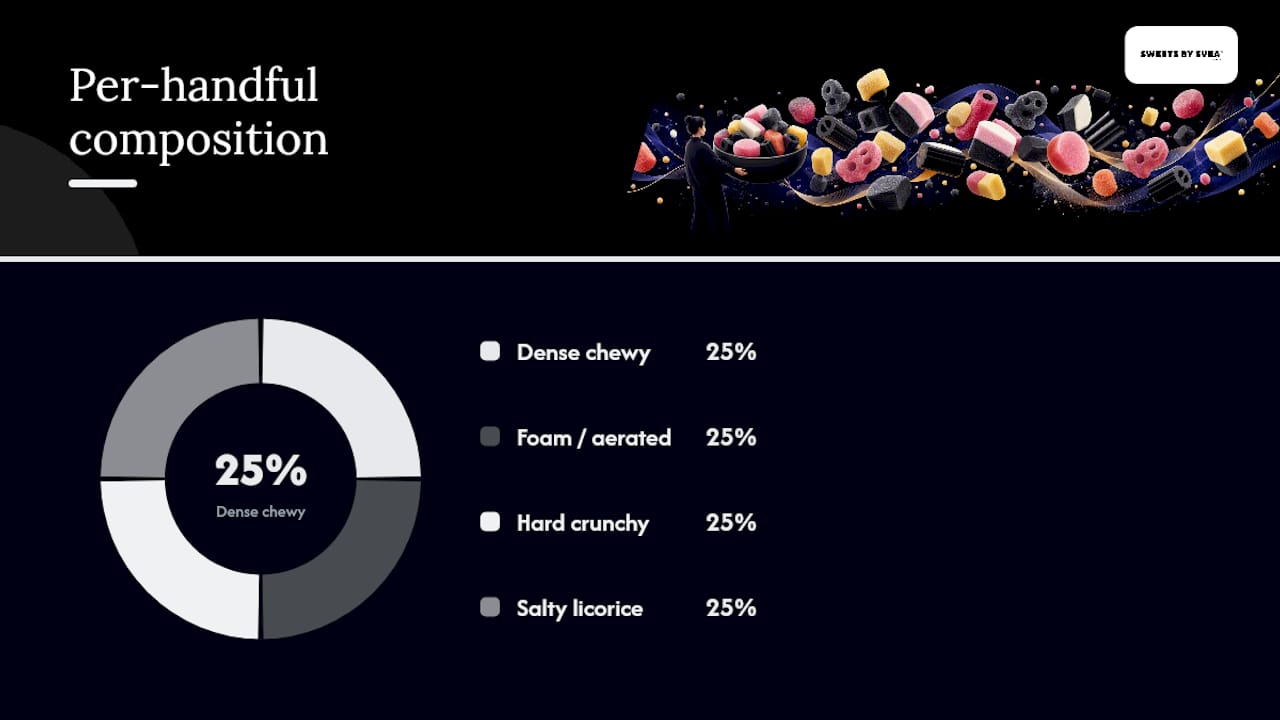
Start with texture, then balance flavor, then add one deliberately polarizing piece. That three-step order matters more than most people assume, because building a mix flavor-first tends to produce a bag that tastes flat by the third handful, even when every individual piece is good.
- Pick your textural anchor and contrast. Choose one dense, chewy piece (a classic gummy like Swedish Fish works well here), one foam or aerated piece, and one hard or crunchy piece. This is the same textural-contrast principle that guides to authentic Swedish pick-and-mix point to as the difference between a memorable bag and a random grab.
- Balance sweet against sour. For every one or two sweet pieces, add a sour piece. A raspberry jelly drop next to a sour foam gummy keeps the palate from fatiguing on sugar alone.
- Add the polarizing note. One salty licorice or salmiak piece per handful. It is not there to be loved by everyone. It is there so the sweet pieces taste sweeter by comparison.
Format matters almost as much as the recipe. Loose scoop bins work for in-person shopping where texture and smell sell the product, but they lose freshness fast and depend entirely on turnover. Pre-curated bundles solve the freshness problem and let a retailer or a gift-giver control the exact ratio of textures instead of leaving it to chance. Premium prepackaged mixes sit at the top end, usually built around a specific theme (all-sour, all-fruity, foam-only) rather than the traditional everything-together approach.
Three mixes worth recreating at home: a “contrast bag” of one dense gummy, one foam piece, and one licorice piece per handful; an all-sour lineup built around retro-sour fruit drops; and a “newstalgia” bag mixing a classic like sour Swedish gummies with a newer foam-textured piece for direct side-by-side comparison.
Pro Tip: Buy your licorice piece last and taste it on its own before mixing. Salmiak intensity varies a lot between brands, and a small amount goes further than most first-timers expect.
What Health and Sustainability Signals Should Shoppers Look For?
Clean labels are no longer a niche request. They are close to a baseline expectation, and trade reporting on 2026 confectionery trends puts natural colorants and sugar reduction at the top of the buyer-demand list for the year. That shift shows up on Swedish candy shelves as fewer synthetic dyes, less reliance on high-fructose corn syrup, and a growing willingness among manufacturers to publish exactly what is in a bag rather than hiding behind generic “natural flavor” labeling.
Sugar alternatives have moved well past the chalky, aftertaste-heavy sweeteners of a decade ago. Sugar-free vegan gummies now use blends that hold texture almost as well as full-sugar versions, which used to be the biggest complaint about the category. A product like the sugar-free vegan gummy line exists specifically to answer that old objection: strawberry-cola flavor, no animal gelatin, no added sugar, and a chew that does not feel like a compromise.
What to check before buying:
- Look for candies made without GMOs, parabens, or high-fructose corn syrup if clean-label matters to you.
- Vegan gummies now commonly use pectin or modified starches instead of gelatin, so texture differences are smaller than they used to be.
- Packaging increasingly favors recyclable or reduced-plastic materials, and ethical sourcing claims are becoming a real purchase driver rather than a footnote.
- Ingredient transparency, brands publishing full lists rather than vague “flavorings,” is becoming a trust signal in its own right.
If you want the full breakdown of what is actually in a typical bag, the ingredient and allergen guide covers it in more depth than a trend roundup can.
How Are These Trends Changing Retail and Pricing?
Viral demand is outpacing supply chains built for a smaller, more predictable market. When a specific texture or flavor blows up on social video, national news coverage has documented the resulting pattern more than once: shelves clear fast, resale prices climb, and the brands that scale production quickly capture the moment while slower manufacturers miss it entirely.
That pressure is also pushing Swedish candy out of specialty import shops and into mainstream retail. Reporting on founder-led Swedish candy brands describes a clear path from niche specialty stores to major national retailers, a jump that changes everything about production scale, packaging standardization, and price positioning. What used to be a $6 import-shop bag is now competing on a shelf next to mainstream CPG candy, which forces both pricing and quality consistency upward.
Seasonal supply adds another wrinkle specific to this category. Sweden’s own candy culture centers on lördagsgodis, or “Saturday candy,” a weekly tradition that keeps domestic demand high and steady year-round. Manufacturers naturally prioritize that home market during peak periods, which means international buyers importing specialty SKUs sometimes hit occasional shortages around Swedish holidays. Anyone buying for a business or an event should build in a little lead time rather than ordering at the last minute.
- TikTok-driven demand spikes now regularly outpace short-term manufacturing capacity for viral SKUs.
- Specialty shop to mainstream retail migration is reshaping pricing, packaging, and production scale.
- Swedish domestic holiday demand can tighten export supply for a few weeks at a time.
What Makes a Swedish Candy Moment Go Viral?
Color contrast, audible bite, and cross-section reveal are the three ingredients of a video that actually performs. A gummy that looks the same cut in half as it does whole rarely gets a second look. One with a hidden foam core or a color gradient inside does, and expo commentary on candy packaging design confirms manufacturers are now designing with that exact reveal in mind rather than treating it as a happy accident.
The promotional tactics that work follow the same logic: seed product with creators who film unboxing and bite-reveal content, not just review content; run short pop-up or experiential retail moments where people can try texture in person before buying online; and let the product’s visual and audible design do the selling instead of relying on a caption to explain why it is interesting.
Quick guidance for brands and store owners:
- Do cut products on camera or in-store displays to show the texture layers, since the cross-section is often the entire pitch.
- Do work with a handful of creators who genuinely react to texture rather than reading a script.
- Don’t assume flavor alone will carry a launch. Without a visual or audible hook, even a great-tasting product struggles to get noticed online.
- Don’t oversaturate a single trend. The last viral texture fades fast, and chasing it after the peak usually means arriving late.
How Does Sweets by Svea’s Catalog Reflect These Trends?
Sweets by Svea’s lineup was not built around a 2026 trend forecast, but it maps onto one closely because the brand has always stocked the authentic Swedish formats these trends are chasing. Every product ships GMO-free, paraben-free, and free of high-fructose corn syrup, with delivery landing in one to three days so texture and freshness survive the trip.
The three products worth calling out against everything above:
- Jelly Raspberry Drops (200g): the juicy, retro-sour-adjacent fruit format tracking directly with the flavor shift toward brighter, less one-note fruit profiles.
Buying notes worth knowing: smaller bags like the 70g vegan line are ideal for sampling a new texture without committing to a full bag, larger formats like the 200g jelly drops make more sense once you know you like the flavor, and all of it should be stored cool and dry rather than refrigerated, since cold storage can dull foam and jelly textures alike.
Texture Is the Signal, Not the Whole Story
The loudest conventional wisdom on Swedish candy trends still treats flavor as the headline and texture as a footnote. That gets the order backward. Every flavor movement worth watching this year, lychee, retro sours, Nordic botanicals, is being engineered onto a textural platform first, because texture is what a video camera and a first bite communicate before flavor ever registers.
Retailers chasing this trend by stocking more sour SKUs without touching texture are missing the actual driver. The businesses getting real traction are the ones treating dual-texture and foam formats as the primary product decision, with flavor as the layer built on top. For enthusiasts, the practical takeaway is simpler: stop judging a new candy purely by its flavor description and start paying attention to how a brand describes the bite itself. That is where 2026’s real innovation is happening.
If there is one thing worth prioritizing first, it is building a mix that plays with contrast rather than sameness, texture against texture, sweet against sour, familiar against new. That approach outperforms flavor-chasing every time.
— Sweets
Ready to Try These Trends? Start With a Sampler
Sweets by Svea gets you the exact products driving these trends without hunting through import shops or waiting on unreliable overseas shipping. Every order ships fresh within one to three days, so the texture you read about here, foam, chew, snap, actually arrives intact.
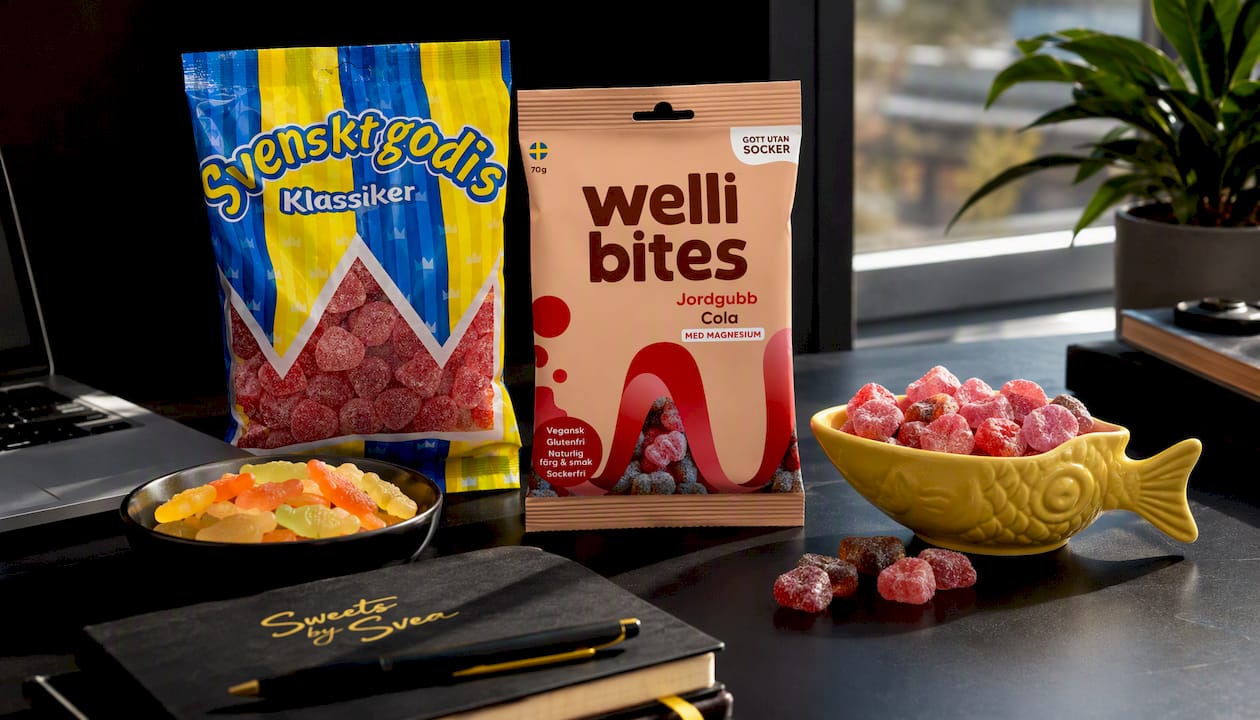
Start with a sampler approach rather than committing to one bag. Pick a dense classic like Swedish Fish to anchor your palate, add the raspberry jelly drops for the juicy retro-sour profile, and grab the vegan sugar-free gummies if you want proof that better-for-you does not mean flavor gets watered down. If you are buying for an event or planning a pick-and-mix bar, order a little ahead of Swedish holiday periods when export supply tightens.
Browse the full catalog now and build your own texture-forward mix before the next flavor trend takes over.
Sources
- The future of confectionery: innovations driving success in 2026
- Aroma: worldwide obsession with Swedish candy (2026)
- Sweets & Snacks Expo announces 2026 Most Innovative New Product Awards winners
- Sweets & Snacks Expo 2026 trends and what they mean for packaging
- A Swedish gummies craze is taking over the candy world