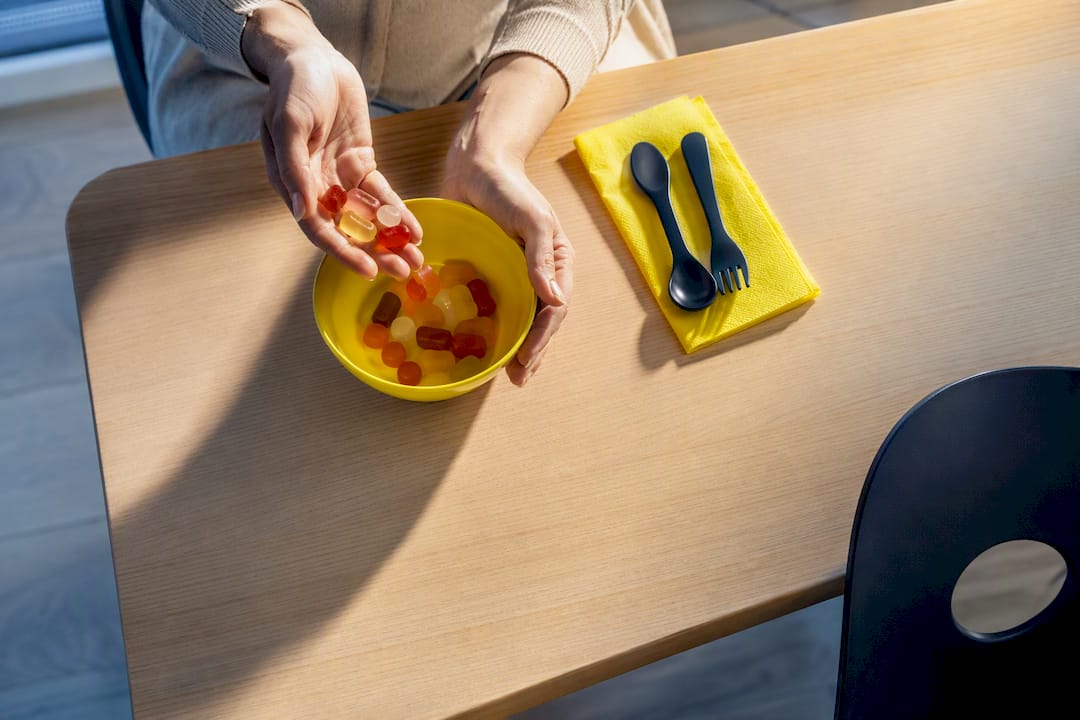

Lördagsgodis literally means “Saturday sweets,” and it’s the Swedish custom of saving most candy eating for one day a week. Children and plenty of adults fill a bag with pick-and-mix candy on Saturdays rather than snacking on sweets throughout the week. The habit isn’t a marketing gimmick or a modern wellness trend. It grew out of a 1950s public-health recommendation, and it stuck around long enough to become one of Sweden’s most recognizable family rituals.
TL;DR:
- Swedes buy candy loose from a wall of bins on Saturdays, setting a budget beforehand to teach kids delayed gratification and budgeting skills.
- The tradition originated from public health advice in the 1950s to limit candy consumption to once a week following experiments linking frequent sugar intake to cavities.
- Modern practice includes families pairing Saturday candy with movie nights or games, with popular picks like salty licorice, sour gummies, and chocolate-covered treats.
- The custom persists because it transforms a health recommendation into a shared weekly ritual, emphasizing structured indulgence rather than restriction.
- Outside Sweden, authentic candy options can be shipped to recreate the experience using mixed selections and single-flavor favorites.
Table of Contents
- What Does Lördagsgodis Mean, and How Do You Say It?
- Where Did Lördagsgodis Come From? The Vipeholm Connection
- How Swedes Practice Lördagsgodis Today
- Why Lördagsgodis Has Lasted This Long
- Sweets by Svea’s Take on Building a Lördagsgodis Bag Anywhere
- Our Honest Read on Why This Tradition Still Works
- Bring Lördagsgodis Home With Sweetsbysvea
- Sources
- FAQ
What Does Lördagsgodis Mean, and How Do You Say It?
The word splits into two pieces: lördag, meaning “Saturday,” and godis, which comes from godsaker, or “tasty things.” Put together, lördagsgodis translates to “Saturday candy” or “Saturday sweets,” and Swedes use it exactly the way it sounds: candy that belongs to Saturday.
Pronouncing it trips up most non-Swedish speakers on the first try, mostly because of that “ö.” Here’s a rough guide:
- Lördag sounds close to “LUR-dahg,” with the “ö” landing somewhere near the vowel in the English word “burn,” minus the “r” sound.
- Godis is stressed on the first syllable, so it comes out closer to GOH-diss than “go-DEECE.”
- Put together, you get something like “LUR-dahgs-goh-diss,” said at a normal conversational clip, not overpronounced.
Norway has its own version, spelled lørdagsgodis or sometimes lørdagsgodteri, which points to how the custom spread across the Nordic region rather than staying a purely Swedish quirk.
Where Did Lördagsgodis Come From? The Vipeholm Connection
Lördagsgodis didn’t start as a cute family tradition. It started as damage control after one of the more ethically troubling chapters in Swedish public-health history.
Between 1945 and 1955, researchers at the Vipeholm mental institution ran experiments feeding patients large quantities of sugar and sticky candy to study the effects on tooth decay. The patients, many of whom had cognitive disabilities, could not meaningfully consent to the study. The Vipeholm experiments confirmed what dentists had suspected: frequent sugar exposure, especially from sticky candy that clings to teeth, drives cavities far more than the total amount of sugar eaten in one sitting. For more on balancing sweets and dental health, see What Foods Are Best and Worst for Kids’ Teeth? | Woodbridge Dental Centre.
That finding reshaped Swedish public-health policy. Rather than telling people to quit sugar altogether, officials in the late 1950s landed on a more practical message: limit candy to once a week instead of grazing on it daily. Saturday made sense as the day, since it fell outside the school and work week and gave families a natural checkpoint.
A few things happened over the following decades:
- The advice moved from clinics and newspapers into ordinary households, especially through the 1960s and 1970s as Sweden expanded its public dental care system.
- Parents adopted it as a parenting tool as much as a health measure, since it gave them a clear, defensible rule instead of daily negotiation.
- By the 1980s, “no candy until Saturday” had become assumed household law rather than a piece of medical trivia.
What started as damage control after an ethically dubious study became one of the most durable pieces of everyday advice in Swedish life.
How Swedes Practice Lördagsgodis Today
Walk into almost any Swedish grocery store on a Saturday and you’ll see it: a wall of clear bins filled with loose candy, weighing scales nearby, and kids with small bags picking out exactly what they want. That wall is called a godisvägg, and the practice of buying candy loose, by weight, is known as lösgodis.
Here’s roughly how a typical Saturday plays out:
- The budget gets set first. Many kids use their weekly allowance, or veckopeng, to decide how much candy they can afford, turning the ritual into an early lesson in budgeting.
- The bag gets filled at the godisvägg. Kids scoop their own mix from dozens of bins, choosing gummies, licorice, chocolate pieces, and sour candy by weight rather than pre-packaged bags.
- Saturday evening becomes the payoff. Many families pair the candy with fredagsmys or a Saturday movie night, turning the sweets into part of a bigger weekly ritual rather than a standalone snack.
- Some families add games. A playful variation called candy fishing turns the reveal into a small event, especially with younger kids, adding a bit of theater to what is otherwise a grocery-store errand.
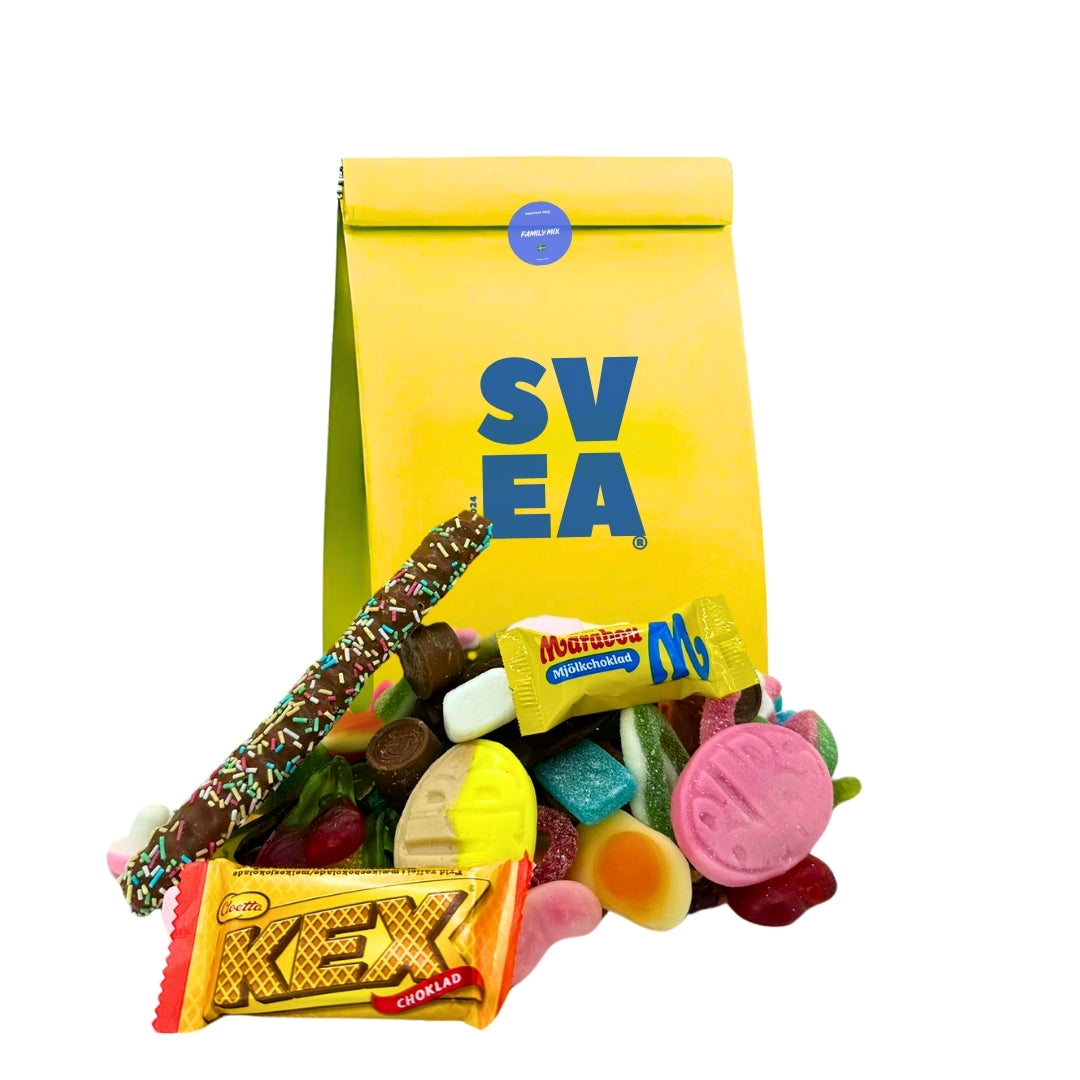
Typical picks include chocolate-covered marshmallows, salty licorice, sour gummy shapes, and jelly fruit drops. Anyone building a version of this outside Sweden can start with a mix like Candy Lovers Favorite or a single classic like jelly raspberry drops to get close to the real thing.
Pro Tip: Set a fixed budget before you shop, the same way Swedish kids do with pocket money. It turns candy shopping into a small decision-making exercise instead of an impulse grab.
Why Lördagsgodis Has Lasted This Long
A rule about candy shouldn’t have survived seventy years, yet lördagsgodis is still going strong. Part of the reason is trust. Cultural lecturer Sofi Tegsveden Deveaux has pointed out that Swedes generally trust official health guidance, which let a clinical recommendation about tooth decay quietly become a beloved weekly ritual instead of a resented restriction.
There’s also a psychological logic to it. Concentrating candy into one predictable day removes the daily “can I have candy” negotiation that wears parents down, replacing constant restriction with structured indulgence people can actually look forward to.
A few other threads keep the tradition alive:
- It teaches kids to budget and delay gratification without anyone framing it as a lesson.
- It gives families a shared weekly touchpoint, especially paired with movie nights or fredagsmys.
- It has adapted rather than disappeared. Naturgodis, or “natural candy” with fewer additives, has become more common on store shelves, and Sweden’s broader sugar conversation continues alongside the tradition rather than replacing it.
Sweets by Svea’s Take on Building a Lördagsgodis Bag Anywhere
Swedish candy, snacks, and grocery staples can be shipped to expats and candy enthusiasts outside Sweden, with products free from GMOs, parabens, and high fructose corn syrup, and delivery typically arriving quickly. That matters for a tradition built entirely around freshness and choice at the godisvägg.
Three products map closely to a real Swedish Saturday bag:
| Product | Best for | Why it fits |
|---|---|---|
| Fredagsmys Swedish Mix 500g | Families or larger groups | Sized for a weekend of shared snacking, not just one bag |
To recreate the ritual, pick one larger mix as the base, then add a favorite single item, set a rough “budget” the way Swedish kids do with pocket money, and portion it out on Saturday rather than eating it all at once.
Our Honest Read on Why This Tradition Still Works
Most articles about lördagsgodis treat it like a quaint national quirk, something charming Sweden does because Swedes are orderly. That undersells it. The real story is that a government told parents to ration candy for dental reasons, and instead of resenting the rule, families turned it into something they looked forward to. That’s rare. Public-health advice usually gets watered down or ignored within a generation.

What actually made it stick wasn’t the health logic. It was the structure. A fixed day, a fixed budget, and real choice at the godisvägg turned a restriction into a ritual kids controlled themselves. Anyone trying to build healthier habits, sugar-related or otherwise, could learn more from that structure than from another article about willpower.
If you’re recreating this outside Sweden, don’t skip the history behind Swedish candy customs. The ritual only makes sense once you understand it started as damage control, not tradition for tradition’s sake.
— Sweets
Bring Lördagsgodis Home With Sweetsbysvea
An online retailer can provide an authentic Saturday candy bag when you don’t have a godisvägg down the street. Orders ship within a few days, and the lineup excludes GMOs, parabens, and high fructose corn syrup, so what lands on your counter tastes like what you’d scoop from a bin in Stockholm, not a supermarket substitute.
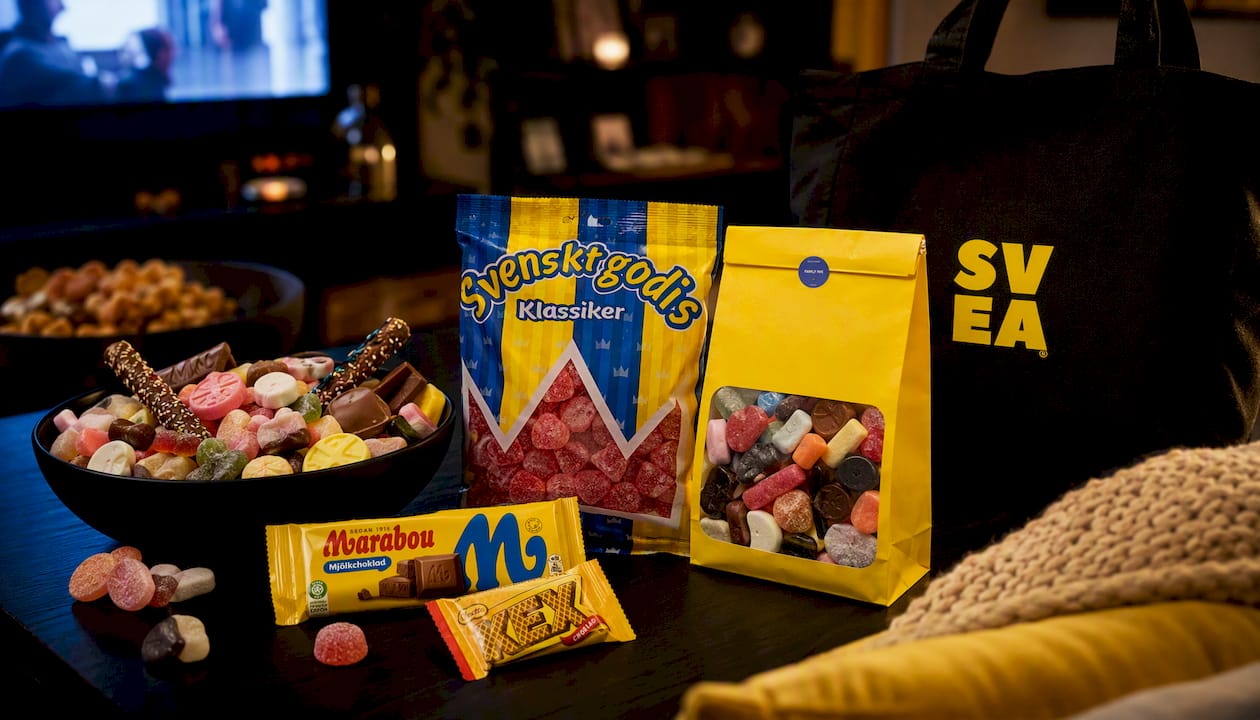
If you want variety without hunting through dozens of single-flavor bags, start with Candy Lovers Favorite for a mixed base, then round it out with a family-sized Fredagsmys Swedish Mix if more than one person is digging into the bag. Check the current selection and place an order before your next Saturday rolls around.
Sources
This explainer draws on a handful of sourced references worth reading directly:
- Lördagsgodis — Wikipedia
- Lördagsgodis: Sweden — SBS Food
- Lördagsgodis: Sweden’s Saturday-only candy tradition — BBC
- Swedish word of the day: lördagsgodis — The Local
FAQ
Why do Swedes only eat sweets on Saturdays?
The habit traces back to a 1950s public-health recommendation following the Vipeholm experiments, which showed frequent sugar exposure caused more tooth decay than eating sweets less often. Limiting candy to one day a week became the practical fix, and it evolved into a family tradition.
How do you pronounce lördagsgodis?
It comes out close to “LUR-dahgs-goh-diss,” with the tricky “ö” sound landing near the vowel in the English word “burn,” and stress falling on the first syllable of godis.
What is the most famous candy in Sweden?
There’s no single winner, but chocolate-covered marshmallows, salty licorice, and sour gummy shapes are staples of most pick-and-mix bags, and a jelly fruit candy like raspberry drops shows up in nearly every mix.
How unhealthy is Swedish candy?
Swedish candy isn’t inherently worse than candy anywhere else. The tradition itself was designed around moderation, concentrating sweets into one day instead of daily snacking, which is precisely the behavior that reduces the tooth-decay risk the Vipeholm findings identified.