
Ingredient choices and regulatory frameworks, not national pride, explain why European candy and American candy taste so different. Sweeteners split along sucrose versus high-fructose corn syrup, chocolate divides between cocoa butter and compound coatings, and colorants and gelling agents follow entirely separate rulebooks on either side of the Atlantic. UC Davis Nutrition tracks the sweetener shift, EU law sets the additive limits behind it, and Sweetsbysvea sources Swedish candy built around the older, simpler formulas. Here’s how each factor plays out on your tongue.
TL;DR:
- American candies generally taste sharper and sweeter due to high-fructose corn syrup, while European sweets tend to have a rounder, more balanced flavor from cane or beet sugar.
- Chocolate in Europe mainly features cocoa butter with better tempering, resulting in a smooth melt, whereas U.S. mass-market coatings often use compound fats that melt differently and feel waxy.
- European gummies are typically softer, sometimes air-filled, and use starch or agar-based gelling agents, contrasting with American gelatin-based gummies that are denser and more elastic.
- EU regulations restrict certain synthetic dyes and additives, leading to more natural colorants and fewer artificial ingredients than in American candy, which relies more on synthetic dyes and preservatives.
- European candy is often priced higher because of stricter ingredient standards, shipping costs, and regulations, and it is marketed as specialty or gift items rather than impulse buys like American candy.
Table of Contents
- European Candy vs American: Key Differences at a Glance
- Chocolate Deep Dive: Fats, Butyric Acid, and Why Melt Matters
- Gummies and Chew: Gelling Agents, Texture, and the Swedish Effect
- Sweeteners, Colors, and Additives: What’s Actually in the Bag
- How Regulation Shapes What Candy Makers Use
- What Swedish and European Candy Fans Are Noticing
- Why Swedish Candy Suddenly Went Viral in the U.S.
- History Behind the Divide: Why Europe and America Taste Candy Differently
- Packaging and Portions: A Different Size Standard Entirely
- Food Labels and What They Teach Consumers
- Iconic Candy Types: What Each Region Is Actually Known For
- Price and Positioning: Why European Candy Often Costs More
- Perspective: Practical Buying Advice for Curious Shoppers
- Try the Difference: Authentic Swedish Candy, Shipped to Your Door
- Sources
- FAQ
European Candy vs American: Key Differences at a Glance
Before you dig into the chemistry, here’s what to expect the next time you compare a Swedish pick-and-mix bag to a gas-station candy aisle. Perceived sweetness, melt behavior, chew density, and color saturation all shift depending on which side of the Atlantic made the product.
- Sweetness: American candy often tastes sharper and more one-note because of high-fructose corn syrup; European candy made with cane or beet sugar tends to taste rounder, with sweetness that fades rather than lingers.
- Chocolate melt: European bars made with cocoa butter melt smoothly at body temperature. Many U.S. mass-market coatings made with vegetable fat stay slightly waxy and resist melting until you chew.
- Chew and texture: American gummies (built on gelatin) tend to be dense and stretchy; Swedish gummies frequently use a mix of gelling agents and air, producing a softer, sometimes foamy bite.
- Color intensity: U.S. candy often looks more neon because of a wider palette of synthetic dyes; European candy leans on muted, natural colorants, since several synthetic dyes carry EU warning labels or outright bans.
If you want a cleaner label-reading shortcut, look for “cocoa butter” instead of “vegetable fat” on chocolate, “sugar” instead of “corn syrup” on the ingredient list, and colors like beet juice or spirulina extract instead of Red 40 or Yellow 5. Those three swaps predict most of what separates a “clean” tasting treat from something that reads as waxy or aggressively sweet.
Chocolate Deep Dive: Fats, Butyric Acid, and Why Melt Matters
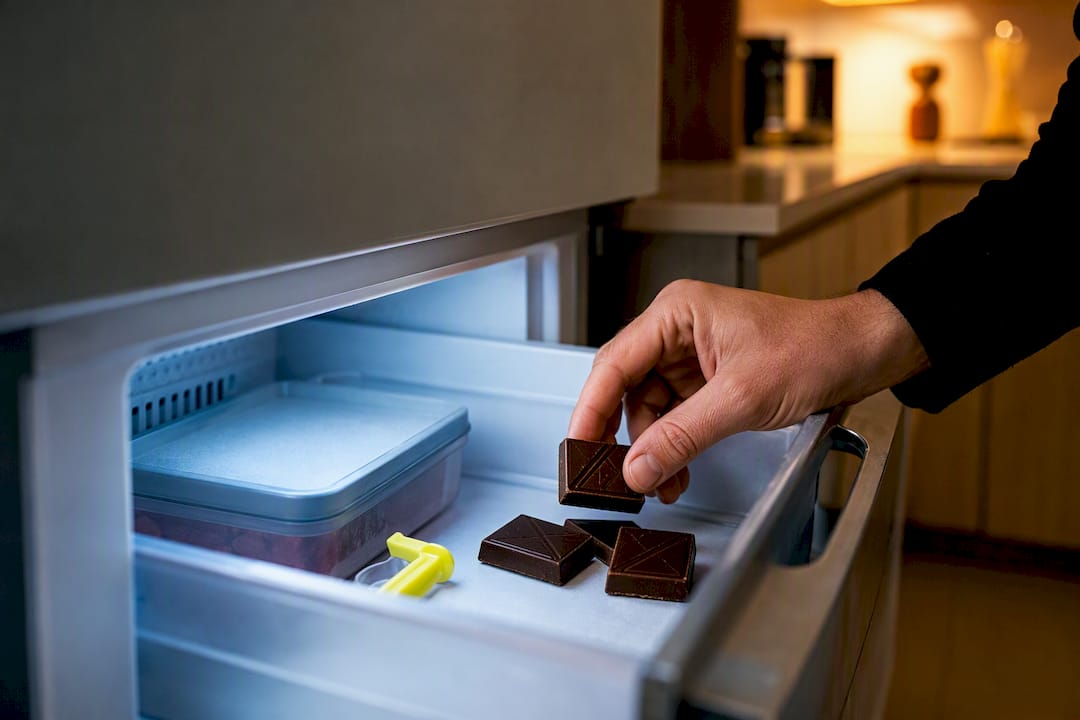
Chocolate is where the European candy vs American gap shows up most obviously, and it comes down almost entirely to fat chemistry. European chocolate traditions and EU standards favor higher cocoa solids and generous cocoa-butter content, which is why imported bars often melt differently than what you’d find at a typical U.S. checkout counter.
Cocoa butter melts at roughly body temperature, which is precisely why a well-tempered European bar turns silky on your tongue instead of sitting there. Tempering, the process of coaxing cocoa butter into stable Form V crystals, is what gives quality chocolate its snap and resistance to that grayish bloom you sometimes see on old candy bars. It’s a finicky process, and it’s one that high cocoa-butter, couverture-style chocolate makers in Europe have refined over generations.
Many U.S. mass-market coatings skip that complexity entirely. Instead of cocoa butter, they use compound coatings built on lauric fats (often from palm kernel or coconut oil) blended with sugar and cocoa powder. These fats melt at a different temperature curve than cocoa butter, which is why some American candy bars feel greasy at room temperature and then oddly firm in your mouth, rather than dissolving evenly.
Butyric acid is the other piece of the puzzle. This compound shows up in some American chocolate processing and contributes a tangy, almost sour dairy note that palates accustomed to European-style chocolate often find off-putting or unfamiliar. It’s not a flaw exactly. It’s a byproduct of specific processing choices, but it’s a flavor signature European bars rarely carry.
Regulation reinforces the split. The EU caps certain additives and pushes cocoa-butter content requirements that keep formulations closer to traditional recipes, while U.S. rules allow a wider range of substitute fats under looser “chocolate” labeling standards. That’s a major reason the ingredients allowed in one market but not the other end up defining two very different retail shelves.
A quick contrast worth remembering: the real dividing line isn’t strictly “Europe versus America.” Premium American chocolatiers who use real cocoa butter and proper tempering produce bars that rival European quality. The bigger split is commodity chocolate against cocoa-butter craft chocolate, and geography just happens to correlate with which one dominates the shelf.
- Cocoa butter: melts near body temperature, smooth mouthfeel, prone to bloom without proper tempering
- Compound coatings: higher melting point, firmer bite, more heat stable for shipping
- Butyric acid presence: tangy or sour dairy note tied to specific U.S. processing methods
- EU cocoa-solid minimums: push formulations toward richer, less diluted chocolate
Gummies and Chew: Gelling Agents, Texture, and the Swedish Effect
Chew is chemistry, not personality. The gelling agent a manufacturer picks determines almost everything about how a gummy candy feels in your mouth, and gelatin versus starch is the fault line between American and European gummy design.
- Gelatin-based gummies (the American default) form a dense, elastic network that stretches before it gives way. That’s the familiar long-lasting chew you get from classic U.S. gummy bears and worms.
- Starch, agar, or gum-blend gummies (common across Swedish and broader European confectionery) trap air differently during setting, producing a softer, sometimes foamy texture that dissolves faster and doesn’t fight back against your teeth.
- Layered and sugar-coated designs add another variable. Swedish candy makers frequently combine a firmer gelled center with a sugared or salted shell, plus fruit or licorice flavor layers, which changes how sourness and sweetness hit in sequence rather than all at once.
- Acid choice (malic versus citric) shifts when the sour hit lands. Malic acid tends to deliver a slower, rounder sourness, which is part of why some Swedish sour candies read as “smoother” even when they’re objectively quite tart.
Reporting on the recent Swedish candy boom has pointed to exactly these texture and ingredient patterns as a big part of the appeal. Several outlets have also noted that many Swedish gummies skip gelatin altogether, landing as gluten-free or vegan-friendly almost by default, alongside noticeably lighter use of synthetic dye.
If you’re shopping and want to predict texture before you bite, check the ingredient list for “gelatin” (expect dense chew) versus “modified starch,” “pectin,” or “gum arabic” (expect something airier and quicker to melt away). A short candy resource like this Swedish candy flavor guide breaks down which categories fall into each camp if you want specifics before ordering.
Sweeteners, Colors, and Additives: What’s Actually in the Bag
Sugar and high-fructose corn syrup are not interchangeable, despite both landing under the vague umbrella of “added sugar.” The U.S. food industry shifted heavily toward HFCS starting in the 1970s for cost and shelf-stability reasons, and that switch changed how American candy tastes on a molecular level. HFCS is sweeter upfront but lacks some of the flavor-rounding properties of sucrose, which is part of why American candy can taste sweet in a flatter, more aggressive way, while European candy made with cane or beet sugar tends to taste rounder and fades more gently.
Color tells a similar regulatory story. European makers moved earlier toward natural colorants, largely because EU precautionary rules created market pressure to reformulate before bans became mandatory. If you want to understand how manufacturers source those replacements, this breakdown of natural red colorant options covers the beet, hibiscus, and paprika extracts that show up instead of synthetic dye.
Dyes worth watching on U.S. labels: Red 40, Yellow 5, Yellow 6, and Blue 1 remain widely used in American candy and are either restricted or require warning labels in parts of the EU.
Beyond color, a few other additives split by market. Titanium dioxide, once common as a whitening agent, is banned as a food additive in the EU but still permitted in some U.S. products. Certain trans fats and select artificial sweeteners also face tighter EU restrictions than their U.S. counterparts, which is one more reason an ingredient panel can look dramatically different between a Swedish candy bag and an American one, even when the flavor sounds identical on the front of the package.
How Regulation Shapes What Candy Makers Use
Two philosophies sit behind every ingredient panel you’ll compare. The EU runs on a precautionary principle, meaning an additive can be restricted or banned if there’s credible concern about it, even before regulators reach total scientific certainty. That approach is why titanium dioxide lost its food-additive approval in the EU and why several synthetic dyes now carry mandatory warning labels on European packaging.
The U.S. system works differently. The FDA relies largely on a threshold and “generally recognized as safe” (GRAS) framework, documented in the Code of Federal Regulations, which permits an ingredient once it clears a safety threshold and stays approved unless new evidence forces a review. That tends to keep more additives in circulation longer, which is part of why the American candy aisle offers a wider range of synthetic colors and compound-fat chocolate coatings.
The retail impact is concrete, not theoretical:
- EU reformulation costs get absorbed earlier, often years before a U.S. equivalent product changes its recipe.
- American manufacturers can lean on cheaper, more heat-stable ingredients (HFCS, compound fats, synthetic dyes) that extend shelf life and lower production costs.
- European imports typically carry a price premium in the U.S. market, partly reflecting the cost of maintaining stricter-compliance formulas and partly reflecting shipping and tariffs.
- Ingredient transparency differs too. EU labeling requirements tend to flag allergens and specific dye warnings more explicitly than standard U.S. nutrition panels.
What Swedish and European Candy Fans Are Noticing
The catalog is built around a simple filter to avoid high-fructose corn syrup, parabens, and GMOs, aiming for fresh worldwide delivery. That’s not a marketing footnote. It’s the exact ingredient logic this article has been walking through, applied to what actually ships.
Three products in the catalog line up directly with the criteria covered above:
- Candy Lovers Favorite, a mixed sampler that lets you compare several Swedish gummy and licorice textures side by side in one order.
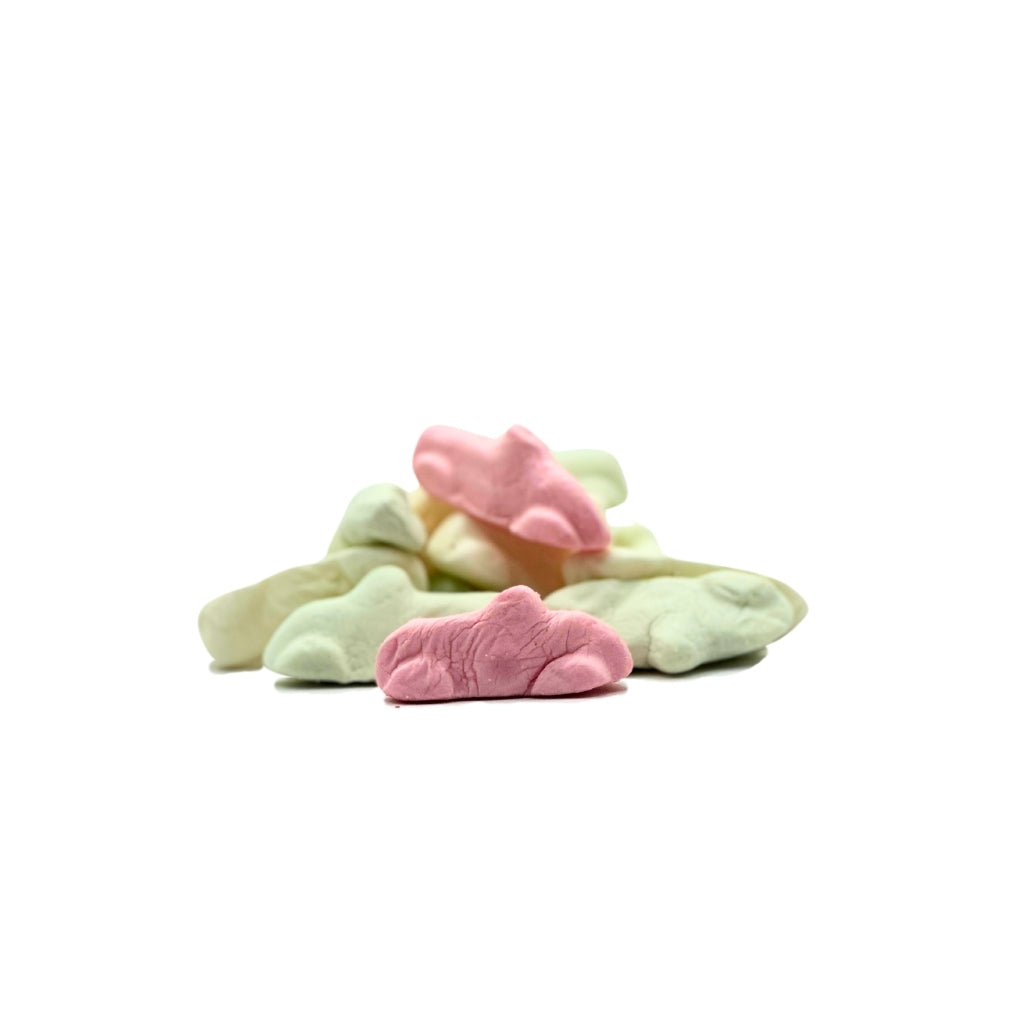
- Ahlgrens Bilar Limousines, a classic Swedish foam-gummy car candy that shows the airy, quick-dissolve texture common to Swedish gelling formulas.
- Almond Butter Toffee, a chocolate-toffee combination that demonstrates the cocoa-butter melt profile discussed earlier, rather than a compound-coating substitute.
Pro Tip: Order a small mixed pack before committing to a full case. Texture preference is personal, and the gap between gelatin chew and Swedish foam gummy is big enough that you’ll want to know which side you land on first.
Why Swedish Candy Suddenly Went Viral in the U.S.
Swedish candy didn’t quietly build American fans over decades. It exploded fast, largely through social video. Viral taste-test clips on TikTok, where American creators bite into foam gummies or salty licorice for the first time on camera, turned Swedish candy from a niche import into a recognizable trend within a couple of years.
Reporting on the shift has tied the boom directly to social platforms, noting that demand accelerated faster than traditional retail could stock it, pushing more of the buying online to specialty importers. The appeal isn’t just novelty. Once American shoppers taste the texture difference (foamy instead of dense, sour that fades instead of one that lingers) many keep buying because the candy delivers something their usual gas-station aisle simply doesn’t stock.
Availability caught up quickly. A handful of years ago, Swedish pick-and-mix bags were mostly a suitcase souvenir for people who had actually visited Scandinavia. Now dedicated import retailers ship internationally within days, closing the gap between “I saw this online” and “I have a bag in my kitchen.” That speed matters, because viral food trends usually die the moment curiosity outpaces access. Swedish candy’s trend line kept climbing because the product showed up before the interest cooled.
History Behind the Divide: Why Europe and America Taste Candy Differently
The taste gap didn’t appear overnight. It’s rooted in decades of different agricultural policy, industrial food processing, and retail habits.
American candy manufacturing scaled up around cheap domestic corn. Federal agricultural subsidies made corn syrup dramatically cheaper than imported cane sugar for much of the twentieth century, and candy makers built recipes around whatever kept costs down and shelf life long. That’s the direct ancestor of today’s HFCS-heavy formulas.
European candy making followed a different economic and cultural path. Countries with strong dairy and cocoa trade histories, particularly in Scandinavia, Belgium, and Switzerland, built confectionery traditions around butter, real sugar, and cocoa butter because those were the ingredients locally available and culturally prized. Chocolate tempering, in particular, became a specialized craft in European confectionery houses long before American mass production existed at scale.
Portion culture diverged too. European snacking habits historically leaned toward smaller, more frequent treats, like a piece of chocolate with afternoon coffee (the Swedish concept of “fika” is a good example), rather than the oversized single servings that became standard in American vending machines and movie theaters. Those cultural habits shaped package sizes, sweetness levels, and even how “rich” a candy was allowed to taste before it felt excessive.
Packaging and Portions: A Different Size Standard Entirely
Pick up a standard American candy bar and a standard European one, and the portion difference is often immediate. U.S. candy bars and bagged sweets have trended toward larger single servings over the decades, partly a legacy of value-sizing marketing that rewards bigger portions at a lower per-ounce price.
European candy, by contrast, tends to favor smaller individual pieces sold in larger mixed bags rather than oversized single bars. Swedish pick-and-mix culture is the clearest example: instead of one big chocolate bar, you get a bag holding a dozen small, distinct pieces, each with a different flavor or texture, meant to be sampled rather than devoured in one sitting.
Packaging design reflects that difference too. European wrappers tend to list ingredients and nutrition information more prominently and in smaller, denser type due to EU labeling requirements, while American wrappers often lead with bold flavor callouts and imagery before nutrition facts. Portion control also shows up in how candy gets marketed: multipack bags in Europe frequently break single servings into resealable smaller units, encouraging slower consumption over several days rather than one sitting.
For U.S. buyers new to ordering Swedish candy, this means recalibrating expectations. A “family size” Swedish gummy bag might contain more individual variety but a smaller total sugar hit per piece than an equivalent American bag, since portion norms and sweetness intensity were built around different snacking habits from the start.
Food Labels and What They Teach Consumers
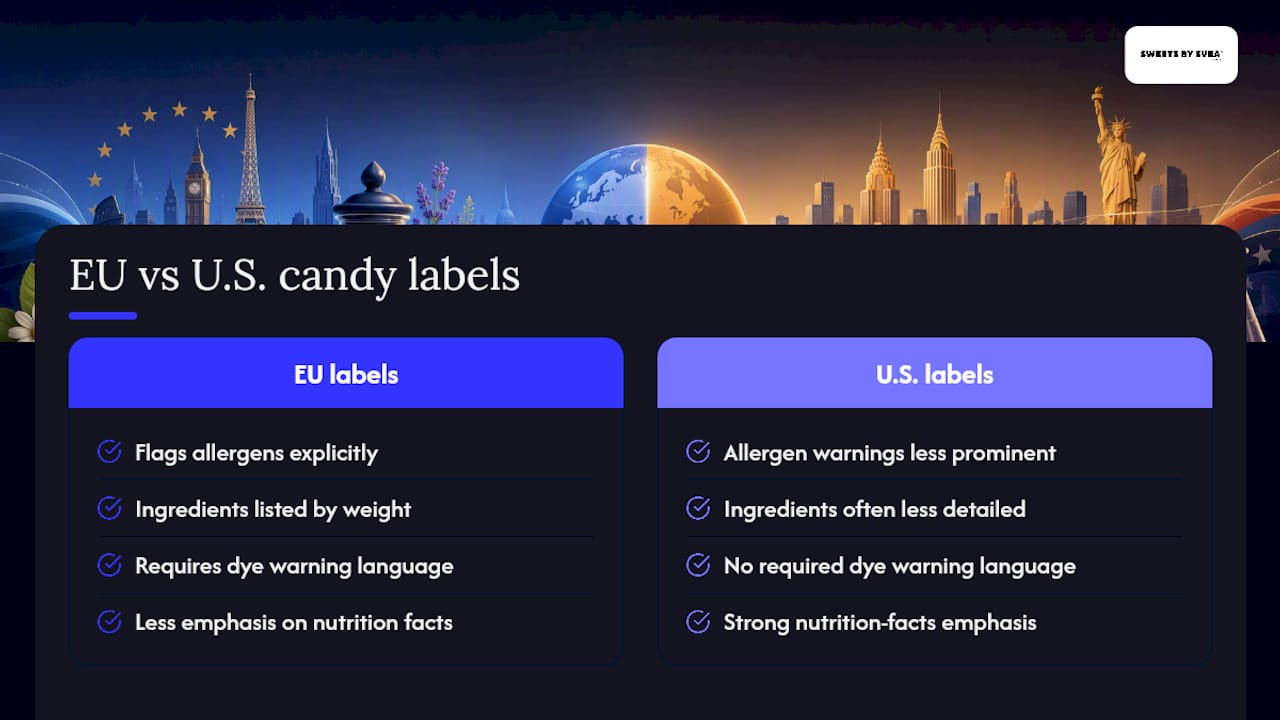
Labeling law shapes more than what’s legal. It shapes what consumers assume they’re getting. EU labeling requirements tend to flag allergens explicitly, list ingredients by descending weight with fewer generic catch-all terms, and require warning language on certain synthetic dyes. That combination trains European shoppers to read ingredient panels somewhat more skeptically, since a warning label on a bright dye is a visible, everyday reminder that not all coloring is treated equally.
U.S. labeling, governed by FDA rules, focuses heavily on nutrition facts (calories, sugar grams, serving size) but doesn’t require the same dye-specific warning language the EU mandates. That difference quietly shapes consumer trust. American shoppers often assume “if it’s for sale, it’s been vetted the same way everything else has,” while European shoppers are more accustomed to seeing explicit caution flags on specific ingredients within otherwise legal products.
The practical result: an American buyer picking up a European import for the first time may notice unfamiliar warning language and read it as alarming, when it’s actually just a routine EU disclosure requirement working as intended. Conversely, a European buyer picking up American candy might notice the absence of dye warnings and assume the product is simpler than it actually is. Neither read is wrong exactly. It just reflects two very different labeling philosophies training two different sets of instincts. Resources like this ingredient and allergen guide exist largely to translate one labeling culture for shoppers used to the other.
Iconic Candy Types: What Each Region Is Actually Known For
Ask someone to name an iconic American candy and you’ll get chocolate bars, peanut butter cups, and sour gummy worms almost immediately. Ask about European candy and licorice, foam gummies, and cocoa-butter chocolate squares tend to dominate the answer instead.
American candy culture built its identity around peanut butter and chocolate combinations, intensely sour gummy coatings, and bold, primary-color candy shells, largely because those flavors and visuals tested well in mass retail and vending environments. Big single flavors that hit immediately (extreme sour, extreme sweet, extreme chocolate) became the commercial standard.
European candy culture, particularly Scandinavian, built its reputation on salty licorice (a genuinely divisive flavor for American palates unfamiliar with ammonium chloride salt), foam-textured gummies shaped like cars or fish, and chocolate that leans on cocoa-butter richness rather than sugar intensity. Belgium and Switzerland separately built reputations around cocoa-forward chocolate craftsmanship, while Sweden and its Nordic neighbors leaned into pick-and-mix variety and licorice experimentation that rarely made it into American mainstream stores until recently.
The emblematic difference really comes down to intensity versus variety. American candy tends to deliver one big flavor note as loudly as possible; European and Swedish candy tends to deliver a dozen smaller, more distinct notes across a mixed bag, betting on variety over volume.
Price and Positioning: Why European Candy Often Costs More
European candy sold in the U.S. almost always carries a price premium over domestic equivalents, and that’s not arbitrary markup. Imported candy has to absorb international shipping, sometimes tariffs, and the cost of maintaining stricter-compliance ingredient formulas that are more expensive to produce than HFCS-and-compound-fat alternatives.
Domestic American candy benefits from decades of manufacturing scale built around cheap corn-based sweeteners and heat-stable compound coatings, both of which lower production costs and let candy makers compete aggressively on price at checkout counters and vending machines. That’s a structural cost advantage European imports simply can’t match on a per-ounce basis.
Market positioning follows the price gap. American candy is largely positioned as an impulse buy: cheap, available everywhere, and priced for high-frequency purchases. European and Swedish candy imports, by contrast, tend to be positioned closer to a specialty or gift-category purchase in the U.S. market, something ordered intentionally rather than grabbed at a checkout line. That positioning shift also explains why import retailers lean on curated sampler packs and mixed bags rather than single-bar sales. It matches how American buyers actually want to try unfamiliar imported candy: a little of everything, rather than committing to a full-size bag of one unfamiliar flavor.
Perspective: Practical Buying Advice for Curious Shoppers
Check the label for “cocoa butter” over “vegetable fat,” and “sugar” over “corn syrup.” Start with a cocoa-butter chocolate bar, a mixed Swedish gummy platter, and one salty licorice piece to calibrate your palate fast. Expect European imports to cost more per ounce than domestic candy. That premium reflects real formulation and shipping differences, not markup for its own sake.
— Sweets
Try the Difference: Authentic Swedish Candy, Shipped to Your Door
Reading about cocoa butter and gelatin-free gummies is one thing. Tasting the difference yourself settles the argument faster than any label comparison can. Candy made without high-fructose corn syrup, parabens, or GMOs is shipped with an aim for quick delivery so it arrives tasting fresh.
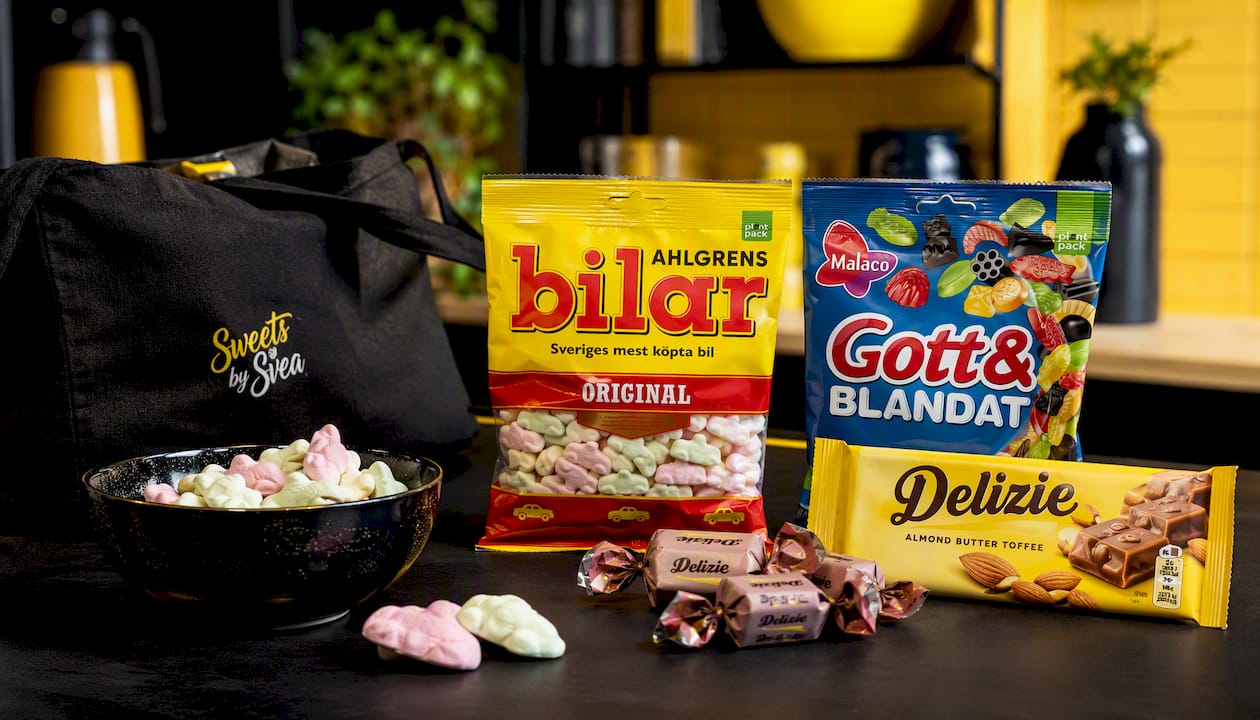
If you want to run your own side-by-side taste test, the Candy Lovers Favorite sampler covers the widest range of textures in one order, from foam gummies to licorice to cocoa-butter chocolate. Prefer to start smaller? The Ahlgrens Bilar Limousines give you the classic Swedish foam-gummy texture in a single, recognizable format, while Almond Butter Toffee shows off real cocoa-butter melt in a chocolate-toffee bite. Browse the full Sweetsbysvea catalog to build your own mixed order and find out which side of the European candy vs American divide actually wins your taste buds.
Sources
- UC Davis Nutrition: Added sugars guidance
- Why does American chocolate taste bad? — Whitaker’s Chocolates blog
- DW: Why chocolate tastes different around the world
- Eur-Lex: EU legal content (relevant directives)
FAQ
Why don’t Europeans like Hershey’s chocolate?
Hershey’s chocolate contains butyric acid from its processing method, which gives it a tangy, slightly sour dairy note that palates used to cocoa-butter European chocolate often find unfamiliar or unpleasant.
What candy does America have that Europe doesn’t?
American candy leans heavily on peanut butter and chocolate combinations, intensely sour gummy coatings, and vividly colored candy shells built on a wider range of synthetic dyes than EU rules typically allow.
What is the most popular candy in Europe?
Popularity varies widely by country, but chocolate with high cocoa-butter content and, in Scandinavia specifically, salty licorice and mixed pick-and-mix gummy bags rank among the most iconic regional favorites.
Why is European chocolate considered better than American chocolate?
European chocolate typically uses more cocoa butter and less compound fat, giving it a smoother melt and richer mouthfeel. The real divide is craft chocolate versus commodity chocolate, and Europe’s traditions and regulations push more producers toward the former.
Does Sweetsbysvea sell candy without high-fructose corn syrup?
Yes. Sweetsbysvea’s catalog is built specifically around candy free from high-fructose corn syrup, parabens, and GMOs, with current pricing and product details available on the site.